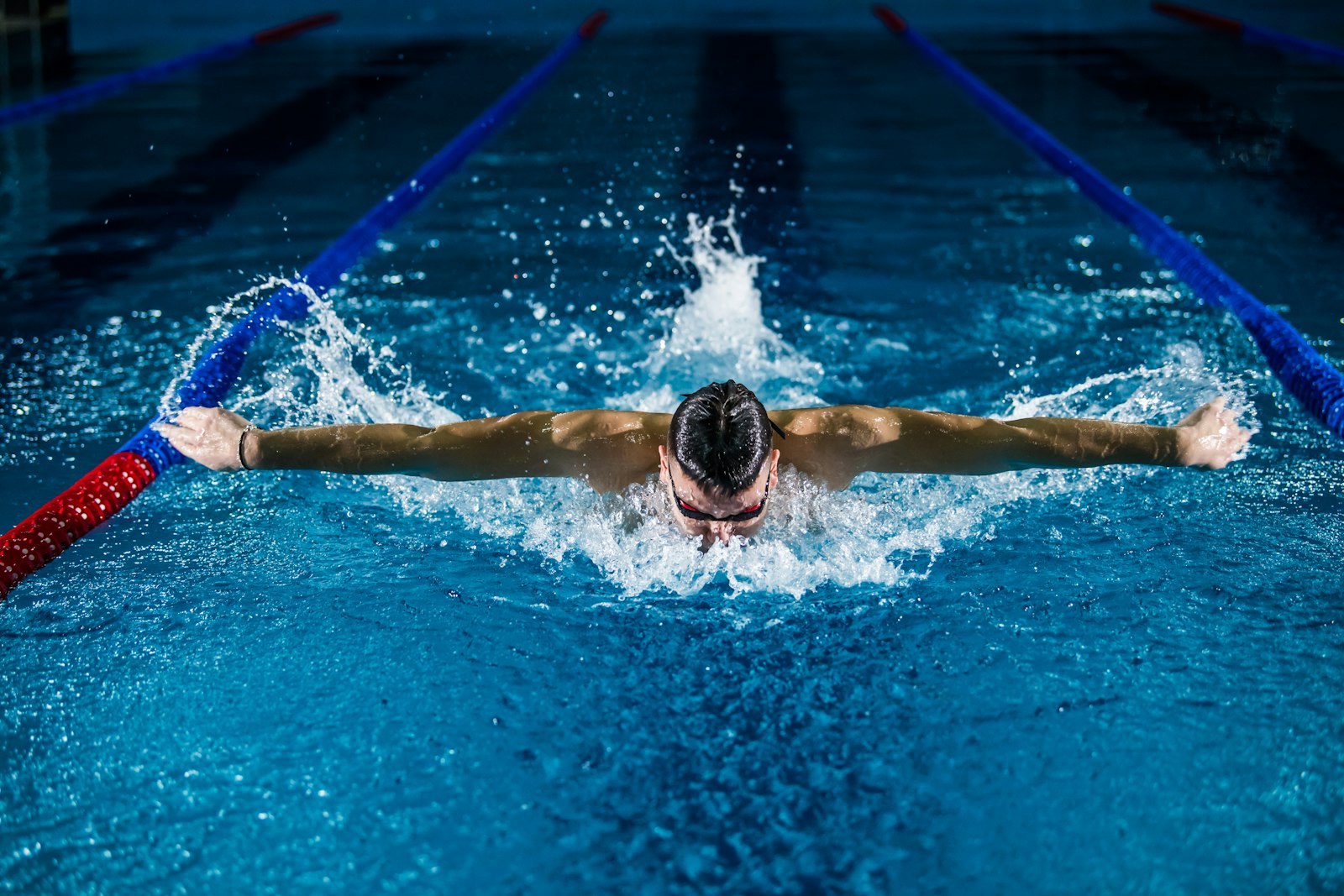
Swimming for Weight Loss in Dubai
Master freestyle, HIIT protocols & 12-week progression plans. Burn 400 to 700 kcal per session.
Home / Swimming / Swimming for Weight Loss Dubai
Swimming burns 400 to 700 kcal per hour depending on stroke and intensity, making it one of Dubai's most effective fat-loss tools. Combined with nutrition, a structured 12-week swimming program can produce 5 to 10 kg of sustainable weight loss. Indoor lap pools offer year-round training without Dubai's brutal summer heat.
Why Swimming Is Dubai's Best-Kept Weight Loss Secret
Dubai's summer temperatures (45 to 50°C in July-August) make traditional outdoor running and gym training miserable. Swimming solves this problem entirely. A one-hour freestyle session in an air-conditioned pool burns more calories than most people realize and without the joint stress of pounding pavement.
The calorie burn advantage is real: A 75 kg person swimming freestyle at moderate intensity burns approximately 400 to 550 kcal per hour. At high intensity (racing pace), this climbs to 600 to 700 kcal. For comparison, jogging burns 400 to 600 kcal in the same timeframe, but swimming is low-impact, full-body, and perfect for Dubai's climate.
Beyond calories, swimming trains your entire body simultaneously. Every stroke works your core, shoulders, chest, back, and legs. This metabolic engagement training 85% of your muscles at once elevates your resting metabolic rate and accelerates fat loss even on rest days.
The Science: How Swimming Torches Fat
Swimming creates what exercise scientists call "metabolic afterburn" or EPOC (excess post-exercise oxygen consumption). Your body continues burning elevated calories for hours after you leave the pool. This is especially pronounced in HIIT swimming workouts.
Swimming is also joint-friendly. The water's buoyancy supports 90% of your body weight, eliminating impact stress. This makes it ideal if you're carrying extra weight, have knee issues, or are returning from injury you can train hard without damaging your joints.
Calorie Burn by Stroke: Which Swim Style Burns the Most?
Not all swimming strokes are created equal. Here's how they stack up for a 75 kg person at moderate-to-high intensity:
| Swimming Stroke | Moderate Intensity (kcal/hr) | High Intensity (kcal/hr) | Best For |
|---|---|---|---|
| Freestyle (Front Crawl) | 400 to 500 | 600 to 700 | Fat loss & endurance |
| Butterfly | 500 to 600 | 700 to 800 | Maximum calorie burn |
| Backstroke | 350 to 450 | 500 to 600 | Recovery days & technique work |
| Breaststroke | 300 to 400 | 450 to 550 | Active recovery |
Key insight: Freestyle offers the best balance of high calorie burn and sustainability. You can train freestyle for 45 to 60 minutes without exhaustion. Butterfly is a calorie-burning beast but most people can only sustain it for short intervals.
Swimming Technique Tips to Burn More Calories
Technique efficiency directly impacts calorie burn. A sloppy swimmer wastes energy fighting the water; an efficient swimmer moves faster with less effort, but can work harder for longer. This matters because sustained intensity is where fat loss happens.
Freestyle Efficiency Essentials
- Body position: Keep your hips high and your head neutral. Your forehead should be looking at the pool bottom, not forward. This reduces drag and lets you work harder without excessive neck strain.
- Arm entry: Extend fully but don't overreach. Enter fingertips-first at shoulder width. A high elbow catch (bending your elbow early in the pull) generates more power and burns more calories per stroke.
- Kick: Use a 6-beat kick (6 kicks per arm cycle). Keep ankles relaxed and flexible. Kick comes from the hips, not knees. A tight kick wastes energy; a loose kick propels you forward efficiently.
- Breathing rhythm: Breathe every 3 strokes (bilateral) or 2 strokes on hard sets. Avoid gulping air. Smooth breathing maintains speed and cardiovascular intensity.
- Rotation: Your body should roll 45 degrees on each side. This lets you use your big back muscles (lats) in the pull and keeps you relaxed. Stiff swimmers tire faster.
Consider taking 2 to 3 technique sessions with a Dubai-based swim coach (see pool recommendations below). Poor technique is the #1 reason people abandon swimming they get tired or frustrated because they're fighting the water, not moving through it efficiently.
Two Proven Swimming Training Methods for Fat Loss
1. HIIT Swimming: Maximum Fat Burn in Minimum Time
High-intensity interval training in the pool delivers rapid results. Short, all-out efforts followed by recovery periods spike your heart rate, create metabolic afterburn, and train your body to use fat for fuel.
Why HIIT works for weight loss: The high intensity signals your body that energy is scarce, prompting it to draw heavily from fat stores in the hours and days following training. HIIT also triggers greater EPOC your metabolic rate stays elevated long after you shower.
Sample 30-Minute HIIT Swim Workout
Warm-up (5 min): • 200m easy freestyle • 4 × 50m kick (easy pace) Main Set (20 min): • 4 × 100m hard effort (90% max) w/ 60s rest • 8 × 50m sprint (95% max) w/ 40s rest • 4 × 100m at threshold pace w/ 45s rest Cool-down (5 min): • 200m easy backstroke or kick Total: ~1,500m, ~320 kcal burned
Perform this workout 1 to 2 times per week. More than that risks overtraining and injury (swimming hammers shoulders). Add a second HIIT session only after 4 to 6 weeks of consistent base training.
2. Steady-State Swimming: Building Aerobic Fat Metabolism
The counterpart to HIIT is steady-state swimming longer distances at a sustainable, moderate pace. This builds your aerobic base, teaches your body to burn fat efficiently, and can be done more frequently without overuse injury.
The fat-burning zone: Swim at a pace where you can speak 2 to 3 words at a time (approximately 70 to 80% of max heart rate). This intensity is where your body preferentially burns fat for fuel. It feels easy compared to HIIT but burns serious calories because the duration is long.
Sample 45-Minute Steady-State Session
Warm-up (10 min): • 300m easy freestyle • 200m kick • 4 × 50m drill (fingertip drag or catch-up) Main Set (30 min): • 2,000m continuous freestyle at steady, sustainable pace (conversational pace) Cool-down (5 min): • 200m easy backstroke or choice stroke Total: ~2,700m, ~450 kcal burned
Beginners should start at 1,000 to 1,500m and build gradually. Advanced swimmers can extend to 3,000 to 4,000m. Perform steady-state swimming 2 to 3 times per week.
Progressive 12-Week Swimming Weight Loss Program
Here's a realistic progression for someone who can comfortably swim 100m continuously. Adjust based on your fitness level.
Weeks 1 to 4: Building the Base
Goal: Establish a consistent training routine, improve technique, build endurance to 1,500 to 2,000m per session.
- Monday: 2,000m steady-state (1,600m freestyle + 400m kick/drill)
- Wednesday: Technique work, 1,500m mixed strokes focusing on form. Include 4 × 100m freestyle on 2:30 departure.
- Friday: Easy 1,200m recovery swim (any stroke)
- Saturday: 1,800m steady (mix of free and backstroke)
Volume: ~6,500m per week | Estimated calorie burn: 2,400 to 2,800 kcal
Weeks 5 to 8: Adding Intensity
Goal: Introduce HIIT work, increase volume, begin fat loss acceleration.
- Monday: HIIT, 4 × 100m hard (90% max) w/ 60s rest + 6 × 50m at 85% + 600m easy recovery = ~1,800m
- Wednesday: 2,000m steady-state + 4 × 25m sprint finishes
- Friday: Technique/recovery, 1,500m easy with drills
- Saturday: Longer steady state, 2,500m at conversational pace
Volume: ~7,800m per week | Estimated calorie burn: 3,000 to 3,400 kcal
Weeks 9 to 12: Consolidation & Peak
Goal: Maximum fat loss phase, higher intensity, peak cardiovascular adaptation.
- Monday: HIIT, 5 × 100m at 92% max w/ 50s rest + 10 × 50m sprint intervals = ~2,000m
- Tuesday: 2,200m steady + tempo work (4 × 200m at 85% effort)
- Thursday: Technique/drill-focused, 1,600m
- Saturday: Long steady state, 3,000m at controlled pace
Volume: ~8,800m per week | Estimated calorie burn: 3,500 to 4,000 kcal
Expected weight loss: With consistent training + proper nutrition (500 to 750 kcal/day deficit), expect 5 to 10 kg loss over 12 weeks, depending on starting weight and diet adherence.
Best Swimming Pools in Dubai for Lap Training
Not all pools are created equal. You need a proper 50m or 25m lap pool with calm, dedicated lanes not a crowded hotel pool where kids are splashing.
Top Lap Swimming Venues
Al Nasr Leisureland
Location: Al Nasr, near Oud Metha (2 km from Downtown Dubai)
Facilities: Olympic-sized 50m lap pool, separate diving pool, training lanes. This is Dubai's premier lap swimming destination. Water temperature maintained at 27 to 28°C year-round. Professional coaching available.
Cost: Day pass Monthly membership Annual membership
Best for: Serious swimmers. Well-maintained, quiet training environment. Offers swim team programs and coaching.
day pass
Dubai Sports City, Aquatic Centre
Location: Dubai Sports City, south of Downtown
Facilities: Multiple pools including Olympic 50m. Excellent for lap swimming. Modern facility with comprehensive coaching programs.
Cost: Drop-in Monthly Annual
Best for: Access to top-tier coaching. Good for athletes serious about progression.
day pass
JA Beach Hotel, Lap Pool
Location: Jumeirah, JBR area
Facilities: Beautiful 50m lap pool overlooking the beach. Less crowded than public facilities. Day pass includes gym and facilities.
Cost: Day pass Monthly pass
Best for: Swimmers who want beach access. Premium environment.
day pass
Rashid School of Islamic Studies Swimming Pool
Location: Umm Suqeim
Facilities: Olympic-sized pool, well-maintained, quieter than major facilities. Offers lap lanes during specific hours.
Cost:. Monthly
Best for: Budget-conscious swimmers seeking a peaceful training environment.
day pass
Emirates Academy, Community Pool
Location: Multiple locations (Jumeirah, JVC, Arabian Ranches)
Facilities: 25m pools, suitable for training if you can do flip turns and navigate around others.
Cost: day pass. Monthly
Best for: Budget training, convenient locations.
day pass
Hotel Pool Training in Dubai
Many 5-star hotels offer day-pass pool access. Caveat: Most are designed for leisure, not lap swimming. Verify they have designated lap lanes before purchasing. Best options include Fairmont, Atlantis, and Hilton properties with Olympic-length pools.
Open Water Swimming in Dubai: Beaches & Considerations
Dubai's warm waters (20°C in winter, 32°C in summer) make year-round ocean swimming possible. JBR Beach and Jumeirah Beach are popular open-water training spots.
Safety Considerations
- Always swim with a buddy. Currents along JBR can be deceptive. Never swim alone in open water.
- Swim during lifeguard hours (typically 8 AM 6 PM). Avoid dawn/dusk.
- Wear a bright swim cap or tow buoy. Jet skis and boats operate near beaches; visibility is critical.
- Check conditions daily. High winds increase chop and current. If waves are 1.5m+, stick to the pool.
- Sunscreen is essential. Even under water, UV rays penetrate. Use reef-safe SPF 50+.
Open water swimming burns slightly more calories than pool swimming (fighting currents, waves, adjusting stroke) and builds mental resilience. Include 1 to 2 open-water sessions monthly once you're confident.
Combining Swimming with Other Exercise for Accelerated Fat Loss
Swimming alone is excellent, but combining it strategically with other modalities accelerates results.
Swimming + Strength Training
Ideal combo: Swim 3x/week + lift 2 to 3x/week. Swimming builds cardiovascular capacity and work capacity; lifting preserves muscle during weight loss and elevates resting metabolic rate.
Sample weekly structure:
- Monday: Lower body lift (squats, deadlifts, lunges)
- Tuesday: HIIT swim (30 to 40 min)
- Wednesday: Upper body lift (bench, rows, shoulder work)
- Thursday: Steady-state swim (45 to 60 min)
- Friday: Functional training or light core work
- Saturday: Long steady swim (60+ min) or active recovery
- Sunday: Rest
Swimming + Sauna/Recovery
Dubai's dry heat means saunas accelerate recovery (though dehydration risk is real drink 500ml water per 15 min sauna). Many pools have saunas. 15 to 20 min sauna post-swim enhances recovery and feels luxurious after hard training.
Nutrition Strategy for Swimming Weight Loss
Training hard without nutrition strategy is like driving with the parking brake on. You'll see results, but they'll be slow. Here's what works:
Caloric Deficit + Protein
The math: Swimming burns 400 to 700 kcal per session. To lose weight, maintain a 500 to 750 kcal/day deficit through diet + exercise. But don't go below your basal metabolic rate (BMR). An app like Cronometer helps track this accurately.
Protein priority: Eat 1.6 to 2.2 g protein per kg body weight daily. Protein preserves muscle during weight loss and increases satiety (you feel fuller longer). For a 75 kg person, that's 120 to 165 g protein daily.
Meal timing around swims:
- Before swim (1 to 2 hours prior): Light carbs + some protein. Example: banana + 20g almonds, or oats + egg white.
- During swim (if >90 min): Sip diluted sports drink (electrolytes + 4 to 6% carbs). Prevents glycogen depletion.
- Within 30 min post-swim: Protein + carbs. Example: protein shake with fruit, or grilled chicken + rice. This refills muscle glycogen and supports recovery.
Hydration in Dubai Heat
You're sweating inside and outside the pool. Dehydration kills performance and increases injury risk. Drink 500 to 750 ml water per hour of training. In summer, add electrolytes (sodium, potassium) to your water mineral-depleted water alone doesn't fully rehydrate.
Swimming Gear for Dubai Pool Training: What to Buy & Where
Essential Equipment
Competition Swimsuit
Speedo, Arena, or Zoggs jammers. Quality suits reduce drag and last longer than cheap alternatives. Essential for lap swimming.
Swimming Goggles
Zoggs, Speedo, or TYR. Get optically-correct goggles if you wear glasses game changer. Try multiple styles; fit varies by face shape.
Swim Cap
Latex or silicone. Reduces drag, keeps hair out of face, increases visibility in open water.
Pull Buoy
Essential training tool for isolating arm work. Allows you to focus on stroke technique without kicking. Many pools provide these, but having your own ensures fit and quality.
Kickboard
Builds leg power and endurance. Essential for kick sets. Lightweight foam or EPE boards work best in Dubai pools.
Drag Shorts / Paddles
Drag shorts increase resistance and help you feel the water better. Hand paddles strengthen shoulders. Advanced tool use after 6 to 8 weeks of base training.
Waterproof Watch / Training Device
Garmin, Apple Watch, or Fitbit. Track distance, splits, heart rate. Invaluable for monitoring progression and calorie burn.
Where to Buy in Dubai
- Decathlon (Deira, Dubai Hills, JVC, Ibn Battuta): Budget-friendly gear, good quality. Speedos, goggles, kick boards, pull buoys. for most items.
- Splash Aquatic (Jumeirah): Specialty swimming shop. Expert staff, full range of brands. Higher prices but better advice.
- Virgin Megastore / Carrefour: Basic swimming gear. Goggles, caps, basic suits.
- Amazon.ae / Noon.com: Wide selection, often cheaper. Delivery in 1 to 2 days to most Dubai areas.
Common Mistakes Beginners Make (And How to Avoid Them)
Mistake #1: Terrible Technique Leads to Quitting
The problem: New swimmers thrash around, fight the water, get tired after 200m, and never return.
The fix: Invest in 2 to 3 coaching sessions before you start solo training. A coach will identify efficiency leaks and set you up for success. This but saves months of frustration.
Mistake #2: Too Much Volume Too Soon = Shoulder Injury
The problem: Enthusiastic newcomers jump to 5,000+ meters immediately. Swimming's repetitive nature causes shoulder impingement.
The fix: Build volume gradually. Add 500m per week max. Spend 4 to 6 weeks at 3,000m/week before progressing. Include shoulder mobility work: band pull-aparts, scapular push-ups, and thoracic rotations 2 to 3x/week.
Mistake #3: No Structured Plan = Inconsistent Results
The problem: Winging it day-to-day leads to overtraining some days, undertraining others. Progress stalls.
The fix: Follow the 12-week plan above or hire a coach to write custom programming. Structure ensures progression, prevents burnout, and accelerates adaptation.
Mistake #4: Nutrition Chaos = No Weight Loss
The problem: Swimming hard but eating whatever, whenever. You'll feel hungry from training and overeat, negating the caloric deficit.
The fix: Track intake for 1 to 2 weeks with Cronometer or MyFitnessPal. Get baseline awareness. Meal prep on Sundays. Hit protein targets daily.
Mistake #5: Ignoring Recovery = Fatigue & Illness
The problem: Training hard daily without rest. Your immune system crashes; you get colds and miss training.
The fix: Schedule 1 to 2 complete rest days weekly. Sleep 7 to 9 hours nightly. Include easy recovery swims. Monitor resting heart rate if it's elevated 10+ bpm above normal, take an extra rest day.
Beyond Weight Loss: Additional Benefits of Regular Swimming
Mental Health & Stress Relief
Swimming is meditative. The rhythmic breathing, repetition, and aquatic environment calm the nervous system. Swimmers report reduced anxiety, better mood, and improved sleep quality all essential for weight loss (poor sleep increases hunger hormones and cortisol).
Joint Health & Injury Prevention
Swimming's low-impact nature builds strength without joint damage. Perfect if you have knee, hip, or back issues. The water's compression also reduces swelling and enhances proprioception.
Longevity & Cardiovascular Resilience
Regular swimmers have lower resting heart rates, better VO2 max, and lower cardiovascular disease risk. Swimming builds heart strength and endurance that translates to everyday life quality.
Swimming for People with Injuries or Joint Problems
If you have arthritis, prior ACL injury, or lower back pain, swimming is often the only exercise that doesn't flare symptoms. The key is avoiding certain strokes:
- Knee pain? Avoid breaststroke (whip kick stresses knees). Use freestyle, backstroke, or flutter kick drills.
- Shoulder pain? Avoid butterfly and wide-grip freestyle. Use catch-up drills, narrow-grip pulls, and backstroke.
- Lower back pain? Avoid excessive dolphin kick. Use flutter kick with core engagement, backstroke, and pull work with a buoy.
Consult a physical therapist or sports medicine doctor before starting if you have chronic pain. They can recommend modifications specific to your condition.
Ready to Start Swimming for Weight Loss?
Find a certified swimming coach in Dubai to assess your technique and build a personalized plan. Expert guidance cuts months off your learning curve and prevents expensive injuries.
Key Takeaways: Swimming for Weight Loss in Dubai
- Calorie burn: 400 to 700 kcal per hour depending on stroke and intensity. Competitive with or better than running, with zero joint impact.
- Best strokes: Freestyle for sustainability, butterfly for maximum burn. Mix them in structured workouts.
- Training methods: Combine HIIT (1 to 2x/week) with steady-state (2 to 3x/week) for balanced fat loss and aerobic adaptation.
- 12-week progression: Build from 6,500m to 8,800m per week. Expect 5 to 10 kg sustainable weight loss with proper nutrition.
- Best pools: Al Nasr Leisureland, Dubai Sports City, or JA Beach Hotel for dedicated lap training. Day passes
- Technique matters: Hire a coach for 2 to 3 sessions. Poor technique kills motivation; efficiency accelerates results.
- Nutrition is non-negotiable: Maintain a 500 to 750 kcal deficit, hit 1.6 to 2.2 g protein/kg bodyweight daily.
- Combine modalities: Swimming + strength training + proper sleep + nutrition = fastest results.
- Dubai advantage: Year-round warm pools escape summer heat. This is a lifestyle advantage most other cities don't have.
Final Word: Why Swimming Is Your Secret Weapon in Dubai
Dubai's climate makes traditional cardio miserable half the year. Swimming flips the script. You train in comfort, burn serious calories, build full-body strength, and improve cardiovascular health all in an environment that feels like recovery rather than punishment.
Start with Al Nasr Leisureland or Dubai Sports City. Book one coaching session. Follow the 12-week progression. Commit to nutrition. In three months, you'll see dramatic changes in body composition, energy, and confidence.
Swimming isn't just a workout in Dubai. It's the most efficient path to the body you want.
List Your Swimming Coaching Services on GetFitDXB
Are you a certified swimming coach in Dubai? Reach thousands of fitness enthusiasts looking for expert guidance.