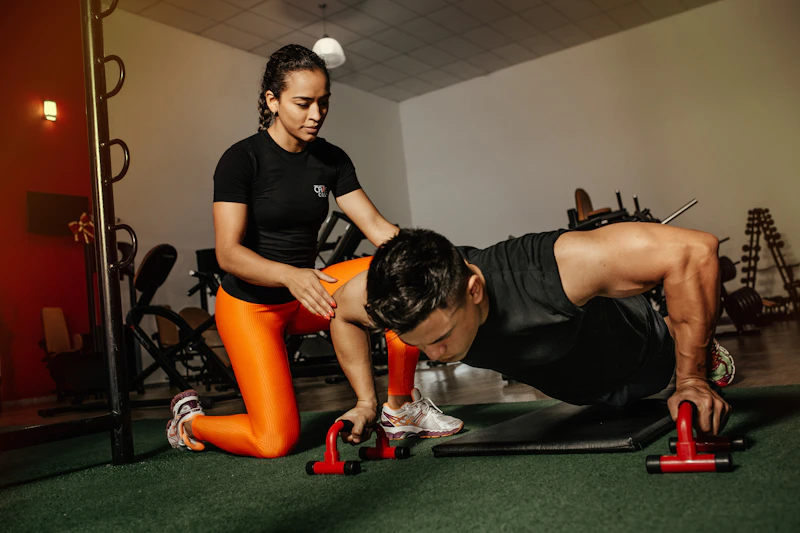
Dubai's gyms are packed year-round, but with intense training comes increased injury risk. Understanding the 10 most common gym injuries—and exactly how to prevent them—is essential for any Dubai athlete looking to train consistently without setbacks. For more, browse our personal trainer directory with verified Dubai coaches and pricing.
This guide details each injury, what causes it in Dubai's specific environment, and actionable prevention strategies. Whether you're a beginner or experienced lifter, you'll find specific exercises and protocols to keep you healthy and progressing.
See the complete injury prevention and recovery guide at Injury Prevention & Recovery in Dubai: The Complete Guide for more comprehensive recovery strategies and physiotherapy information.
Dubai Gym Injury Statistics & Why Prevention Beats Cure
Research from Dubai's major fitness facilities shows that 70-80% of injuries are preventable with proper form, appropriate progression, and adequate recovery. The remaining 20% are accidents or underlying conditions that require professional intervention.
The cost of ignoring injury prevention is significant: a single physiotherapy session costs AED 200-450, and a major injury requiring 12+ sessions costs AED 2,400-5,400+. More importantly, injuries derail training progress for weeks or months.
Prevention requires investing just 10-15 minutes per workout in warm-up, mobility, and recovery protocols. This small time investment prevents expensive injuries and keeps you consistently progressing toward your goals.
The 10 Most Common Gym Injuries Explained
1. Lower Back Strain (Lumbar Strain)
Frequency: 30% of all gym injuries
What it is: Small tears in the muscles or ligaments of the lower back, causing pain and stiffness.
Why it happens in Dubai: Poor deadlift form combined with excessive sitting (cars, air-conditioned offices) creates chronically tight hip flexors and weak glutes. Dubai's heat also reduces tissue elasticity during training.
Symptoms: Dull ache in lower back, pain worse with bending forward, stiffness after sitting, pain radiating into glutes.
Recovery time: 2-6 weeks with proper treatment; 8-12 weeks if ignored.
Prevention exercises:
- Glute bridges (3x15, 3x per week): Activates glutes and reduces lower back strain
- Dead bugs (3x10 per side, 3x per week): Teaches core control under load
- Quadruped opposite arm/leg raises (3x10 per side, 3x per week): Develops spinal stability
- Cat-cow stretches (2 minutes, daily): Improves spinal mobility
- Deep bodyweight squats (2 minutes, daily): Opens hips and trains proper squat mechanics
Form checklist for deadlifts: Neutral spine (not rounded), chest up, hips back, knees slightly bent, weight through midfoot.
2. Rotator Cuff Injury (Shoulder)
Frequency: 20% of all gym injuries
What it is: Inflammation or small tears in the rotator cuff muscles (supraspinatus, infraspinatus, teres minor, subscapularis) that stabilize the shoulder joint.
Why it happens in Dubai: Excessive pressing (bench press, overhead press) without adequate pulling volume creates muscle imbalance. Many Dubai athletes do 2-3 chest days but only 1 back day.
Symptoms: Sharp pain in front of shoulder during pressing, clicking sounds, weakness in arm raising, pain at night.
Recovery time: 4-8 weeks with treatment; 12+ weeks if severe.
Prevention exercises:
- Band pull-aparts (3x15, daily): Activates rear delts and external rotators
- Face pulls (3x15, 3x per week): Strengthens upper back and rear shoulders
- External rotations with light dumbbell (3x12 per arm, 3x per week): Directly strengthens external rotators
- Prone I-Y-T raises (2 sets of 8-10, 2x per week): Rear delt and rotator cuff strengthening
- Shoulder dislocates with light band (3x10, daily): Improves shoulder mobility
Training ratio: Maintain 1 : 1.5 pulling to pressing ratio. For every set of pressing, do 1.5 sets of pulling. Example: 10 sets chest, 15 sets back.
3. Knee Ligament Sprain (ACL/MCL)
Frequency: 15% of gym injuries (especially in sports training)
What it is: Partial or complete tears of the knee ligaments (ACL, MCL, PCL), causing instability and pain.
Why it happens in Dubai: Sudden direction changes during jumping or sports, inadequate warm-up in heat (muscles less pliable), and training on uneven surfaces (beach or outdoor courts).
Symptoms: Sharp pain, immediate swelling (within hours), feeling of knee giving out, inability to bear weight.
Recovery time: Grade I sprain: 2-4 weeks; Grade II: 4-8 weeks; Grade III (severe): 8-12 weeks or requires surgery.
Prevention exercises:
- Single-leg balance (3x30 seconds each leg, 3x per week): Improves proprioception
- Bulgarian split squats (3x8 per leg, 2x per week): Develops quad/glute strength and balance
- Nordic hamstring curls (3x5 per leg, 2x per week): Strengthens hamstrings (injury preventer)
- Lateral band walks (3x12 per direction, 2x per week): Strengthens glutes (stabilizers)
- Box jumps with control (3x5, 1x per week): Teaches landing mechanics
Warm-up for lower body: 5 minutes light cardio + 6-8 leg mobility drills + 2-3 light sets of main lift before heavy work.
4. Tennis Elbow (Lateral Epicondylitis)
Frequency: 10% of gym injuries
What it is: Inflammation of tendons on the outside of the elbow from repetitive gripping and pulling motions.
Why it happens in Dubai: High training frequency for arm exercises (many people do arm days twice per week), poor lat pulldown form, and inadequate rest days between arm training.
Symptoms: Pain on outside of elbow, especially with gripping, pain worse when extending wrist, weakness in forearm.
Recovery time: 4-8 weeks with rest and treatment; can become chronic if not addressed.
Prevention strategies:
- Proper lat pulldown form: Avoid gripping too hard; focus on pulling with elbows
- Limit arm isolation volume: Max 2 arm-focused days per week, 8-12 sets per session
- Include rest days: At least 2 consecutive days without pulling or gripping before repeating
- Forearm stretches (2x30 seconds each, daily): Reduce tendon tension
- Eccentric wrist curls (3x8 slow reps, 2x per week): Strengthen wrist extensors
5. Hamstring Strain (Pull)
Frequency: 12% of gym injuries
What it is: Partial or complete tear in hamstring muscles at the back of the thigh, causing sharp pain.
Why it happens in Dubai: Insufficient warm-up before heavy lifting or sprinting, inadequate hamstring flexibility, and muscle fatigue from overtraining in heat.
Symptoms: Sharp pain in back of thigh, bruising (after 24-48 hours), difficulty bending knee, pain walking or running.
Recovery time: Grade I: 2-4 weeks; Grade II: 4-8 weeks; Grade III: 12+ weeks or surgery.
Prevention exercises:
- Nordic hamstring curls (3x5 per leg, 2x per week): #1 hamstring injury preventer
- Good mornings (3x8, 1x per week): Strengthens hamstrings under load
- Lying hamstring stretches (2x30 seconds each leg, daily): Maintains flexibility
- Glute-ham raises (3x5-8, if available, 1x per week): Develops eccentric strength
- Proper warm-up: 5-10 minutes dynamic leg mobility before heavy lower body work
Critical: Never push into hamstring pain during training. Hamstring injuries worsen rapidly with continued loading.
6. Shin Splints (Medial Tibial Stress Syndrome)
Frequency: 8% of gym injuries (especially running-focused training)
What it is: Inflammation of the muscles and connective tissue along the shin bone, causing dull to sharp pain along the shin.
Why it happens in Dubai: Rapidly increased running volume without gradual adaptation, training on hard surfaces (concrete instead of treadmill), and inadequate footwear for Dubai's heat and terrain.
Symptoms: Dull to sharp pain along shin, especially during running, tenderness to touch, pain that subsides with walking but returns with running.
Recovery time: 2-6 weeks with reduced activity and proper treatment.
Prevention strategies:
- Progressive running increase: No more than 10% volume increase per week
- Calf strength work (3x12 calf raises, 2x per week): Reduces strain on shins
- Proper footwear: Supportive running shoes appropriate for your gait (neutral/stability/motion control)
- Soft surface training: Treadmill or track instead of concrete when possible
- Calf stretches (2x30 seconds each leg, daily): Reduce tension on shin compartment
Rule: If shin pain develops, reduce running volume by 30-50% immediately. Continuing full volume will worsen the injury.
7. Wrist Sprain
Frequency: 7% of gym injuries
What it is: Injury to the ligaments of the wrist joint, causing pain, swelling, and reduced range of motion.
Why it happens in Dubai: Heavy compound movements (bench press, overhead press, kettlebell work) without wrist support or proper warm-up, and jumping into high-load kettlebell training without adaptation.
Symptoms: Wrist pain on movement, swelling within hours, reduced grip strength, clicking or popping sensations.
Recovery time: 2-4 weeks for mild sprains; 4-8 weeks for moderate sprains.
Prevention strategies:
- Wrist mobility work (2 minutes daily): Wrist circles, wrist flexor/extensor stretches, prayer stretch
- Wrist strength exercises (2x12, 2x per week): Wrist curls and reverse curls with light weight
- Proper bench press positioning: Wrists neutral or slightly extended, not excessively bent
- Wrist wraps for heavy pressing: Support wrists during max-effort lifts
- Progressive loading: Don't jump into heavy kettlebell work; build wrist stability gradually
8. IT Band Syndrome
Frequency: 6% of gym injuries (especially running-focused)
What it is: Inflammation of the iliotibial band (connective tissue running along the outside of the thigh), causing sharp pain on the outside of the knee.
Why it happens in Dubai: Excessive running volume without adequate foam rolling, weak glute muscles, and training on cambered surfaces (uneven running paths).
Symptoms: Sharp pain on outside of knee during/after running, pain that worsens over weeks, clicking sensations, tightness on outside of leg.
Recovery time: 4-8 weeks if aggressively managed; can become chronic (12+ weeks) without intervention.
Prevention strategies:
- Glute strengthening (lateral band walks, clamshells, single-leg deadlifts, 3x per week): Weak glutes are the #1 cause
- IT band foam rolling (90 seconds per leg, 3x per week): Reduce tension and improve mobility
- Running on flat surfaces: Avoid cambered paths and uneven terrain
- Progressive running increase: No more than 10% volume increase weekly
- Hip mobility work (couch stretch, 90/90 stretch, pigeon pose, daily): Reduce IT band tension
Important: Never stretch the IT band directly (ineffective and potentially harmful). Instead, address root causes: weak glutes and tight hip flexors.
9. Neck Strain
Frequency: 5% of gym injuries
What it is: Muscle or ligament strain in the neck from poor posture or excessive load, causing pain and stiffness.
Why it happens in Dubai: Poor form during neck-loading exercises (upright rows, behind-neck pulldowns), excessive mobile phone use (text neck from constant messaging), and poor desk posture at work.
Symptoms: Neck pain, reduced range of motion, headaches from neck tension, pain radiating into shoulders.
Recovery time: 1-2 weeks for mild strains with rest and care.
Prevention strategies:
- Proper upright row form: Elbows wide, avoid excessive weight
- Avoid behind-neck pulldowns: Use neutral grip pulldowns or lat pulldowns in front
- Neck mobility work (2 minutes daily): Gentle rotations, lateral flexion, flexion/extension
- Posture awareness: Keep ears over shoulders, avoid forward head posture
- Thoracic mobility (daily): Opens chest and improves upper back mobility
10. Achilles Tendinopathy
Frequency: 5% of gym injuries
What it is: Inflammation and degeneration of the Achilles tendon (back of ankle), causing pain and stiffness.
Why it happens in Dubai: Excessive jumping or plyometric training without adequate recovery, inadequate calf strength, and heel-striking during running.
Symptoms: Pain in back of ankle/heel, stiffness worse in morning, pain during jumping or running, pain with calf raises.
Recovery time: 4-8 weeks with proper management; can become chronic if ignored.
Prevention strategies:
- Calf strengthening (calf raises, eccentric calf raises, 3x12, 2x per week): Build tendon strength
- Eccentric loading (lower slowly from calf raise position, 3x8, 2x per week): Repair tendon tissue
- Calf stretches (2x30 seconds each leg, daily): Maintain flexibility
- Moderate plyometric volume: Max 1-2 jump sessions per week, not consecutive days
- Proper footwear: Supportive shoes with adequate heel cushioning
The Heat Factor: How Dubai's Climate Makes Injuries More Likely
Dubai's extreme heat (45-50°C in summer) fundamentally changes how your body responds to training. Understanding this is critical for injury prevention:
Heat Reduces Tissue Elasticity
Heat actually makes muscles and connective tissues less flexible in the moment, even though they feel warm. The combination of heat stress plus intense loading creates a perfect storm for injuries. This is why many injuries happen on the hottest days of the year.
Heat Depletes Electrolytes Faster
Intense sweating in Dubai's heat depletes sodium, potassium, and magnesium much faster than cooler climates. This causes heat cramps (involuntary muscle contractions) that significantly increase injury risk during heavy lifts.
Heat Accelerates Fatigue
Your cardiovascular system works harder in heat, pumping blood to muscles and skin for cooling. This dual demand causes earlier fatigue, faster form breakdown, and therefore higher injury risk. A lift that feels manageable at 25°C becomes significantly harder at 45°C.
Heat Impairs Recovery
Hot nights (25-30°C) disrupt sleep quality, which is when most adaptation happens. The combination of heat stress during training + poor sleep recovery = injury risk that builds over weeks.
Solution: Adjust training intensity down 10-20% during peak summer heat, increase hydration with electrolytes, prioritize recovery protocols (ice baths, extra stretching, better sleep), and consider training during cooler hours (very early morning or late evening).
Injury Prevention Exercises Every Dubai Gym-Goer Should Do
These exercises prevent the 10 injuries listed above. Spend 10-15 minutes on these 3-4 times per week:
Glute activation (5 minutes): Glute bridges (3x15), lateral band walks (3x12 per direction)
Shoulder health (4 minutes): Band pull-aparts (3x15), face pulls (3x12)
Core stability (4 minutes): Dead bugs (3x10 per side), planks (3x45-60 seconds)
Mobility (5 minutes): Deep bodyweight squats (2 minutes), cat-cow stretches (2 minutes)
This 15-minute protocol, done before your main workout, prevents 70%+ of common injuries.
When to Push Through Pain vs. Stop Training
This is where many athletes get injured: not knowing when to continue and when to stop.
STOP training immediately if:
- Sharp pain (7/10 or higher) that shoots through a joint
- Pain that prevents movement (can't walk, can't bend)
- Pain that worsens during the set
- Swelling or instability
- Any pain that feels "wrong" (different from normal training soreness)
You can continue with:
- Muscle soreness (dull ache that doesn't worsen with movement): This is normal muscle damage and adaptation
- Mild discomfort (3-4/10) that doesn't worsen during the set and doesn't prevent proper form
- General fatigue or "pump" sensation: This is normal training stress
Key rule: If form starts to break down to avoid pain, STOP. Form breakdown is how injuries happen. Never sacrifice form to push through pain.
First Aid for Gym Injuries in Dubai
The first 24-48 hours after an injury are critical. Follow the RICE protocol:
REST: Stop the activity immediately. Don't try to "push through" an acute injury.
ICE: Apply ice (or cold water in Dubai's heat) for 15-20 minutes, 3-4 times daily for the first 48 hours. This reduces inflammation and pain. Ice is extremely effective in Dubai's heat.
COMPRESSION: Wrap the injured area snugly with an elastic bandage to reduce swelling. Don't wrap so tight it restricts circulation.
ELEVATION: Raise the injured limb above heart level to reduce fluid accumulation and swelling.
Avoid: Heat (don't use hot water or sauna), alcohol (thins blood and increases swelling), and massage (can worsen acute inflammation). Wait 48+ hours before these interventions.
See a physiotherapist if:
- Pain doesn't improve within 3 days
- Swelling doesn't decrease within a week
- You can't resume normal activities after a week
- You feel instability or the joint doesn't feel stable
Early physiotherapy (AED 200-450 per session) is much cheaper than letting minor injuries become chronic problems requiring months of recovery.
Don't Train Injured. Get Professional Help Today.
Find qualified sports physiotherapists and recovery specialists in Dubai who can get you back to training safely and quickly.
Frequently Asked Questions
What's the most common gym injury?
Lower back strain is the most common, accounting for about 30% of all fitness injuries. It's caused by poor deadlift form, weak core muscles, tight hip flexors from excessive sitting, and inadequate mobility work. Prevention focuses on glute activation, core strengthening, and proper lifting mechanics.
How can I prevent rotator cuff injuries?
Prevent rotator cuff injuries by: maintaining proper bench press form (elbows at 45 degrees, not flared out), doing daily shoulder mobility work (band pull-aparts, dislocates), balancing pressing with pulling (1:1.5 ratio), and taking adequate rest days between chest workouts. Include face pulls and external rotations in your routine.
When should I stop training with pain?
Stop immediately if you experience sharp pain (7/10+), pain that prevents movement, or pain that worsens during the set. You can continue with mild discomfort (3-4/10) that doesn't worsen and doesn't affect form. The key: if form breaks down to avoid pain, stop. Form breakdown is how injuries worsen.
What is the RICE method?
RICE stands for Rest (stop activity), Ice (apply 15-20 minutes, 3-4x daily for 48 hours), Compression (wrap snugly), and Elevation (raise above heart). This initial protocol reduces inflammation and speeds early recovery from acute injuries. Avoid heat, alcohol, and massage during the first 48 hours.