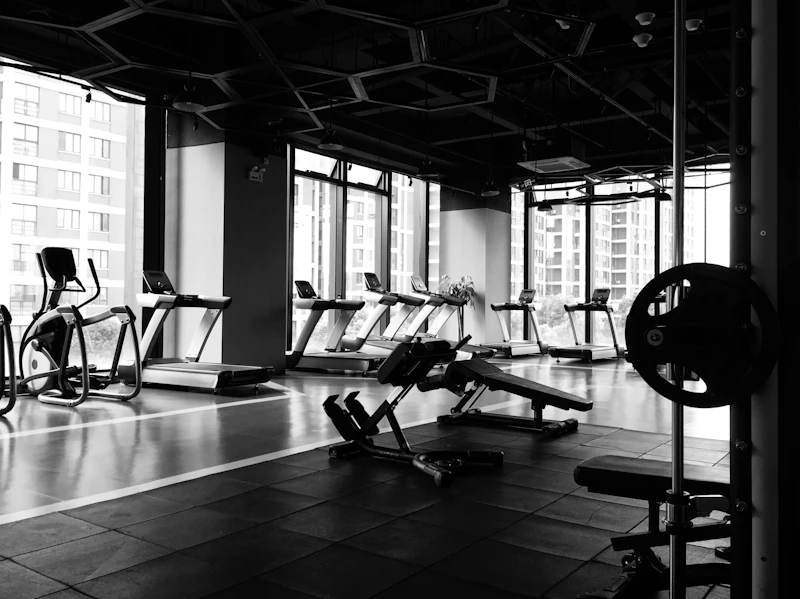
Dubai's summer heat makes outdoor running dangerous. Temperatures exceed 45°C (113°F) June through August, with humidity often reaching 80-90%. Even dedicated runners retreat indoors during these months. Home cardio training becomes not just convenient but essential for Dubai residents who want to maintain cardiovascular fitness year-round without heat exhaustion risk. The key is understanding which indoor methods genuinely build aerobic capacity—not just burn calories in the moment—and how to structure them effectively in a small apartment space.
This guide is part of our complete Home Workout Programme, covering evidence-based approaches to cardio training at home. We address Dubai's specific challenges: limited space, extreme heat, noise considerations for neighbours, and the need for workouts that complement rather than interfere with strength training. Whether you're training for 5K performance, building general fitness, or maintaining aerobic capacity during summer, home cardio workouts can match or exceed gym/outdoor options when programmed intelligently.
Transform Your Summer Cardio
Stop letting Dubai heat derail your fitness goals. Effective home cardio workouts require zero equipment and minimal space—but they demand smart programming.
Access Complete Home Workout GuidesThe Dubai Cardio Challenge — Why Indoor Training Matters
Outdoor cardio in Dubai presents concrete physiological challenges. Heat stress increases core temperature rapidly. Thermoregulatory demands (sweating) cause dehydration at rates of 1-2 litres per hour in summer conditions. Even acclimated athletes face increased injury risk and reduced training quality May-September. Running at pace becomes virtually impossible for most. Walking becomes the only safe option.
Indoor training eliminates these variables. Temperature remains constant (typically 20-24°C in AC'd apartments). Dehydration remains manageable (consume 500-750ml water per hour, depending on sweat rate). You can maintain quality effort without core temperature escalating dangerously. The trade-off is environmental boredom and space constraints—but both are solvable.
Research on altitude/heat training shows that consistent low-intensity aerobic work (Zone 2 training) produces the largest adaptations for general fitness. Home cardio workouts structured for this purpose—30-45 minutes at conversational intensity—deliver similar cardiovascular benefits to outdoor running without the heat stress complications. The key: consistency matters more than environment. Ten home cardio sessions beat three outdoor heat-compromised sessions.
Equipment-Free Cardio Methods That Actually Work
The most effective home cardio requires nothing but bodyweight and gravity. These methods build genuine cardiovascular adaptation when structured properly:
Marching in Place and High Knees
This seems deceptively simple. Elevated-intensity marching (knee to chest height, repeated rapidly) elevates heart rate to 60-70% max for sustained periods. Control counts: Perform 3 minutes continuous marching at 100+ knee lifts per minute. Rest 60 seconds. Repeat 6-8 times. Total duration: 25 minutes. This produces heart rate response matching low-intensity running without joint impact.
Individual sessions deliver modest stimulus, but consistency is where adaptation happens. Perform 4-5 times weekly, and cardiovascular improvements manifest within 2-3 weeks.
Stair Climbing (Apartment Stairs)
If your apartment building has accessible stairs (or you have a staircase), stair climbing combines cardio stimulus with lower-body strength engagement. A single flight of stairs (12-16 steps) climbed repeatedly at 60-second intervals per ascent produces significant intensity.
Workout: Climb one flight at moderate pace (breathless but able to speak briefly), descend at controlled pace (preventing knee damage), rest 30 seconds. Repeat 8-12 times. Duration: 15-20 minutes. Advanced variation: Climb two stairs at a time (increased range of motion and power demand).
Stair training builds lower-body power and endurance simultaneously. Caution: High eccentric load (descending) causes muscle soreness; beginners should start with 2x weekly frequency and increase gradually.
Movement Circuits (Equipment-Free Cardio)
Combine low-impact movements with higher-impact ones. Example 20-minute circuit:
- 50 seconds continuous alternating lunges (step forward, alternate legs, 40-50 total reps)
- 10 seconds transition
- 50 seconds high knees marching
- 10 seconds transition
- 50 seconds lateral shuffles (side-to-side movement, 20 total shifts)
- 10 seconds transition
- 50 seconds jumping jacks or step-back burpees (no push-up, just step back to plank position, minimal noise)
- Rest 60 seconds
Repeat 3-4 times. This 20-minute session produces heart rate elevations to 70-80% max VO2 while distributing impact across different lower-body patterns.
Low-Impact Cardio for Apartments (Neighbour-Friendly)
Jumping jacks, burpees, and plyometric movements generate noise. If you're on an upper floor in a Dubai apartment tower (common scenario), pounding on the floor creates disturbances for those below. Low-impact alternatives maintain cardiovascular demand without noise complaints.
Step-Back Burpees (Not Push-Up Burpees)
Traditional burpees include a jump or explosive landing. Step-back burpees replace this: Stand → step back to plank position (no jump) → step forward to standing → repeat. This maintains core engagement, upper-body loading, and lower-body work without impact. Perform 20-30 continuous reps (typically 45-60 seconds) as part of a circuit. Elevates heart rate to 65-75% max without floor pounding.
Shadow Boxing and Kickboxing
Shadowboxing requires space but produces genuine cardio stimulus. 90 seconds of continuous punching combinations (jab-cross-hook patterns, straight 1-2s) elevates heart rate to 70-80% max. Unlike heavy bag work, shadowboxing is silent—no impact, no noise. Technique matters: punch from the hip, rotate core, maintain footwork. Rest 30 seconds between 90-second rounds. Perform 6-8 rounds (15-20 minutes total). This is low-impact but extremely high-effort cardio.
Marching or Stepping on a Sturdy Chair (Controlled Environment)
Use a reinforced low chair or bench (12-18 inches high). Step up with one leg, step down, repeat in controlled cadence. 60 reps per leg at moderate pace takes 90-120 seconds. Performs circuit of 3-4 variations: single-leg steps, double-leg steps, reverse steps (stepping backward). Total 20 minutes, zero noise, genuine lower-body and cardiovascular demand.
Jump Rope and Shadow Boxing Home Cardio
Jump rope historically requires significant ceiling height (often unavailable in Dubai apartments). However, low-impact rope jumping and alternative methods deliver similar stimulus.
Single-Leg Jumping Rope (Minimal Ceiling Height Required)
Traditional double-leg rope jumping needs 7-8 feet clearance. Single-leg variants (hopping on one leg continuously for 30-40 seconds, then switching) require minimal height. This is extremely demanding cardiovascularly—30 seconds produces heart rate equivalent to 2-3 minutes of double-leg rope. Include 1-2 minute breaks between sets. Perform 10-12 sets (5-10 minutes total rope work). Total workout: 25-30 minutes including warm-up and modifiers.
Rope Simulation (Shadowboxing Cadence)
No rope needed: Perform the jumping motion (wrist rotations, foot hops) without the rope. Maintain rapid foot motion, elevated arm tempo. Research shows imaginary rope jumping produces comparable heart rate response to actual rope jumping, with less injury risk and noise. 90-second intervals separated by 30 seconds rest, repeated 8-10 times, produce excellent cardio stimulus.
Kickboxing Combinations (Punching + Kicking)
Shadow boxing covers punching patterns. Add low kicks (hamstring-level, rotating hip for power, no jumping). Combinations like "jab-cross-low kick, repeat" maintain rhythm while incorporating lower-body power. 90 seconds continuous, 30 seconds rest, repeated 6-8 times. This is genuinely challenging and builds power-endurance alongside cardiovascular fitness.
LISS vs HIIT for Home Cardio — Which is Better?
Low-Intensity Steady State (LISS) and High-Intensity Interval Training (HIIT) produce different adaptations. The optimal approach for Dubai home cardio depends on your goals and training context.
| Factor | LISS (Low-Intensity Steady State) | HIIT (High-Intensity Intervals) |
|---|---|---|
| Duration | 30-60 minutes at 60-70% max HR | 15-25 minutes including intervals |
| Intensity Feel | Conversational, sustainable | Hard effort, breathlessness between rounds |
| Cardiovascular Adaptations | Aerobic base, mitochondrial density, fat oxidation | VO2 max, anaerobic capacity, lactate clearance |
| Muscle Preservation | Excellent (minimal muscle breakdown) | Moderate (higher catabolism, but strength protocols offset) |
| Recovery Demand | Low (can perform daily) | High (typically 2-3x weekly maximum) |
| Injury Risk | Low when progressive | Moderate (fatigue reduces form quality) |
| Dubai Summer Applicability | Superior (no outdoor heat compromise, AC'd home) | Good (indoors removes heat stress variable) |
Evidence-Based Recommendation
For general fitness, LISS dominates. Three to four 40-minute LISS sessions weekly (total 120-160 minutes) produces superior cardiovascular adaptations, fat loss, and recovery. The principle: accumulate volume at lower intensity. One hour of marching at conversational pace builds more aerobic capacity than 20 minutes of maximal effort.
HIIT works well as supplementary training 1-2x weekly. Example: Monday/Thursday LISS (40 minutes marching), Wednesday HIIT (20 minutes alternating 90s hard effort + 30s easy), Saturday strength + cardio circuit.
For Dubai residents training through summer, LISS is the reliable anchor. Heat-induced fatigue compromises HIIT quality; you cannot sustain maximum effort when managing core temperature stress. LISS is resilient to fatigue, accommodating summer hydration needs, and buildable. A Dubai summer LISS programme maintaining November fitness levels absolutely outweighs sporadic high-effort training.
Summer Heat Management for Indoor Cardio
Even air-conditioned apartments present challenges. AC can malfunction during peak summer. Building AC outages are common during sustained 45°C+ heat waves—your backup must be reliable.
Hydration Protocol
Drink 300-500ml water every 15-20 minutes during sessions. For LISS sessions exceeding 45 minutes, include electrolyte drinks (sodium 200-300mg per 500ml). Dubai-available options include:
- ORS (Oral Rehydration Salts) powders from pharmacies (AED 8-15 per box, mixes with water)
- Commercial sports drinks: Gatorade (AED 4-6/bottle), Powerade (AED 4-6/bottle)
- DIY electrolyte: 1L water + 6g salt + 20-30g sugar + lemon juice
Pre-hydration: Consume 400-600ml water 2-3 hours before training. Post-hydration: Drink 150% of sweat loss within 2 hours post-workout (if you lost 1L sweat, consume 1.5L fluid to account for ongoing losses).
Training Timing
During June-August, train early morning (5-7am, before outdoor temperature rises) or late evening (8-10pm, after temperature drops). Afternoon training in AC'd apartment is viable but feels psychologically harder.
Cooling Strategies
Perform high-intensity work (HIIT) in morning hours (5-7am) when home core temperature is naturally lower. Reserve afternoon/evening for LISS work at lighter intensity. Use fans during workouts to increase evaporative cooling. Wear minimal clothing (lightweight shorts, no shirt). Cold shower or ice bath post-session (5-10 minutes in cool water) accelerates core temperature reduction and perceived recovery.
4-Week Home Cardio Programme
This framework is designed for Dubai apartments, zero equipment, and sustainable progression. Perform this 4-week block, then repeat with increased intensity/duration.
Weekly Schedule
| Day | Type | Duration | Format |
|---|---|---|---|
| Monday | LISS (Marching) | 40 minutes | Continuous marching at conversational intensity |
| Tuesday | Strength (Home Strength) | 45 minutes | Bodyweight strength from our strength guide |
| Wednesday | HIIT (Intervals) | 20 minutes | Shadowboxing + marching intervals |
| Thursday | LISS (Low-Impact Circuit) | 35 minutes | Circuit of lunges, lateral shuffles, step-back burpees |
| Friday | Strength (Home Strength) | 45 minutes | Bodyweight strength |
| Saturday | LISS (Stair Climbing) | 25 minutes | Stair repeats or apartment stairs |
| Sunday | Rest or Active Recovery | 20 minutes | Easy walking or stretching mobility |
Week-by-Week Progression
Week 1: Establish baseline. Complete all sessions at prescribed duration without increasing intensity. Focus on perceived effort (RPE 5-6 for LISS, RPE 7-8 for HIIT). Track heart rate via basic smartphone app or smartwatch if available.
Week 2: Add 5 minutes to Monday and Thursday LISS sessions (40→45, 35→40 minutes). Maintain HIIT at 20 minutes. All other variables identical.
Week 3: Increase HIIT intensity: Shadowboxing intervals shift from 90s hard + 30s easy to 60s hard + 30s easy (shorter intervals, same total volume). Add 5 minutes to Saturday stair climbing (25→30 minutes).
Week 4: Deload week. Reduce all cardio duration by 25% (Monday 45→35 min, Thursday 40→30 min, etc.). Maintain effort at RPE 5 (easy). This week prioritizes recovery heading into next 4-week block. Strength training continues but at lighter volume (2 sets instead of 3).
Monday LISS Example Workout (Week 1-2)
Warm-up (5 minutes): Light marching in place, arm circles, leg swings. Heart rate should reach 50-55% max.
Main Set (35-40 minutes): Continuous marching at 100-120 knee lifts per minute, maintaining conversational breathing (able to speak brief phrases but not sing). Keep movement controlled and rhythmic. If home boredom sets in, break it into 10-minute blocks: 10 minutes marching → 1 minute rest/walk → 10 minutes marching, etc.
Cool-down (5 minutes): Reduce marching pace gradually, bring heart rate to <100bpm, perform light stretching (30 seconds quad stretch each leg, 30 seconds hamstring, 30 seconds hip flexor).
Wednesday HIIT Example Workout (Week 1)
Warm-up (5 minutes): Light shadowboxing, marching in place, arm circles. Heart rate 50-60% max.
Intervals (15 minutes): 90 seconds shadowboxing (jab-cross-hook combinations, continuous effort at RPE 8) + 30 seconds easy marching (RPE 3). Repeat 8 times. Total: 8 rounds × 2 minutes = 16 minutes active time.
Cool-down (3 minutes): Easy marching, gradually reducing pace. Heart rate down to <110bpm before finishing.
Wrapping Up: Sustainable Home Cardio for Dubai
Home cardio workouts eliminate Dubai's summer heat compromise while offering flexibility gym schedules cannot match. Effective programming requires understanding that consistency beats intensity. A sustainable 40-minute marching session performed four times weekly outproduces sporadic maximal-effort training.
The approach outlined here integrates with strength training, minimizes apartment noise, requires zero equipment, and produces measurable cardiovascular adaptations. Track sessions (date, duration, perceived effort, heart rate if available). Every 4 weeks, retest a standardized workout (e.g., "how many rounds of the interval circuit can I complete in 20 minutes?"). Progression becomes visible.
Summer in Dubai doesn't mean fitness stagnation. It means training indoors, structuring cardio for sustainability and consistency, and returning to outdoor training when conditions allow (September onwards). By November, home cardio training will have built a substantial aerobic base. Combined with the complete home workout framework and complementary guidance on HIIT programming and minimal equipment training, you have a comprehensive pathway to fitness regardless of season or space constraints.
Get Expert Fitness Tips Every Week
New articles, workout ideas, Dubai fitness news, and exclusive offers — every Tuesday.