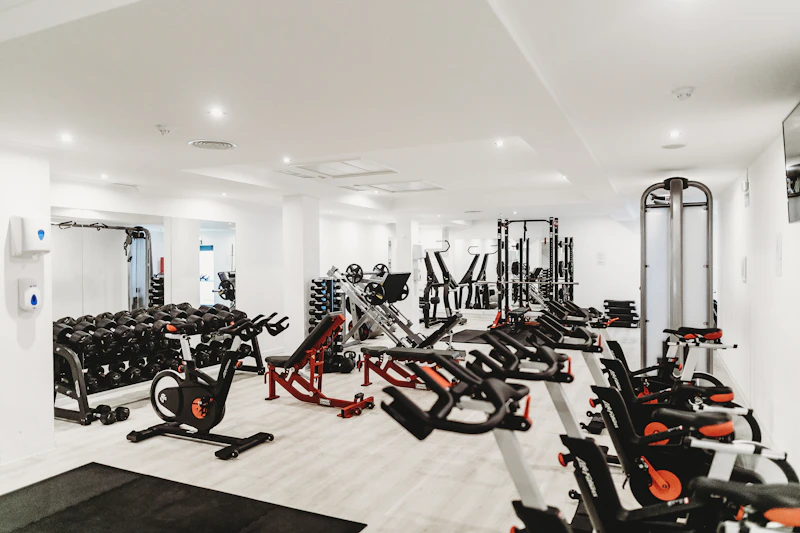
Home workout programmes have exploded in Dubai over the past few years — and for good reason. With gym memberships costing AED 200–600 per month, commute times eating into already-packed schedules, and summer temperatures making outdoor exercise genuinely dangerous, training at home has become the smart choice for thousands of Dubai residents. This comprehensive guide gives you everything you need to build a complete, progressive home workout programme — from absolute beginner to advanced — designed specifically for the Dubai environment and lifestyle.
1. Why Home Training Works — The Dubai Case
The argument for home training is stronger in Dubai than almost anywhere else on Earth. This is a city that combines world-class fitness infrastructure with genuinely prohibitive barriers to using it consistently. Understanding why so many Dubai residents find the gym hard to stick to helps explain why a well-designed home workout programme is not a compromise — it is often the superior solution.
The Time Problem
Dubai is a city of long working hours, significant commutes, and intense social obligations. The average Dubai professional spends 45–90 minutes per day commuting, with peak-hour traffic on Sheikh Zayed Road turning a 15-minute drive into 45 minutes. Adding a gym commute before or after a long workday pushes training time to 2–3 hours of your day. Home training collapses this to the workout itself — typically 30–60 minutes. Research consistently shows that workout adherence is highest when friction is lowest, and training at home removes the biggest friction point entirely.
The Cost Equation
Premium gyms in Dubai Marina, Downtown Dubai, and DIFC cost AED 300–600 per month. Budget clubs run AED 150–250 per month. Over a year, that is AED 1,800–7,200 in membership fees alone, before you factor in personal trainer sessions (AED 200–600 each), activewear, protein supplements, and travel costs. A properly equipped home gym — with resistance bands, adjustable dumbbells, a yoga mat, and a pull-up bar — costs AED 800–2,500 as a one-time investment. If you keep the equipment for two years, you have already paid for itself against even a budget gym membership. Our detailed cost comparison breaks down exactly when home training pays off.
The Weather Factor
Dubai's summer is legitimately extreme. From June through September, temperatures regularly reach 42–47°C with humidity above 70%. Running outdoors becomes medically inadvisable. Cycling to the gym risks heat exhaustion. Even the short walk from air-conditioned car to air-conditioned gym can feel punishing. Home training eliminates all of this. Your workout environment stays at whatever temperature you set — and your consistency through the brutal summer months reflects it. Many Dubai residents who train at home maintain year-round consistency, while gym members often take informal "summer breaks" that derail their progress.
Privacy and Comfort
Dubai's expat community includes many people who are new to exercise, returning after a long break, or managing health conditions like obesity, joint problems, or anxiety. The Dubai gym floor — often filled with highly aesthetic, extremely fit clientele — can feel intimidating for beginners. Home training provides a judgment-free environment where you can focus entirely on your own progress without social pressure. This is particularly significant for women in Dubai who prefer privacy in their exercise environment.
- Gym membership abandonment rate in Dubai: approximately 67% quit within 3 months
- Average Dubai professional has 38 minutes per day available for exercise
- Home workout equipment sales in the UAE grew 340% between 2020 and 2025
- Properly programmed home training matches gym training for strength gains (research: NSCA 2024)
2. The Science Behind Effective Home Workouts
One of the most persistent myths about home training is that it is inherently inferior to gym training for building strength and fitness. The science says otherwise — with two important caveats: you must apply progressive overload, and you must train with sufficient intensity. Get these two elements right, and your home programme will deliver results that match or exceed gym training for most fitness goals.
Progressive Overload: The Non-Negotiable Principle
Progressive overload is the single most important concept in training science. Your body adapts to stimulus — it gets stronger, fitter, and more resilient as a response to challenge that is slightly beyond your current capacity. The moment you stop challenging your body progressively, adaptation stops. This is why doing the same twenty push-ups every day for a year produces negligible results after the first few weeks.
In a gym, progressive overload is easy to track: add 2.5kg to the bar, move to the next dumbbell weight, increase resistance on the cable machine. At home, you must be more creative and systematic, but the principle is identical. Our detailed guide to progressive overload in home training covers every technique for making gains without weights, but the core methods include: increasing reps, increasing sets, slowing tempo (more time under tension), reducing rest periods, increasing range of motion, moving to harder exercise variations, and adding external load through bands or improvised weights.
Bodyweight Training and Strength Development
Research from the Journal of Strength and Conditioning Research has demonstrated that well-programmed bodyweight training produces comparable gains in muscular strength and hypertrophy to resistance machine training over 8–12 week periods. The key variable is not equipment — it is load and progressive challenge. A pistol squat (single-leg squat to floor) creates far more muscular tension in the quadriceps than a leg press at low weight. An archer push-up loads the chest and shoulder more than a flat bench press with light dumbbells.
The limitation of pure bodyweight training for advanced athletes is the difficulty of loading the posterior chain (hamstrings, glutes, lower back) and creating sufficient mechanical tension for larger muscle groups. This is where minimal equipment additions — particularly resistance bands, kettlebells, and adjustable dumbbells — dramatically expand what is possible at home.
Cardiovascular Conditioning at Home
Contrary to popular belief, you do not need a treadmill or outdoor space to maintain excellent cardiovascular fitness at home. Jump rope (one of the most calorie-dense exercises per minute), stair climbing, dance-based HIIT, shadow boxing, and cycle ergometers all provide excellent cardiovascular stimulus in small indoor spaces. Our home cardio guide for Dubai covers every method suitable for apartment living with practical programming included.
Recovery and Rest in Home Training
One advantage often overlooked in home training is the ease of post-workout recovery. You are already home. There is no commute after training. You can transition immediately to proper nutrition, shower, and rest — factors that meaningfully improve adaptation. Research shows that recovery quality is a major determinant of training results, and the lower stress of home training (no traffic, no social pressure, familiar environment) may itself contribute to better hormonal recovery profiles.
3. Beginner Home Workout Programme (Weeks 1–4)
If you are new to exercise or returning after a long break, your initial priority is building movement competency and basic fitness foundations — not maximising intensity. The biggest mistake beginners make is starting too hard, getting excessively sore, and quitting within two weeks. This programme is specifically designed to be challenging enough to produce results while being realistic enough to sustain.
Week 1–2: Foundation Movement Patterns
The human body operates on six fundamental movement patterns: squat, hinge, push, pull, carry, and core stabilisation. Every exercise in your programme should fit one of these categories. In the first two weeks, your goal is to perform each pattern correctly rather than intensely. Three sessions per week, with at least one rest day between each, is the ideal starting point.
Session A — Lower Body + Core:
- Bodyweight squat: 3 sets × 12 reps (focus on depth and knee tracking)
- Glute bridge: 3 sets × 15 reps (pause 2 seconds at top)
- Reverse lunge: 2 sets × 10 reps each leg
- Dead bug: 3 sets × 8 reps each side
- Standing calf raise: 3 sets × 20 reps
Session B — Upper Body + Core:
- Wall push-up or incline push-up: 3 sets × 12 reps
- Doorframe row (or band pull-apart): 3 sets × 12 reps
- Shoulder tap in push-up position: 2 sets × 8 each side
- Prone Y-T-W: 2 sets × 10 reps each position
- Hollow body hold: 3 × 20 seconds
Session C — Full Body:
- Step-up (onto a sturdy chair or step): 3 sets × 10 each leg
- Push-up (knee or full): 3 sets × 10 reps
- Hip hinge (good morning or Romanian deadlift with backpack): 3 sets × 12
- Plank: 3 × 20–30 seconds
- March in place (high knees): 3 × 30 seconds
Week 3–4: Adding Volume and Intensity
By week 3, movement patterns should feel more natural. Increase the training stimulus by adding sets, reducing rest periods, or moving to slightly more challenging exercise variations.
- Increase to 4 sets on main exercises
- Reduce rest from 90 seconds to 60 seconds
- Progress push-ups from wall/incline to full floor push-ups
- Progress squats by adding a 3-second descent (tempo squat)
- Add one circuit session per week (30 seconds work, 15 seconds rest, 5 exercises × 3 rounds)
Schedule your first session of the week on Saturday morning (Dubai's weekend). You are more likely to be rested, less time-pressured, and establishing a positive association with your training. The psychological pattern of starting the week with exercise is powerful for habit formation in the Dubai lifestyle.
Want Expert Guidance for Your Home Programme?
An online personal trainer can design a programme tailored to your goals, equipment, and Dubai schedule — and keep you accountable week by week.
4. Intermediate Programme (Weeks 5–12)
The intermediate phase is where genuine physical transformation begins to accelerate. By this stage, your body has adapted to basic movement patterns, your connective tissue is conditioned for higher loads, and you are ready to introduce more sophisticated training techniques. This phase runs for 8 weeks, progressing through two 4-week blocks.
Block 1 (Weeks 5–8): Strength Endurance Focus
The goal here is building work capacity — the ability to do more total volume. You will train 4 days per week in an upper/lower split, with each session lasting 40–50 minutes.
Upper Body Push (Mon/Thu):
- Push-up variations (standard → diamond → decline): 4 × 15
- Pike push-up: 3 × 12
- Tricep dip (using chair): 3 × 12
- Planche lean hold: 3 × 20 seconds
- Lateral raise with resistance band: 3 × 15
Lower Body + Pull (Tue/Fri):
- Bulgarian split squat (rear foot elevated): 4 × 10 each leg
- Single-leg Romanian deadlift (bodyweight): 3 × 12 each leg
- Nordic curl (negative only): 3 × 5 slow
- Doorframe row or resistance band row: 4 × 15
- Banded face pull: 3 × 20
- Glute bridge with 3-second hold: 4 × 12
Block 2 (Weeks 9–12): Hypertrophy Focus
Shift the emphasis to time under tension and metabolic stress — both key drivers of muscle growth that are readily achievable without heavy weights.
- Introduce 4-second negatives (eccentric phase) on all main exercises
- Add pause reps — 2 seconds at the hardest point of the movement
- Include one drop-set per session: perform a set to near-failure, reduce difficulty immediately and continue
- Introduce superset pairings to increase metabolic stress
- Target 15–20 sets per muscle group per week (spread across sessions)
By week 12, a well-followed intermediate home programme should deliver: 10–15% improvement in upper body pushing strength, 20–25% improvement in lower body strength, measurable improvement in body composition (typically 2–4kg fat loss with concurrent lean mass gain), and dramatically improved movement quality and joint stability.
5. Advanced Home Training (12 Weeks+)
Advanced home training requires ingenuity, progressive variation, and a willingness to embrace difficulty. The good news is that this phase is where home training becomes genuinely exciting — the exercise library available through calisthenics and loaded bodyweight movements is vast, and the skill-strength combination of movements like muscle-ups, handstands, and pistol squats provides a training experience that many gym veterans find more rewarding than barbell work.
Advanced Calisthenics Progressions
The progression ladders in calisthenics — where each exercise is a stepping stone to a more demanding variation — provide built-in progressive overload for years of training. Key progression paths include:
- Push progression: Push-up → Archer push-up → Korean dip → One-arm push-up → Planche push-up
- Pull progression: Band-assisted pull-up → Full pull-up → Weighted pull-up → Archer pull-up → One-arm pull-up
- Squat progression: Bodyweight squat → Pistol squat (assisted) → Full pistol squat → Shrimp squat
- Hinge progression: Hip hinge → Single-leg RDL → Nordic curl → Shrimp to sprint
Weighted Home Training
For advanced trainees who have access to even minimal equipment — adjustable dumbbells, a kettlebell, or resistance bands — the programming possibilities expand enormously. See our guide to minimal equipment workouts in Dubai for comprehensive programming using bands, kettlebells, and dumbbells. Our guide to home strength training in Dubai apartments provides detailed layout and equipment recommendations for your space.
Periodisation at Home
Advanced home trainers benefit greatly from periodisation — the systematic variation of training variables over time to prevent adaptation and reduce injury risk. A simple approach is block periodisation: 4 weeks of hypertrophy focus (12–20 reps, short rest), followed by 4 weeks of strength focus (4–8 reps, slow tempo, full rest), followed by 2 weeks of deload (50% volume). Rotating these blocks over a 10-week cycle keeps the body adapting and the mind engaged.
6. Apartment-Specific Strategies for Dubai
The majority of Dubai's residents live in apartments — often high-rise units with downstairs neighbours, management rules about noise, limited floor space, and building security that restricts certain deliveries of heavy equipment. Effective apartment training requires a specific approach that differs meaningfully from training in a house or dedicated home gym space.
The Noise Problem
Jumping exercises — burpees, jump squats, jumping jacks — create impact noise that travels through concrete floors. In dense apartment buildings, this is a real concern for neighbourly relations and building management. The solution is not to avoid intensity, but to substitute impact with effort. Our detailed apartment workout guide provides complete substitute exercise libraries for every jumping movement, maintaining equivalent cardiovascular and muscular stimulus without impact noise.
Low-impact alternatives that deliver equivalent results:
- Jump squat → Slow tempo squat (4-second descent, 2-second pause, explosive rise to toes only)
- Burpee → Bear crawl to push-up to mountain climber (same muscles, zero impact)
- Box jump → Step-up with explosive drive (same posterior chain activation, no landing impact)
- Jump rope → Shadowboxing (comparable cardiovascular response, silent)
Space Optimisation
Most exercises in an effective programme require nothing more than a 2m × 2m clear floor area — roughly the size of a yoga mat with walking space around it. If your apartment is particularly small, consider:
- Mounting a pull-up bar in a doorframe (no wall damage, AED 80–150 at any UAE sports shop)
- Using a balcony for stretching and mobility work (if the temperature permits — April through October avoid balconies mid-day)
- Keeping resistance bands hanging in a wardrobe rather than storing loose equipment
- Foldable yoga mats that store behind a door
Temperature Management Inside
Dubai apartments can reach 26–28°C inside during summer even with air conditioning running, particularly in buildings with older HVAC systems. When training indoors during summer, set air conditioning to 22°C minimum before your session. Consider a portable fan aimed directly at you during the workout. Wear light, moisture-wicking clothing. Keep hydration immediately accessible. A 500ml water bottle consumed before training and 250ml every 15 minutes during training maintains adequate hydration for typical home session durations of 45 minutes.
7. Training Through Dubai's Summer Heat at Home
Even with indoor training, Dubai's summer months (June–September) present specific challenges that smart programming can address. The extreme ambient heat outside affects internal temperature, mood, and motivation even when you are working out in an air-conditioned apartment. Understanding the seasonal adjustments that Dubai-specific home trainers make helps you maintain consistency year-round.
Morning Training in Summer
Dubai summer mornings — 6:00 to 7:30 AM — are the most productive window for home training. The building is cooler, you are cognitively fresh, the day has not yet accumulated stress, and you have the psychological benefit of completing your workout before the day gets busy. Many Dubai professionals who have shifted to home training report that morning sessions are the only consistent window they can protect during the intense summer work season.
Reducing Intensity During Ramadan
Ramadan presents specific challenges for home trainers who are fasting. Training intensity should be reduced by approximately 20–30% during fasting hours. The optimal training window for fasting individuals is either shortly before Iftar (using stored glycogen with Iftar as immediate recovery nutrition) or 1–2 hours after Iftar (allowing some digestion while leveraging the post-Iftar energy window). Focus on skill work, mobility, and lower-intensity strength sessions during the day. Save any higher-intensity home HIIT sessions for post-Iftar timing.
Hydration Strategy for Indoor Summer Training
Even in air conditioning, core body temperature rises during exercise. Summer humidity in Dubai — often 70–80% even indoors in some buildings — reduces sweat evaporation efficiency. Practical hydration protocol for home training in Dubai summer:
- Pre-workout: 400–600ml water in the hour before training
- During: 150–200ml every 15 minutes for sessions over 30 minutes
- Post-workout: Replace approximately 150% of sweat loss (weigh yourself before and after if tracking this precisely)
- Electrolyte supplementation (sodium, potassium, magnesium) becomes important for sessions exceeding 60 minutes in summer
Download Our Free Home Workout Guide
Get our comprehensive 12-week home training plan designed specifically for Dubai apartments — no equipment required to start.
8. Essential Equipment Guide — What to Buy in Dubai
You do not need equipment to start training at home. But strategic equipment purchases dramatically expand your programming options, enable heavier loading as you progress, and allow you to train more muscle groups effectively. Here is a tiered guide to building your home training toolkit, with Dubai prices and where to buy.
Tier 1: Zero Investment (Start Today)
Your own bodyweight is sufficient for a complete beginner programme. You need a clear 2m × 2m floor area, comfortable exercise clothing, and a phone or laptop to follow along with a programme. Cost: AED 0.
Tier 2: Starter Kit (AED 300–600)
| Item | Purpose | Dubai Price | Where to Buy |
|---|---|---|---|
| Yoga/exercise mat (6mm+) | Floor protection, grip | AED 80–200 | Decathlon, Amazon.ae |
| Resistance band set (5 bands) | Upper body pulling, assistance | AED 50–150 | Decathlon, Fitness First Pro Shop |
| Pull-up bar (doorframe) | Upper body pulling | AED 80–180 | Amazon.ae, Carrefour |
| Jump rope (speed rope) | Cardio, coordination | AED 40–150 | Decathlon, Noon.com |
Tier 3: Intermediate Kit (AED 800–2,000)
| Item | Purpose | Dubai Price | Notes |
|---|---|---|---|
| Adjustable dumbbells (2.5–25kg) | Full-body loading | AED 600–1,200 | Best single equipment purchase |
| Kettlebell (16kg or 24kg) | Swings, carries, Turkish get-ups | AED 150–300 | Start with one weight |
| Gymnastic rings | Push, pull, dip progressions | AED 120–250 | Mounted in doorframe or ceiling |
| Ab wheel | Core strength | AED 40–80 | Excellent bang for buck |
For a comprehensive guide to building your home gym space in a Dubai apartment, including space-saving layouts and the best brands available in the UAE, see our Dubai home gym equipment buying guide. We also recommend reading our guide to setting up a home gym in a Dubai apartment for spatial planning and practical setup advice.
Tier 4: Advanced Home Gym (AED 3,000–8,000)
At this level, you are equipping a genuine strength training space: a squat rack or power cage, barbell and plate set, bench, cable machine, or multi-gym. This requires a minimum 4m × 3m dedicated space — uncommon in most Dubai apartments but achievable in villas, townhouses, or dedicated garage/storage spaces. See our full equipment guide for specific product recommendations at this tier.
9. Nutrition for Home Training in Dubai
Training at home does not change the fundamental principles of nutrition for fitness — but the Dubai context adds layers of practical complexity that deserve specific attention. Whether your goal is fat loss, muscle building, or general health, your nutrition strategy needs to account for Dubai's food environment, cultural calendar, and climate.
Protein: The Foundation
Protein intake is the most important nutritional variable for both fat loss and muscle building. Current evidence supports a target of 1.6–2.2g of protein per kilogram of bodyweight per day for active individuals engaged in resistance training. For a 75kg person, that is 120–165g of protein daily. This is achievable through whole foods — chicken, fish, eggs, legumes, dairy — and can be supplemented with protein shakes when whole food targets are difficult to hit. Dubai supermarkets (Carrefour, Waitrose, Spinneys, LuLu) stock all major protein sources, and halal options are universally available across the city.
Meal Timing for Home Training
When you train at home, you have the significant advantage of being near your kitchen for immediate post-workout nutrition. The post-exercise window (30–60 minutes after training) is optimal for protein-rich food — a combination of fast-digesting protein (whey shake, eggs, Greek yogurt) and moderate carbohydrates promotes muscle protein synthesis and glycogen replenishment. This is harder to execute at a gym 30 minutes from home but trivially easy when training in your apartment.
Dubai-Specific Nutritional Considerations
The UAE food environment presents specific challenges: heavy restaurant culture, large portion sizes, frequent social eating obligations, and a food delivery ecosystem (Talabat, Deliveroo, Noon Food) that makes processed food extremely accessible. Home trainers in Dubai often find that training at home strengthens their nutritional habits because they are already in the kitchen and more likely to prepare their own food on training days.
During Ramadan, home trainers should shift their nutritional timing significantly. The Suhoor meal (pre-dawn) should be protein-rich and include slow-digesting carbohydrates for sustained energy through the fasting day. Iftar should include immediate simple carbohydrates to restore blood glucose, followed by a balanced meal 30–60 minutes later. Training volume and intensity should be reduced by approximately 20% during Ramadan to accommodate the nutritional limitations.
10. When to Add an Online Personal Trainer
Home training and personal training are not mutually exclusive. Online personal training has become one of the fastest-growing fitness services in Dubai, combining the convenience and cost savings of home training with the expertise, programme design, and accountability of working with a professional coach.
What Online Personal Training Provides
- Bespoke programme design: A programme built specifically for your goals, equipment, schedule, and physical condition — far superior to following a generic YouTube video
- Form analysis: Video review of your technique with detailed feedback, preventing the bad habits that self-directed home trainers commonly develop
- Progressive programming: Regular updates to your programme as you adapt, ensuring continuous challenge and progress
- Accountability: Weekly check-ins, progress tracking, and the motivational effect of knowing someone is reviewing your logs
- Nutritional guidance: Many online PTs in Dubai offer integrated nutrition coaching — food log analysis, macro targets, meal suggestions
Online PT Costs in Dubai
Online personal training in Dubai typically costs AED 400–1,200 per month for 4 weekly check-ins and a bespoke programme. This is significantly less than in-person training (AED 1,600–4,800 per month for equivalent frequency) while delivering comparable results for non-beginners who have already established basic movement competency. Browse our directory of verified personal trainers in Dubai who offer online coaching services.
Signs You Need Professional Guidance
Consider adding an online coach if you have been training for 3+ months without measurable progress, if you experience recurring pain or discomfort during exercises, if you have a specific performance goal (race, event, body composition target) with a deadline, or if you find motivation and consistency consistently difficult. A good coach solves all of these problems simultaneously. You can also contact our team for a personalised trainer recommendation based on your goals and budget.
- Apartment Workouts Dubai — No Equipment, No Noise, Full Results
- Bodyweight Strength Programme Dubai — 12-Week Plan
- Home Cardio Dubai — Effective Indoor Workouts for Any Space
- Minimal Equipment Workouts Dubai — Bands, Kettlebells & Dumbbells
- Home HIIT Programme Dubai — 6-Week Fat Loss Plan
- Progressive Overload in Home Training Dubai
Get Your Free Home Training Programme
Download our 12-week beginner to intermediate home programme designed for Dubai apartments, or subscribe to our weekly newsletter for ongoing home training content.
Frequently Asked Questions
Can I get fit training at home in Dubai without a gym?
Absolutely. With a structured programme using bodyweight exercises, resistance bands, and progressive overload principles, you can build significant strength, improve cardiovascular fitness, and transform your physique without ever stepping inside a gym. Many Dubai residents train exclusively at home due to convenience, cost savings, and the city's extreme summer heat. The key is following a structured programme that applies progressive overload rather than just doing random exercises.
What is the best home workout for a Dubai apartment?
The best apartment workouts in Dubai minimise jumping (for noise and floor impact) while maximising intensity. Slow-tempo bodyweight exercises, resistance band circuits, and controlled movements like slow squats, pike push-ups, and Bulgarian split squats deliver excellent results without disturbing neighbours or requiring much floor space. Our apartment workout guide has complete noise-free programmes for every fitness level.
How much equipment do I need for a home gym in Dubai?
You can get excellent results with zero equipment using bodyweight training alone. Adding a set of resistance bands (AED 50–150), a pair of adjustable dumbbells (AED 300–800), and a yoga mat (AED 80–200) covers 95% of training needs. A kettlebell or pull-up bar expands options further without taking much space. Our full home gym equipment buying guide covers every option available in Dubai with prices and stockist information.
How do I stay motivated working out at home in Dubai?
Structure is everything. Follow a written programme with scheduled sessions, track your progress in a training log, set 4-week mini goals, and consider hiring an online personal trainer for accountability. Dubai's fitness community is also very active on social media, and connecting with virtual training groups helps maintain motivation. Scheduling your training sessions in your calendar as non-negotiable appointments — just as you would a work meeting — is the single most effective habit strategy.
Should I train at home or join a gym in Dubai?
Both have merit. Home training offers convenience, cost savings (gym memberships in Dubai cost AED 200–600/month), and time efficiency. Gyms offer more equipment variety, professional coaching, and social motivation. Many Dubai residents do both — home training for busy weekdays and gym visits for more structured strength sessions on weekends. Our detailed cost comparison helps you decide which option makes most financial and practical sense for your situation.
Start Your Home Workout Programme Today
Home training in Dubai is not a fallback — it is a genuine, scientifically validated approach to building fitness that suits the city's lifestyle perfectly. The combination of Dubai's extreme summer heat, time-pressured professional culture, high gym costs, and predominantly apartment-based living makes the case for home training stronger here than almost anywhere else in the world.
The most important step is the first one: begin with the beginner programme outlined in this guide, commit to three sessions per week for four weeks, and track your progress honestly. By the end of four weeks, you will have established a habit, improved your fitness measurably, and built the foundation for everything that follows.
If you want expert guidance, consider browsing our directory of Dubai-based personal trainers who offer online coaching services. Many of our verified trainers specialize in home and apartment training specifically. For further reading, explore our complete series of home training guides covering apartment workouts, bodyweight strength programmes, home cardio, minimal equipment training, home HIIT, and progressive overload at home. You can also contact our team directly for a personalised recommendation.