Powerlifting in Dubai has evolved from a niche pursuit of competitive athletes to a mainstream strength discipline embraced by thousands of residents. The sport's focus on three fundamental human movements — the squat, bench press, and deadlift — combined with its clear performance metrics (how much weight can you lift?) and welcoming community, has made it one of the fastest-growing fitness disciplines in the UAE. This guide covers Dubai's best powerlifting gyms, how to find qualified coaching, and how to get started with the sport whether your goal is competition or simply building serious strength.
Table of Contents
- What Is Powerlifting? The Big Three Lifts Explained
- Best Powerlifting Gyms in Dubai
- Finding a Powerlifting Coach in Dubai
- Powerlifting Programming: How It Works
- Powerlifting Equipment Guide for Dubai
- Powerlifting Nutrition in Dubai's Climate
- Competing in Powerlifting in the UAE
- Powerlifting vs CrossFit: Complementary Disciplines
- Frequently Asked Questions
What Is Powerlifting? The Big Three Lifts Explained
Powerlifting is a strength sport contested across three movements: the squat, bench press, and deadlift. In competition, athletes attempt three lifts in each movement, with their best successful attempt in each counting toward a total. The athlete with the highest combined total in their bodyweight category wins. The sport is governed internationally by the IPF (International Powerlifting Federation) and regionally by UAE Powerlifting, affiliated with the Gulf Powerlifting Federation.
Unlike Olympic weightlifting, which emphasizes explosive speed-strength and technical complexity, powerlifting prioritizes raw maximal strength across slow, controlled movements. This makes it more accessible to beginners and particularly well-suited to athletes with athletic backgrounds in rugby, football, or general strength training. The fundamental movements are ones every competent trainer teaches from day one — the sport simply takes them to their absolute extreme.
The Squat
Bar positioned on the upper back, athlete squats until hip crease passes below knee joint, then stands to full extension. The most technically demanding of the three lifts. Common mistakes: insufficient depth, forward lean, knee cave. Training the squat builds massive quad, glute, hamstring, and back strength.
The Bench Press
Lifter lies on bench, lowers bar to chest, pauses on command, and presses to full lockout. Requires significant pectoral, tricep, and anterior deltoid strength. The pause requirement distinguishes competition bench from gym bench press — touching and going is not permitted. Training the bench builds a powerful upper body pressing foundation.
The Deadlift
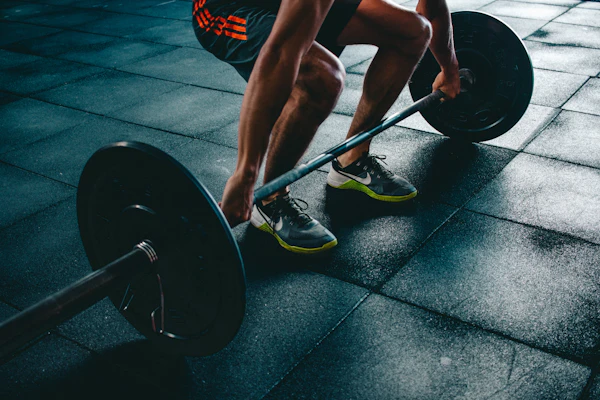
Bar lifted from the floor to standing position with locked hips and knees. Both conventional (feet narrow, hands outside legs) and sumo (feet wide, hands inside legs) stances are permitted. The deadlift tests full posterior chain strength — glutes, hamstrings, lower back, and grip. Most people deadlift their heaviest weight of the three lifts.
Best Powerlifting Gyms in Dubai
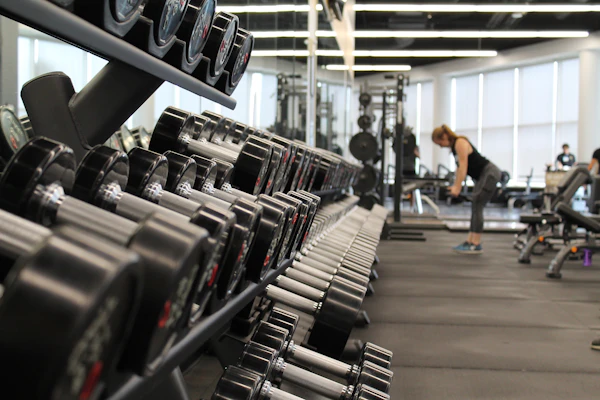
Not all gyms are created equal for powerlifting. The sport requires dedicated power racks or squat stands, calibrated competition barbells (20kg for men, 15kg for women), bumper or iron plates, a flat bench with uprights, and ideally a competition-spec deadlift platform. Facilities that cater to serious strength athletes invest in this equipment and foster a culture where heavy barbell work is not just tolerated but celebrated.
Commercial gyms in Dubai — Fitness First, GymNation, NAS Sports Complex — provide access to power racks but vary significantly in barbell quality and rack availability. GymNation's spacious floor plans and lower membership costs (AED 99–159/month) make it a popular choice for powerlifters who train in off-peak hours. NAS Sports Complex in Oud Metha has consistently been recognized for its strength-focused facilities and allows chalk use — a rarity in commercial gyms.
Specialist strength gyms offer the best environment for serious powerlifting. Several boutique strength gyms have emerged in Dubai's industrial zones (Al Quoz, Al Barsha) specifically catering to powerlifters, weightlifters, and strength athletes. These facilities typically have: multiple competition-spec power racks, calibrated IPF-approved barbells, a chalk bucket, strongman equipment, and a coaching culture that values technique and programming over aesthetics.
- Equipment: Competition-spec barbell (knurling marks at 810mm apart), power rack with safety bars, deadlift platform, calibrated plates
- Chalk allowed: Essential for grip on heavy deadlifts — many commercial gyms prohibit it
- Culture: Do other members squat deep? Do coaches correct movement? Is heavy training celebrated?
- Programming support: Does the gym offer powerlifting-specific coaching or programmes?
- Hours: Powerlifting sessions can run 2+ hours — flexible opening hours matter
Finding a Powerlifting Coach in Dubai
The difference between self-programmed powerlifting and coached powerlifting is enormous, particularly in the first two years. A qualified powerlifting coach provides: technically correct movement patterns from the start (bad habits are difficult to unlearn), appropriate programming that builds strength without accumulating excessive fatigue, competition preparation if you choose to compete, and an experienced eye to identify weak points and address them systematically.
When evaluating a Dubai powerlifting coach, prioritize: their own competitive experience (have they competed and totalled in a meaningful weight class?), their certification (IPF Technical Official certification, NSCA-CPT, or equivalent), evidence of coaching success with clients at your level, and their programming philosophy. Effective powerlifting coaching is evidence-based and periodized — if a coach just has you "lifting heavy whenever" without progressive structure, their coaching effectiveness is questionable.
Dubai has a small but growing community of dedicated powerlifting coaches. Many operate from specialist strength gyms or offer online coaching for programme design with in-person check-ins. Rates range from AED 200–400 per session for in-person coaching to AED 800–1,500 per month for online programming with video review. Find strength coaches on GetFitDXB and filter for powerlifting or barbell training specialization.
Powerlifting Programming: How It Works
Effective powerlifting programming follows principles that differ significantly from general fitness programming. Understanding these principles helps you train intelligently whether you have a coach or are programming yourself as an intermediate lifter.
Specificity: Most of your training should directly develop the competition movements. Squats, bench presses, and deadlifts should comprise the majority of your weekly training volume. Accessory exercises support the competition lifts but don't replace them.
Progressive overload: The foundation of all strength development. Powerlifting programmes systematically increase weight, volume, or intensity over planned training cycles (typically 12–16 weeks leading to a peak). Linear progression (adding small weight each session) works for beginners; intermediate and advanced lifters use wave loading and periodization to manage fatigue while building strength.
Periodization: Organizes training into phases with different emphases. A typical 16-week competition prep cycle might include: 6 weeks of hypertrophy work (higher reps, moderate load), 6 weeks of strength development (lower reps, heavier load), and 4 weeks of peaking (very low reps, near-maximum loads, with a deload week before the meet).
| Programme | Level | Structure | Weekly Frequency |
|---|---|---|---|
| Starting Strength / StrongLifts | Beginner | 3×5 linear progression on big 3 | 3 days |
| 5/3/1 (Wendler) | Intermediate | 4-week wave loading cycles | 3–4 days |
| GZCL Method | Intermediate | Tiered volume/intensity structure | 4 days |
| Sheiko | Intermediate–Advanced | High-volume, competition-specific | 4–5 days |
| Conjugate / Westside | Advanced | Max effort + dynamic effort days | 4 days |
Powerlifting Equipment Guide for Dubai
Powerlifting equipment serves both protective and performance-enhancing functions. For beginners, minimal equipment is needed — the goal is building movement skill and raw strength, not maximizing the mechanical assistance of gear. As you advance toward competition, understanding approved and raw equipment becomes important.
Shoes are the single most impactful equipment purchase for a beginning powerlifter. Squat shoes (elevated heel, typically 0.75" or more) improve squat mechanics by allowing greater ankle dorsiflexion and a more upright torso — crucial for hitting depth with heavy weight. Deadlift shoes are flat-soled with minimal cushion to maximize force transfer from the floor. Many Dubai powerlifters use barefoot-style shoes or Converse Chuck Taylors for deadlifting. Good squat shoes (Adidas Adipower, Nike Romaleos, Reebok Legacy Lifter) are available from Sun & Sand Sports at AED 500–900.
Belt: A lever or prong belt (typically 10mm thick, 4" wide for powerlifting) supports the lower back and core during heavy squats and deadlifts by providing an external reference for intra-abdominal pressure generation. For raw powerlifting, single-ply leather or suede belts are approved. Available from AED 200–500 online or through specialist suppliers. Do not wear a belt until you can squat and deadlift with technically sound technique without it.
Wrist wraps and knee sleeves: Wrist wraps support the wrist during heavy bench press. Knee sleeves provide warmth, compression, and modest mechanical assistance during squats. Both are approved in raw powerlifting. Available locally at Sun & Sand Sports and Decathlon from AED 80–250.
Powerlifting Nutrition in Dubai's Climate
Powerlifting nutrition differs from general fitness nutrition in one important way: weight class management. Since powerlifting is contested by bodyweight category, what you eat influences not just your performance but whether you compete in a heavier or lighter weight class — and the strength-to-bodyweight ratio that determines your competitive positioning.
For most recreational powerlifters, the goal is simple: eat enough protein to support muscle growth and recovery (1.6–2.2g/kg), consume sufficient total calories to fuel training and maintain or slightly increase body mass, and don't obsess over bodyweight class management until you're actually preparing for a meet.
Experienced Dubai powerlifters preparing for competition often work with a sports nutritionist in the weeks before a meet to optimize body composition and manage any water weight for weigh-in. For more on muscle-building nutrition in Dubai or to find a nutrition coach, explore GetFitDXB's directory.
Ready to Get Serious About Powerlifting?
Connect with Dubai's specialist strength and powerlifting coaches for technique coaching, programming, and competition preparation. Your first total is closer than you think.
Competing in Powerlifting in the UAE
The UAE Powerlifting Federation (UAEPF) governs competitive powerlifting in the country, affiliated with the Asian Powerlifting Federation and IPF. Competitions are held multiple times per year, typically at sports venues in Dubai and Abu Dhabi, with weight classes from 59kg through 120kg+ for men and 47kg through 84kg+ for women. Both raw (no supportive gear) and equipped (multi-ply suits and knee wraps) divisions are offered.
Entering your first powerlifting competition in Dubai requires: UAEPF registration (apply through the federation website), meeting minimum total standards if applicable, and completing the technical package (flight selection, opening attempts) submitted days before the meet. Most local meets welcome first-time competitors in the Open division regardless of experience level — the sport's culture of inclusion means absolute beginners are warmly welcomed.
Competition day follows a strict format: weigh-in 24 hours or 2 hours before the meet (depending on the meet format), equipment check, warm-up, and then flights based on opening attempts. Having a handler — an experienced coach or training partner who manages your warm-up weights and communicates with the score table — is strongly recommended for first-time competitors.
Powerlifting vs CrossFit: Complementary Disciplines
Powerlifting and CrossFit are often positioned as alternatives, but in practice many Dubai athletes pursue both. The strength foundation built through powerlifting-style training — technically proficient squats, deadlifts, and pressing — directly improves performance on CrossFit WODs that include heavy barbell work. Conversely, CrossFit's metabolic conditioning work improves the work capacity and recovery that supports higher powerlifting training volumes.
If you're a CrossFitter curious about powerlifting, the most efficient path is to add one dedicated powerlifting session per week focused on technique and building to a true maximum in the squat or deadlift. Over 8–12 weeks, this typically produces 10–20% increases in heavy barbell performance that carry directly into WOD performance. Read the full CrossFit and Strength Training guide for a comprehensive overview of the relationship between these disciplines in Dubai's fitness scene.