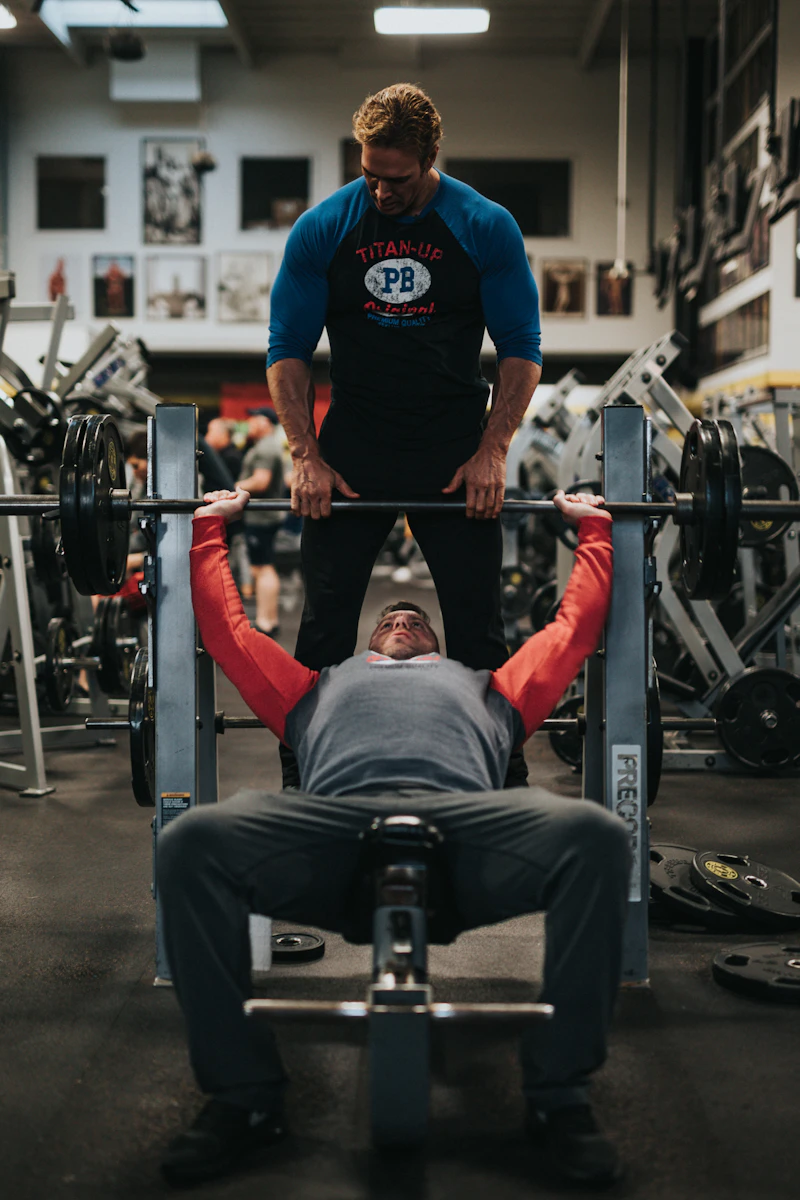
This guide is part of our complete sports injury rehabilitation guide for Dubai. Rotator cuff injuries are among the most common complaints seen in Dubai physiotherapy clinics — particularly in the city's large gym-going population and overhead sports community. Whether you're dealing with impingement syndrome, a partial tear, or recovering from full-thickness repair surgery, this guide covers the complete rehabilitation pathway.
1. The Rotator Cuff: Anatomy & Common Injuries
The rotator cuff is a group of four muscles that surround and stabilise the glenohumeral (shoulder) joint: supraspinatus (abduction), infraspinatus and teres minor (external rotation), and subscapularis (internal rotation). Together, they create a dynamic "cuff" that compresses the humeral head into the glenoid socket, providing stability during movement while allowing the large prime movers (deltoid, pectoralis, latissimus dorsi) to generate power.
The supraspinatus is by far the most commonly injured rotator cuff tendon, typically at its insertion into the greater tuberosity — an area of relative avascularity known as the "critical zone" which makes tendon healing slower. The infraspinatus is the second most commonly affected. Subscapularis tears are less common but increasingly recognised with the rise of arthroscopic surgical assessment.
Injury Classification
- Subacromial impingement syndrome (SIS): Pain with overhead movement due to compression of the bursa and rotator cuff tendons under the acromion. Often the diagnosis given before imaging confirms tear status. Responds well to physiotherapy in 80–90% of cases.
- Partial-thickness tears: Involve less than 50% (or more than 50%) of the tendon thickness. Critical threshold: >50% thickness tears have significantly higher failure rates with conservative management.
- Full-thickness tears: Complete disruption of the tendon. May be small (<1 cm), medium (1–3 cm), large (3–5 cm), or massive (>5 cm). Surgical repair is generally recommended for active individuals under 70 with full-thickness tears.
- Massive cuff tears: Involving multiple tendons. Complex surgical and rehabilitation challenge; not covered in detail in this guide.
Dubai's gym culture, with its emphasis on bench pressing, overhead pressing, and pull-up work, combined with the sedentary desk-working hours of many expat professionals (which creates scapular dyskinesia and forward head posture), creates ideal conditions for rotator cuff pathology. Padel tennis — arguably Dubai's fastest-growing sport — also places significant overhead demands on the shoulder. CrossFit, swimming, and throwing sports (cricket is hugely popular in the South Asian expat community) add to the load. Prevalence studies estimate 30% of asymptomatic people over 60 have full-thickness rotator cuff tears — many unaware.
2. Diagnosis & Imaging in Dubai
Accurate diagnosis is essential before beginning a rehabilitation programme. Clinical examination by a skilled physiotherapist or sports medicine physician — using tests like the Neer test, Hawkins-Kennedy test, empty can test, and external rotation resistance test — can reliably identify the likely tendon involved. However, MRI remains the gold standard for confirming tear grade and extent.
MRI of the shoulder at Dubai's private hospitals and imaging centres typically costs AED 1,200–2,500. Many international health insurance plans cover this at 80–100% after deductible. Ultrasound (AED 300–600) is an excellent real-time imaging modality for rotator cuff assessment that can be performed in the physiotherapy clinic itself at specialist centres — ask your physiotherapist whether they have access to diagnostic ultrasound.
3. Conservative Rehabilitation Protocol
Conservative rehabilitation is the first-line treatment for subacromial impingement syndrome and partial-thickness tears. Research consistently shows that a structured physiotherapy programme achieves equivalent outcomes to surgery for these presentations in 85–90% of patients at 1-year follow-up. Commit to the programme before considering surgical intervention.
Phase 1: Pain Modulation & Postural Correction (Weeks 1–4)
The initial phase focuses on reducing pain and inflammation, correcting the postural contributors to shoulder pathology, and beginning gentle shoulder mobility work. Key interventions include: activity modification (avoiding the specific movements that provoke pain), Kibler's scapular exercises (wall slides, scapular retraction), cervicothoracic spine mobilisation (upper back stiffness directly contributes to shoulder impingement), and patient education about posture at work and during exercise.
Phase 2: Rotator Cuff & Scapular Strengthening (Weeks 4–12)
This is the cornerstone of rotator cuff rehabilitation. Exercises must follow a specific hierarchy: scapular stabilisers first (trapezius lower and middle, serratus anterior), then rotator cuff strengthening, then progressive loading of prime movers. Rushing to bench press and shoulder press before the stabilisers are adequate is the most common reason for failed conservative rehabilitation.
Key Phase 2 exercises include: sidelying external rotation (starting with 1–2kg, progressing to 5–8kg over 8–12 weeks), banded external rotation in neutral and in 90° abduction, face pulls with cable machine (available at all Dubai gyms), prone Y-T-W exercises, and serratus anterior punches/push-up plus exercises.
Phase 3: Progressive Loading & Return to Full Activity (Weeks 12–24)
Phase 3 gradually reintroduces overhead loading, throwing, or sport-specific movements depending on the patient's goals. For gym-goers, this means carefully reintroducing overhead pressing (typically beginning with landmine press before progressing to dumbbell overhead press), pull-ups, and eventually barbell work. Pain should not exceed 2–3/10 during any exercise, and should settle within 24 hours. If it does not, the load or volume was too much.
Working with a Shoulder Specialist in Dubai?
Find verified physiotherapists and sports rehabilitation specialists experienced in rotator cuff rehabilitation across Dubai.
4. Post-Surgical Rehabilitation
Rotator cuff repair surgery is performed arthroscopically in most Dubai hospitals, with a typical hospital stay of less than 24 hours. Post-operative rehabilitation follows a strict protocol that respects the biological timeline of tendon-to-bone healing — the most critical constraint on progression.
| Post-Op Phase | Timeline | Restrictions & Key Goals |
|---|---|---|
| Maximum Protection | 0–6 weeks | Sling immobilisation; pendulum exercises only; no active shoulder movement against gravity |
| Moderate Protection | 6–12 weeks | Progressive passive then active-assisted ROM; supine pulley exercises; elbow/wrist mobility |
| Minimum Protection | 12–20 weeks | Active strengthening begins; scapular stabilisers first; rotator cuff exercises introduced |
| Strengthening | 20–32 weeks | Progressive resistance; sport-specific movements; isokinetic testing |
| Return to Sport | 6–12 months | Full return depending on sport demands; overhead athletes at the longer end |
The key difference between conservative and post-surgical rehabilitation is the protected phase: after surgical repair, no active shoulder elevation against gravity is permitted for 4–6 weeks to protect the healing tendon-to-bone interface. This phase cannot be rushed regardless of how "good" the patient feels. Noncompliance is the primary cause of re-tear after surgery.
5. Key Exercises by Phase
For both conservative and post-surgical patients, the following exercise progression forms the backbone of rotator cuff rehabilitation. All exercises below can be performed at any Dubai gym with minimal equipment — bands and cables are sufficient for most phases.
- Pendulum exercises: Gentle gravity-assisted shoulder mobility during early post-surgical phase. Lean forward, let arm hang, and make small circles. Do not actively swing.
- Sidelying external rotation: The foundational rotator cuff exercise. Start light (1–2kg) and progress slowly. 3 sets × 15–20 reps, controlling through full range.
- Banded external rotation in scapular plane: Band attached at elbow height, arm in 90° abduction. External rotate against resistance. Essential for overhead athlete return.
- Face pulls: Cable machine, rope attachment at forehead height. Pull rope to face while externally rotating. Trains posterior rotator cuff and rear deltoid simultaneously.
- Prone Y-T-W: Lying prone on a bench, arms in Y, T, and W positions. Emphasises lower and middle trapezius — crucial for scapular upward rotation. Start with bodyweight; add 1–2kg plates when bodyweight is easy.
- Serratus punches: Lying supine, push arm toward ceiling rounding the shoulder. Activates serratus anterior — critical for scapular upward rotation and preventing impingement.
- Landmine press: Excellent early overhead pressing exercise for shoulder rehabilitation. The arc of movement naturally respects shoulder joint mechanics.
For gym programme integration and how these exercises fit into broader training, see our guides on shoulder injury prevention and general injury prevention for gym beginners in Dubai.
6. Return to Overhead Sport
For padel players, tennis players, swimmers, CrossFit athletes, and cricket players — the most shoulder-demanding sports in Dubai's active community — return to sport requires specific criteria beyond simple pain resolution. Isokinetic strength testing (external/internal rotation ratio should be ≥65–75%), functional reaching tests, and a sport-specific gradual loading programme are all recommended before full return to competition.
Padel players (an enormous and growing population in Dubai) should not return to match play until they can perform 10 pain-free overhead smashes and 10 pain-free flat drives without fatigue. A graduated return from driving practice to net play to baseline rallies to match play is strongly recommended, supervised by a physiotherapist who understands padel mechanics. The sport's unique shoulder demands — particularly the repetitive overhead smash — make premature return risky.
7. Dubai-Specific Considerations
Several factors make rotator cuff rehabilitation unique in Dubai. The high prevalence of air-conditioned environments (gyms at 18–22°C) can cause shoulder muscles to feel tighter and more vulnerable — always warm up thoroughly regardless of the season. Swimming rehabilitation, while ideal for rotator cuff recovery, requires specific guidance on stroke mechanics: freestyle swimming requires thorough shoulder mobility and adequate strength before being safe; backstroke is often better tolerated early in rehabilitation due to its open shoulder position.
For Arabic-speaking patients, many Dubai clinics now offer consultations and exercise instructions in Arabic — ask your clinic about language support. Ramadan considerations: rehabilitation sessions scheduled after Iftar allow fully hydrated patients with optimal energy levels, which is important for quality neuromuscular training sessions.
Connect with a verified physiotherapist via GetFitDXB's physiotherapy directory or browse wellness specialists near you in Downtown Dubai. For the broader context of injury rehabilitation in Dubai, including ACL, disc herniation, and stress fractures, see the complete sports injury rehabilitation guide. Related reading: ACL Rehabilitation Protocol, Disc Herniation Exercise Guide, and our guide to dry needling for trigger points in Dubai which is often used as an adjunct to rotator cuff rehabilitation.
Download Our Free Dubai Fitness Guide
Get our comprehensive starter guide — includes workout templates, injury prevention checklists, and Dubai-specific training tips.