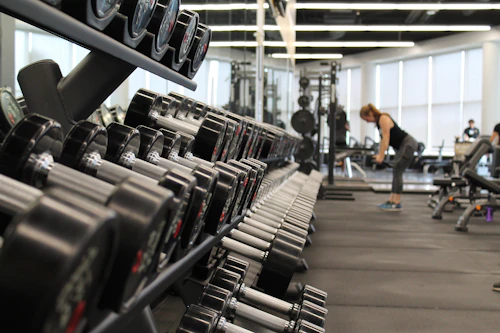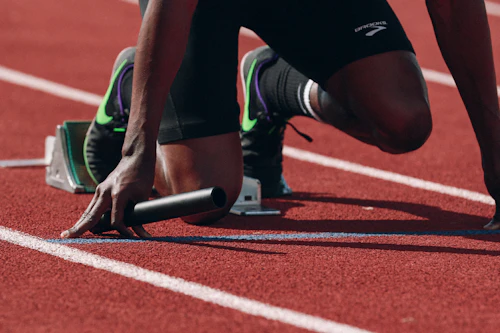
In a city where competition is fierce and athletic excellence commands respect, speed and agility can be the difference between winning and finishing second. Whether you're a footballer chasing a professional contract, a padel player aiming for tournament victory, a basketball enthusiast looking to dominate the court, or an amateur athlete simply wanting to move faster and more explosively, this guide shows you exactly how to develop world-class speed and agility in Dubai.
1. What Is Speed & Agility Training?
Speed and agility training, often abbreviated as SAQ training, is a specialised fitness discipline that develops three foundational athletic capacities: maximum speed (your top-end velocity), acceleration (how quickly you reach that speed), and agility (your ability to change direction explosively while maintaining control).
These aren't one-dimensional skills. Speed requires optimal sprint mechanics, muscle power, and neurological efficiency. Agility demands proprioception, reactive strength, dynamic stability, and sport-specific footwork. Together, they form the foundation of athletic performance across virtually every field sport.
SAQ training differs fundamentally from general cardio or strength work. While a treadmill run or circuit class builds cardiovascular fitness, SAQ training specifically teaches your neuromuscular system to recruit muscle fibres faster, contract with greater force, and coordinate complex movements with precision. It's neurological training dressed as athletics.
Speed and agility aren't luxuries reserved for sprinters or elite footballers. Reaction time, multi-directional movement, and explosive power matter in tennis, basketball, padel, rugby, swimming, golf, and even strength sports. And for non-athletes, SAQ training improves functional fitness, injury resilience, and sports enjoyment at any age.
2. Benefits of Speed & Agility Work
Building speed and agility isn't just about winning matches. The benefits cascade across athletic performance, injury prevention, and metabolic health.
Reaction Time & Decision-Making
Agility drills train your body to respond faster to environmental cues. A padel player can reach the net faster. A defender can track a winger's cut. Your nervous system adapts to process stimulus and execute movement quicker — a skill that transfers directly to sport and life.
Change of Direction & COD Power
The ability to decelerate, plant your foot, and change direction explosively is a cornerstone of field sports. SAQ training teaches eccentric strength (absorbing force) and concentric power (generating force), making your cuts sharper and your transitions smoother.
Sport-Specific Performance Gains
Studies consistently show that athletes who integrate SAQ training improve their sport-specific performance by 5–15% within 8–12 weeks. Faster acceleration. Quicker first step. Better rhythm and timing. These advantages compound over a season.
Calorie Burn & Metabolic Boost
SAQ training is metabolically demanding. High-intensity sprint and agility work elevates your heart rate, depletes muscle glycogen, and creates significant EPOC (excess post-exercise oxygen consumption). Result: elevated calorie burn long after the session ends.
Injury Prevention
Stronger stabiliser muscles, better proprioception, and improved movement mechanics reduce injury risk. Athletes who train SAQ properly experience fewer ankle sprains, ACL injuries, and hamstring pulls.
3. Key Speed Training Drills
Raw speed depends on three elements: stride length, stride frequency, and technique. The following drills develop all three.
A-Skips & B-Skips (Sprint Mechanics)
These fundamental drills reinforce proper running mechanics: high knee drive, powerful hip extension, ground contact, and rhythm. Perform 30–40 metres of A-skips, focusing on knee height and cadence. Rest 60 seconds. Repeat 3–4 sets. Progress to B-skips (which add a powerful kick behind you) once A-skips feel automatic.
Flying Sprints
A "flying sprint" is a maximal-effort 20–30 metre acceleration from a rolling start. This drill allows you to reach near-maximum speed without the fatigue of an all-out 100m sprint. Perform 4–6 reps with full recovery (3–4 minutes) between efforts. These are CNS-demanding; quality matters far more than quantity.
Resisted Sprints (Band or Sled)
Resistance bands attached to a partner or harness, or a weighted sled, increases the neuromuscular demand of acceleration. You're forced to generate greater force, which trains explosiveness. Perform 6–8 x 20–30 metre efforts with 90 seconds rest. Reduce resistance to match your strength level; poor mechanics = wasted session.
Acceleration Ladder Drills
The "acceleration ladder" involves progressively longer sprints (e.g., 10m, 20m, 30m, 40m, then back down). This trains your body's ability to reach speed progressively and teaches deceleration control. Perfect for developing sport-specific acceleration patterns.
Fatigue destroys technique. Always perform speed work fresh, early in your session, and with full recovery between reps. A sloppy, tired sprint teaches your nervous system poor movement patterns, which carries into matches.
4. Agility Ladder Drills Guide
The agility ladder (a flat, segmented ladder laid on the ground) trains rapid foot coordination, cadence, and proprioception. Each drill emphasises a different footwork pattern.
In-and-Out Drill
Step one foot in each ladder square, then one foot outside the square, alternating rapidly. This builds quick feet and teaches weight transfer. Target 10–15 seconds per ladder length. Perform 3–4 passes with 45 seconds rest.
Lateral Shuffle
Face forward and shuffle laterally through the ladder, placing one foot in each square. This develops lateral agility crucial for tennis, padel, and basketball. Perform 2–3 passes per direction (left and right).
Ickey Shuffle
Step forward into a square, then backward and out. This combination of forward and backward movement mirrors the cutting patterns of game play. Perform 2–3 passes slowly, focusing on control, then 2–3 passes at game speed.
Ali Shuffle (Double-Foot Hop)
Hop on both feet simultaneously, landing in each square with a quick double-tap. This is high-intensity and teaches rapid ground contact. Perform 2 x 10–15 second efforts with 60 seconds rest between.
Quality agility ladders in Dubai cost AED 30–150 depending on material (nylon or plastic). Available at Decathlon Dubai, Carrefour, and online. Any flat space 15+ metres long works: indoor gym, outdoor track, or grass field. Many Dubai sports facilities include them as standard equipment.
5. Cone Drills for Change of Direction
Cone drills train the explosive change of direction that defines competitive agility. These are sport-relevant and measurable.
The T-Drill
Set up four cones: one at the start, one 10m forward, and two others 5m left and right of the forward cone. Sprint forward 10m, shuffle left 5m, shuffle right 10m, shuffle left 5m, then backpedal 10m to start. Time yourself. Elite athletes perform this in under 9.5 seconds; competitive amateurs target 10–11 seconds. Perform 4–6 reps with 2–3 minutes rest between efforts.
The 5-10-5 Pro Agility Shuttle
Start at a cone. Sprint 5m to your right and back. Sprint 10m to your left and back. This creates three rapid directional changes and measures true COD speed. Competitive time: under 4.3 seconds for elite athletes, 4.5–5 seconds for competitive amateurs. Perform 4–6 reps with 2–3 minutes rest.
The L-Drill
Simple but effective: sprint 30m, make one sharp 90-degree turn, and sprint 15m. Focuses on single explosive change of direction. Perform 5–6 reps with full recovery between efforts. This drill teaches deceleration and re-acceleration — the two critical moments of any direction change.
Illinois Agility Test
A comprehensive shuttle-weaving drill with cones set in two rows. You navigate through in a specific pattern, assessing overall agility. Perform 2–3 reps, timing yourself. This is excellent for measuring progress over weeks and months.
6. Speed & Agility for Sports in Dubai
Every sport has unique demands. Tailor your SAQ training to match.
Football & Futsal
Focus on acceleration (first 5–10m burst), lateral agility (sharp defensive cuts), and repeated sprint ability (multiple efforts with short recovery). Incorporate shuttle drills and reactive footwork patterns. Most football academies in Dubai integrate SAQ as core curriculum.
Padel Tennis
Padel demands explosive lateral movement and rapid direction changes on a tight court. Emphasise lateral shuttle drills, diagonal sprints, and reactive footwork. Court-specific agility ladders and cone work are essential. Many Dubai Sports City facilities now offer padel-specific SAQ coaching.
Basketball
Basketball combines forward sprinting, lateral cuts, and vertical agility. Incorporate explosive jumping (plyometrics), lateral bounds, and reactive cone drills. The ability to accelerate, stop, and cut in a new direction is basketball's defining speed skill.
Tennis
Baseline-to-net coverage requires explosive first-step acceleration and lateral agility. Emphasise split-step footwork, rapid shuffles, and directional acceleration. Court-based cone work mirrors actual match movement.
Rugby
Rugby players need powerful acceleration (breaking tackles), lateral evasion (sidestepping), and the ability to maintain speed under fatigue. Integrate SAQ with strength work and sport-specific directional changes. HIIT training pairs well with rugby-specific agility work.
7. Where to Train for Speed & Agility in Dubai
Dubai has world-class facilities dedicated to speed development.
NAS Sports Complex
With locations in Al Manara (The Meadows) and JBR, NAS offers dedicated speed and agility programming with certified coaches. Facilities include indoor tracks, timing gates, and full SAQ equipment. Pricing: AED 150–300 per session or monthly packages available.
Dubai Sports City
Home to multiple academies and training facilities, Dubai Sports City offers world-standard track facilities and sports coaching across all disciplines. The outdoor 400m track is ideal for speed work. Facility access typically requires academy membership or session booking.
Hamdan Sports Complex (Al Wasl)
One of Dubai's premier athletic facilities, Hamdan Sports Complex features professional-grade tracks and full coaching staff. This is where elite junior and adult athletes train. Day passes and session bookings available.
Rashid Sports City
Serves primarily as a training base for national teams, but certain facilities and coaching are available to the public. Ideal for serious competitive athletes pursuing structured programming.
Mushrif National Park
For outdoor training, Mushrif offers open space, uneven terrain, and natural conditions for speed and agility work. Free access. Popular with runners and sports teams for outdoor conditioning.
Private Training & Personal Coaching
Many specialised sports performance coaches in Dubai offer SAQ-specific training at your chosen location — gym, park, or private facility. Sessions typically cost AED 250–500 per hour depending on coach credentials and experience.
Train With a Sports Performance Coach in Dubai
Find certified sports performance trainers who specialise in speed and agility development across Dubai. From elite athletes to weekend warriors, expert coaching accelerates progress and prevents injury.
8. Programming Your SAQ Sessions
Effective SAQ development requires thoughtful programming, not random sprinting.
Session Structure
Warm-up (10–12 min): Dynamic stretching, movement prep, and light activation. Never jump into maximal-intensity work cold.
SAQ Work (25–35 min): Perform speed or agility drills with full recovery. Quality > quantity.
Accessory Work (10–15 min): Strength or plyometric drills to reinforce power and stability.
Cool-down (5 min): Light movement and static stretching.
Weekly Integration
Optimal frequency: 2–3 dedicated SAQ sessions per week, spaced 48+ hours apart. Monday, Wednesday, Friday is a common pattern. Pair SAQ work with strength training on separate days for synergistic results, or integrate SAQ at the start of a mixed session when you're fresh.
Progression Model
Weeks 1–2: Technique and movement quality. Light resistance if using bands.
Weeks 3–4: Increase rep volume while maintaining perfect mechanics.
Weeks 5–6: Add maximal intensity; reduce volume slightly but demand near-perfect execution.
Weeks 7–8: Sport-specific agility work; game-realistic patterns and speed.
Recovery & Nutrition
Speed development is CNS-intensive. Adequate sleep (7–9 hours), protein intake (1.6–2.2g per kg bodyweight), and carbs (5–7g per kg) are non-negotiable. Sports nutrition coaching can optimise your fuel strategy for SAQ work. Foam rolling and mobility work accelerate recovery between sessions.
Measuring Progress
Track times on the T-drill, 5-10-5, or flying sprint. Measure agility ladder reps per time. Video your form monthly. Progress is real when metrics improve while movement quality stays high. Expect 5–10% improvements over 8–12 weeks for beginners; smaller gains for advanced athletes.
9. Equipment & Costs
You don't need expensive kit to develop speed and agility, but a few basics are essential.
| Equipment | Cost Range (AED) | Notes |
|---|---|---|
| Agility Ladder | 30–150 | Quality plastic lasts; nylon is more durable. Decathlon Dubai stock multiple options. |
| Cones (set of 10) | 20–80 | Basic plastic cones are fine. Need flat surface to prevent rolling in wind. |
| Resistance Bands | 40–150 | Loop-style bands (light, medium, heavy) for sprint resistance work. |
| Weighted Vest | 150–400 | Add resistance to sprints and agility drills. Adjustable weight is best. |
| Hurdles (adjustable) | 100–250 | For bounding and sprint-hurdling drills. Carrefour and Decathlon stock these. |
| Timing Gates/App | 0–300+ | Smartphone timer apps are free; professional gates offer precision but cost more. |
| Basic Complete Setup | 200–400 | Ladder + cones + bands + resistance = complete home gym for SAQ. |
Where to buy in Dubai: Decathlon Dubai (multiple branches), Carrefour, Lulu Hypermarket, Amazon.ae, and specialist sports retailers. Many gyms and facilities have equipment on-site if you train there.
Get a Structured Training Programme
Speed and agility aren't developed through random effort. A qualified personal trainer designs a programme matched to your sport, fitness level, and goals — then coaches you through proper technique and progression.
10. Frequently Asked Questions
How long before I see improvements in speed and agility?
Neurological adaptations begin within 2–3 weeks. Noticeable performance improvements typically appear within 4–6 weeks of consistent training. Measurable gains (faster T-drill times, quicker first step) emerge within 8–12 weeks. Individual variation is large; consistency matters more than intensity.
Can I train speed and agility if I'm not an athlete?
Absolutely. SAQ training improves functional fitness, balance, proprioception, and injury resilience for everyone. Modified, lower-impact agility work suits older adults; advanced athletes push maximal intensity. Talk to a coach about age-appropriate programming.
Do I need a specialist facility to train speed and agility?
No. You can perform effective SAQ work in a park with cones and a ladder, or even indoors with limited space. Specialist tracks and timing gates add precision, but fundamentals work anywhere flat and safe.
What's the best time to do SAQ training?
Early in your weekly training cycle (Monday/Wednesday) and early in your session (when you're fresh and your nervous system is primed). Never perform maximal speed work when fatigued or late in the day.
Can I combine SAQ training with other fitness goals?
Yes. Pair SAQ with plyometric training for power, functional fitness for stability, or HIIT for conditioning. Keep SAQ work fresh by performing it first or on separate days.