Rest days are not wasted training days, they are when your body actually gets stronger. But the difference between completely switching off and engaging in targeted active recovery can mean 15-30% faster return to full performance. In Dubai's year-round fitness culture, where gyms never close and social pressure to always be training is high, knowing how to recover smartly is as important as knowing how to train hard. This guide gives you every active recovery option available in Dubai, with Dubai-specific protocols for the summer heat and Ramadan, plus a complete 30-minute mobility routine you can do anywhere.
1. What Is Active Recovery?
Active recovery refers to low-intensity physical activity performed on rest days or immediately following intense training sessions. The key word is low intensity, typically 30-50% of your maximum heart rate (roughly 90-130 BPM for most adults). At this intensity, you increase blood flow and promote the clearance of metabolic waste products without imposing additional training stress on your body.
Active recovery sits between two extremes: complete rest (total inactivity) and light training (a workout, even if easy). Done correctly, active recovery accelerates the physiological adaptations you're trying to build, reduces next-session fatigue, and helps maintain movement quality and psychological readiness to train.
What Counts as Active Recovery?
- Easy swimming (no intervals, conversational pace)
- Leisurely walking (flat surfaces, easy pace)
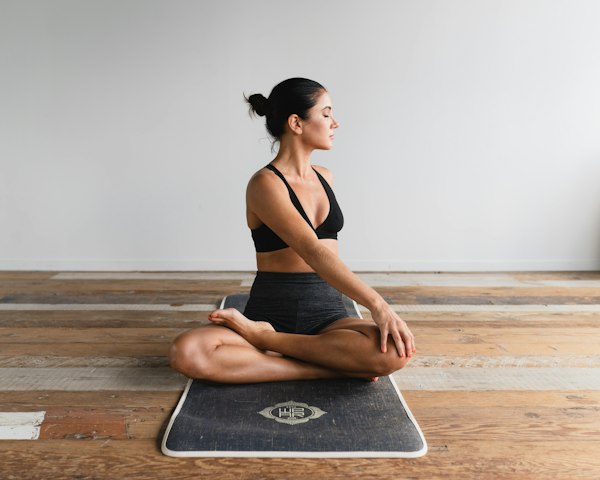
- Restorative or yin yoga
- Light cycling (flat roads or easy indoor bike)
- Foam rolling and mobility work
- Gentle stretching sessions (30-60 minutes)
- Easy paddleboarding or kayaking
- Tai chi or qigong
Light HIIT, "easy" crossfit, moderate-pace running, heavy yoga classes (power yoga, hot yoga), or any activity that significantly elevates your heart rate (above 60-65% max) is training, not recovery. Many Dubai gym-goers accidentally make their rest days harder than their training days.
2. The Science Behind Recovery
Understanding why recovery matters physiologically helps you prioritise it. After intense training, several processes must complete before you can train at full capacity again:
Muscle Protein Synthesis
Resistance training damages muscle fibres at the microscopic level. In the 24-72 hours following a session, your body synthesises new proteins to repair and reinforce those fibres, making them stronger. This process requires adequate rest, protein, sleep, and low physiological stress. Active recovery enhances this by improving circulation and nutrient delivery to damaged tissues.
Glycogen Resynthesis
Intense endurance or high-volume strength training depletes muscle glycogen (stored carbohydrate). Full glycogen restoration takes 24-48 hours with adequate carbohydrate intake. Light activity during this window doesn't significantly delay glycogen replenishment and may actually marginally accelerate it through increased insulin sensitivity.
Nervous System Recovery
Heavy strength training and maximal effort sessions stress the central nervous system (CNS). CNS fatigue manifests as reduced reaction time, decreased power output, and poor coordination, even when muscles feel fine. Active recovery with very low neural demands (walking, easy swimming) allows CNS recovery without the complete metabolic decline of pure inactivity.
Lactate and Metabolic Waste Clearance
Despite popular belief, lactic acid is not the primary cause of post-workout soreness. However, other metabolic waste products (hydrogen ions, inorganic phosphate) do accumulate during intense training. Increased blood flow from low-intensity active recovery helps clear these more quickly than complete rest.
3. Active vs. Passive Recovery: When to Choose Each
| Situation | Recommended Approach | Reason |
|---|---|---|
| After moderate training session | Active Recovery | Blood flow without extra stress |
| After maximal intensity session | Active or Passive | Assess fatigue 12h later |
| Mild DOMS (muscle soreness) | Active Recovery | Movement reduces soreness faster |
| Severe DOMS or pain | Passive Rest | Pain signals need attention |
| Illness or infection | Passive Rest | Immune system priority |
| High life stress / poor sleep | Passive Rest | Total stress load is already high |
| Training 5-6 days/week | Active Recovery day | Complete rest disrupts rhythm |
4. Best Active Recovery Activities in Dubai
Dubai offers excellent active recovery options across all budgets and seasons. Here's what's available and when to use each:
Swimming (Easy Laps)
The gold standard of active recovery in Dubai. The water's buoyancy reduces joint loading, the hydrostatic pressure acts as compression, and the gentle resistance increases blood flow throughout the entire body. Aim for 20-30 minutes of easy, non-stop freestyle at a pace where you could easily hold a conversation. Dubai has excellent pools in virtually every residential area.
Year-Round
Low Impact
Restorative or Yin Yoga
60-90 minute sessions targeting deep connective tissue, fascia, and flexibility. Unlike power yoga or vinyasa which are intense training sessions, yin yoga holds gentle poses for 3-5 minutes each at 30-40% effort. Excellent for releasing hip flexors, thoracic spine, and shoulder tension from heavy training. Hundreds of studios across Dubai offer dedicated restorative classes.
Year-Round
Low Impact
Beach or Marina Walk
30-60 minutes of easy walking on flat ground is one of the most effective and underrated active recovery tools. JBR Beach, Dubai Marina Walk, The Palm boardwalk, and Kite Beach are ideal locations from October to April. In summer, walk indoors (Dubai Mall's 5km indoor route is air-conditioned and free). Target 6,000-8,000 steps at easy pace.
Oct April Best
Low Impact
Easy Cycling
30-45 minutes on an easy gear with no intervals. Al Qudra cycling track is ideal October to April. During summer, a stationary bike at the gym set to light resistance provides the same benefits in climate control. Key: keep cadence high (80-100 RPM) at very low resistance, this is blood flow, not conditioning work.
Oct April Outdoor
Indoor Year-Round
Stand-Up Paddleboarding (SUP)
Easy paddleboarding on calm water is a surprisingly effective active recovery tool, it challenges balance, gently activates stabilising muscles, and the water environment promotes psychological recovery. JBR and Kite Beach offer SUP rentals. Best October to May when water temperatures are comfortable.
Oct May Best
Moderate
Contrast Therapy (Sauna + Cold)
Alternating between heat (sauna, steam room) and cold (cold shower, ice bath, pool) causes repeated vasodilation and vasoconstriction that powerfully flushes metabolic waste and reduces inflammation. Several Dubai facilities offer contrast therapy including Wellfit gyms, Warehouse Gym, and dedicated recovery centres. 10-15 minute protocol: 3-4 cycles of 3-4 min heat, 1-2 min cold.
Year-Round
Recovery-Focused
Find recovery and wellness specialists in Dubai
GetFitDXB lists Dubai's best massage therapists, yoga instructors, and wellness professionals for your active recovery days. Filter by area, price, and speciality.
5. Sample Rest Day Protocols
Here are three evidence-based active recovery protocols for different schedules and goals:
Protocol A: 45-Minute Beginner (Minimal Equipment)
- 5 min: Easy walk outside or gentle jumping jacks
- 20 min: Full-body foam rolling (quads, hamstrings, glutes, back, lats, calves)
- 15 min: Static stretching, 5 minutes each: hip flexors, chest/shoulders, hamstrings
- 5 min: Diaphragmatic breathing (4-7-8 pattern) to activate parasympathetic nervous system
Protocol B: 60-Minute Intermediate (Pool Access)
- 25 min: Easy swimming (freestyle, backstroke, breaststroke rotation) at conversational pace
- 20 min: Pool mobility, leg swings, arm circles, gentle hip stretches in shallow water
- 15 min: Poolside stretching, major muscle groups held 30-60 seconds each
Protocol C: 90-Minute Advanced (Gym Access)
- 20 min: Light bike at Zone 1 (heart rate 50-60% max)
- 30 min: Full-body foam rolling and lacrosse ball work (focus on problem areas)
- 25 min: Restorative yoga sequence or dedicated mobility session
- 15 min: Contrast therapy, 3 cycles of sauna/cold shower if available
6. 30-Minute Mobility Routine for Active Recovery
This routine addresses the most commonly restricted areas in Dubai gym-goers, hip flexors (from desk work and car commuting), thoracic spine (from bench pressing and overhead work), and shoulder internal rotation (from pushing-dominant training).
Perform each movement for the prescribed time. Breathe deeply into areas of tension. Never force range of motion, work to the edge of comfort, not pain.
Lower Body Block (10 minutes)
- 90/90 Hip Position: 3 minutes each side. Sit on floor with both knees at 90 degrees, gently press front knee toward floor.
- Couch Stretch: 2 minutes each side. Rear knee against wall, front foot forward, squeeze glutes to stretch hip flexor.
- Supine Piriformis Stretch: 90 seconds each side. Figure-4 position, gentle pull on back of knee.
Thoracic Spine Block (10 minutes)
- Foam Roller T-Spine Extension: 3 minutes. Foam roller across mid-back, support head, extend backward over roller in 5 positions.
- Thread the Needle: 2 minutes each side. From all-fours, thread one arm under the body, hold, then rotate through.
- Seated Thoracic Rotation: 3 minutes alternating. Sit tall, cross arms on chest, rotate left and right focusing on upper back not lumbar.
Shoulder Block (10 minutes)
- Sleeper Stretch: 2 minutes each side. Lie on one side, use free hand to gently press wrist toward floor for internal rotation.
- Doorframe Chest Stretch: 3 minutes. Both arms at 90 degrees in doorframe, gently lean forward into the stretch.
- Wall Angels: 5 minutes. Back against wall, arms in goalpost position, slide arms overhead while maintaining contact.
7. Active Recovery in Dubai Summer
Dubai's summer (June September) presents unique challenges for active recovery. Outdoor activities become dangerous during midday, and even early morning humidity can be overwhelming. However, summer is actually an ideal time to focus on recovery quality since outdoor training decreases naturally.
Summer-Specific Recommendations
- Indoor swimming pools: Many Dubai gyms have air-conditioned indoor pools, check Fitness First, GymNation, and hotel gyms
- Dubai Mall walking route: The world's largest shopping mall has a 5km interior route, completely air-conditioned and free to walk
- Early morning (5-6am): The only viable outdoor option, temperatures are still 30-34°C but humidity drops slightly before sunrise
- Yoga studios: Dubai's yoga studios are thoroughly air-conditioned, restorative and yin classes are ideal summer recovery
- Recovery modalities: Ice baths, cryotherapy chambers, and infrared saunas are all indoor and excellent summer recovery tools
Summer heat is itself a physiological stressor. Your body works harder simply to thermoregulate during Dubai's hottest months. This means your total recovery needs are higher in summer even if your training volume drops. Prioritise sleep (the most powerful recovery tool), increase hydration, and add 1-2 extra recovery-focused sessions to your weekly routine from June to September.
8. Recovery Services in Dubai
Dubai has excellent professional recovery services available across different price points. Building a recovery budget is excellent value for serious athletes:
| Service | Frequency | Best For |
|---|---|---|
| Sports Massage | Weekly | Deep tissue tension release |
| Thai Massage | Weekly | Flexibility and relaxation |
| Float Tank Session | Bi-weekly | CNS recovery, mental reset |
| Infrared Sauna | 2 to 3x weekly | Circulation, detox |
| Cryotherapy | 2x weekly | Acute inflammation reduction |
| Compression Therapy | 2x weekly | Lower limb recovery |
| Restorative Yoga Class | Weekly | Mobility + mental recovery |
Find Dubai's top massage therapists, wellness specialists, and recovery centres on GetFitDXB's Massage & Spa category.
9. Signs You Need More Rest (Not More Active Recovery)
Active recovery is not a substitute for adequate rest when your body is genuinely depleted. Recognise these signs that signal the need for complete passive rest:
- Resting heart rate elevated 5-10+ BPM above baseline: A reliable early marker of inadequate recovery
- Persistent DOMS lasting 72+ hours: Normal soreness resolves within 48-72 hours; extended soreness signals under-recovery
- Declining performance across consecutive sessions: If you're getting weaker or slower over 2-3 sessions, your recovery is the problem
- Poor sleep quality despite physical tiredness: Overtraining disrupts sleep architecture through cortisol dysregulation
- Mood changes, irritability, or loss of motivation: CNS fatigue and overtraining both manifest psychologically
- Increased susceptibility to illness: Repeated infections signal immune suppression from excessive training load
If you experience 3 or more of these symptoms simultaneously, take 3-5 days of complete rest before considering active recovery. Working with a sports physiotherapist in Dubai can help diagnose and address chronic under-recovery patterns.
Book a recovery session with Dubai's best wellness professionals
From sports massage to yoga studios to physiotherapy, GetFitDXB has hundreds of recovery specialists across all 15 Dubai areas. Find the right professional for your needs.
10. Frequently Asked Questions
What is the difference between active and passive recovery?
Passive recovery means complete rest, no exercise. Active recovery involves low-intensity movement (20-50% max heart rate) that increases blood flow, delivers nutrients to muscles, and removes waste products without adding training stress. Most athletes benefit more from active recovery than complete rest on off-days.
What are the best active recovery activities in Dubai?
Top options include swimming (year-round, excellent for joint health), restorative yoga, walking along the beach or Marina (October April), light cycling on Al Qudra trail (cooler months), stretching and mobility sessions, and recovery gym sessions with light band work and easy cardio.
How intense should active recovery be?
Active recovery should keep your heart rate at 30-50% of your maximum (roughly 90-130 BPM for most adults). You should be able to hold a full conversation easily. If you're breathing hard or breaking a serious sweat, you've gone too intense.
How many rest or active recovery days per week do I need?
Most athletes need 1-2 complete rest or active recovery days per week. Beginners benefit from 2-3 recovery days. Advanced athletes training 5-6 days per week should include at least 1 full rest day. In Dubai summer, an extra recovery day is often warranted due to heat-induced physiological stress.