Back pain is one of Dubai's most common workplace complaints. With a workforce juggling desk jobs, gym memberships, and a demanding lifestyle in the heat, the lower back takes a beating. But what if gentle, controlled movement could be your answer? Pilates for back pain relief is supported by clinical research and has transformed lives across Dubai. This guide reveals whether Pilates really works, which conditions it helps with, and how to find the best instructors in your area.
The Back Pain Epidemic in Dubai
Back pain affects approximately 80% of adults at some point in their lives, and Dubai is no exception. In fact, the issue may be even more pronounced here due to several lifestyle factors:
- Desk work culture: Sprawling office parks in Dubai Marina, Business Bay, and DIFC mean many professionals spend 8-10 hours daily hunched over desks, straining the cervical and lumbar spine.
- Sedentary living: Car dependency and air-conditioned offices reduce natural movement and core activation throughout the day.
- Intense fitness habits: Dubai's gym culture often emphasizes heavy lifting without proper form or injury prevention, leading to acute and chronic spinal strain.
- Climate stress: Heat-related dehydration and muscle tension can exacerbate existing back problems.
The result? Many Dubai residents experience chronic lower back pain, sciatica, postural dysfunction, and herniated discs—conditions that traditional treatment (rest, anti-inflammatories, physiotherapy) only partially resolves. This is where Pilates enters the picture as a complementary and often highly effective solution.
How Pilates Addresses Back Pain
Pilates is built on principles that directly target the root causes of back pain. Unlike high-impact exercise or strength training that can aggravate existing injuries, Pilates emphasises controlled, low-impact movements that rebuild the deep stabiliser muscles of the spine.
Core Stability & Deep Muscle Activation
The human spine is supported by multiple layers of muscles. The deep core—particularly the transversus abdominis and multifidus—acts like a corset around your torso, stabilising each vertebra. When these muscles weaken (due to prolonged sitting or injury), the larger, more superficial muscles compensate, leading to tension and pain. Pilates retrains these deep stabilisers through precision movements, restoring natural spinal support.
Improved Posture & Spinal Alignment
Poor posture is the silent killer of back health in Dubai's office culture. Pilates teaches you to stack your vertebrae correctly, engage your core, and maintain neutral spine alignment throughout daily activities. Even 20 minutes of daily Pilates-based movement awareness can dramatically improve posture over weeks.
Research Evidence
Multiple randomised controlled trials published in journals like *Spine* and the *Journal of Orthopaedic & Sports Physical Therapy* confirm that Pilates is as effective as, or superior to, conventional physiotherapy for chronic lower back pain. Studies show:
- 60–70% of participants experienced significant pain reduction after 8-12 weeks of Pilates.
- Improvements persisted at 12-month follow-up, suggesting lasting functional change.
- Pilates reduced relapse rates compared to standard exercise programmes.
In Dubai, many physiotherapists now integrate Pilates into rehabilitation protocols, particularly for back pain and post-injury recovery.
Types of Back Pain Pilates Can Help With
Lower Back Pain (Lumbar Region)
This is Pilates' strongest domain. Whether your pain is work-related, postural, or from past injury, Pilates addresses the mechanical dysfunction causing discomfort. Most participants see improvements within 4-6 weeks with 2-3 sessions per week.
Sciatica
Sciatica—sharp, shooting pain down the leg caused by sciatic nerve compression—often responds well to Pilates. By decompressing the lumbar spine, strengthening stabiliser muscles, and reducing muscle tightness (especially in the piriformis), Pilates can alleviate sciatic symptoms. However, acute sciatica may require physiotherapy assessment first.
Herniated Disc
A slipped or herniated disc doesn't mean you can't exercise. In fact, controlled Pilates movements encourage the disc to retract and stabilise. Working with a clinical Pilates instructor (see section below) is essential to modify exercises and avoid positions that worsen the condition.
Postural Back Pain
If your back hurts by 3 PM after sitting all day, postural dysfunction is likely the culprit. Pilates specifically targets postural muscles, retraining your body to hold itself correctly. This is perhaps the fastest area to see improvement—many professionals notice relief within 2-3 weeks.
Degenerative Disc Disease & Osteoarthritis
While Pilates cannot reverse degeneration, it can significantly improve function and reduce pain by optimising spinal movement patterns and strengthening supporting muscles. Many practitioners with mild to moderate spinal arthritis find Pilates preferable to impact-based exercise.
Types of Back Pain to Be Careful With
While Pilates is remarkably safe, some conditions require medical clearance and specialist supervision:
Always consult your doctor or physiotherapist before starting Pilates if you have an existing back injury or chronic pain condition. This guide is educational. Pilates can be hugely beneficial, but it is not a substitute for medical diagnosis. Conditions like cauda equina syndrome, acute fractures, or severe spinal infections require immediate medical attention, not exercise.
Acute Injuries (First 48–72 Hours)
If you've just strained your back, rest for 24-48 hours before beginning gentle Pilates. Aggressive movement too soon can worsen inflammation. Work with a physiotherapist before starting.
Severe Disc Herniation with Neurological Symptoms
If you experience numbness, weakness, or loss of bowel/bladder control alongside back pain, seek emergency care. These suggest nerve compression requiring medical intervention.
Spinal Fractures or Recent Surgery
Post-operative Pilates is possible and beneficial, but must be prescribed by your surgeon or physiotherapist. Avoid self-directed practice until cleared.
Undiagnosed Pain
If you have new back pain with no clear cause, imaging (X-ray or MRI) and a medical diagnosis should precede Pilates. What feels like a pulled muscle could be a herniated disc or another condition requiring specific modification.
Best Pilates Exercises for Back Pain
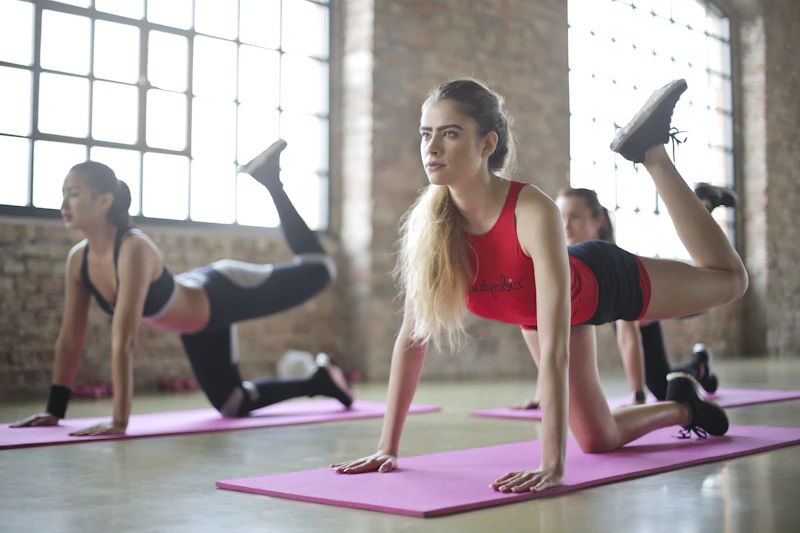
Here are the foundational exercises that form the backbone of any back pain Pilates routine. Always warm up with 5 minutes of gentle movement, and modify or skip any exercise that causes sharp pain.
1. Pelvic Tilts
Why it helps: Teaches you to engage your deep core and move the pelvis and spine independently.
How: Lie on your back, knees bent, feet flat. Inhale. Exhale, tilt your pelvis to flatten your lower back against the floor, engaging your lower abdominals. Hold for 2 seconds, inhale to release. Repeat 12-15 times.
2. Imprinting (Modified Pelvic Tilt)
A progression of pelvic tilts, adding arm and leg movement while maintaining core engagement. Builds endurance in deep stabilisers.
3. Cat-Cow Stretch
Why it helps: Mobilises the entire spine, improving flexibility and reducing stiffness.
How: On hands and knees, alternate between arching your back gently (cow) and rounding your spine (cat). Move slowly with breath, 10-12 repetitions. Avoid forcing the stretch.
4. Bird Dog
Why it helps: Activates the multifidus and gluteus maximus, stabilising the lumbar spine during limb movement.
How: On hands and knees, extend your right arm forward and left leg backward, maintaining a neutral spine. Hold 2-3 seconds. Repeat 10 times per side, then switch. Keep your hips level—don't rotate.
5. Dead Bug
Why it helps: Strengthens the transversus abdominis whilst maintaining neutral spine, mimicking functional movement patterns.
How: Lie on your back, hips and knees bent 90°, shins parallel to the floor. Extend your right arm overhead and left leg straight, hovering above the floor. Return to start. Repeat 10 per side. Keep your lower back pressed to the floor throughout.
6. Spinal Rotation (Lying)
Why it helps: Restores rotation mobility safely, reducing stiffness and improving functional movement.
How: Lie on your back, knees bent to one side, arms outstretched. Keep your shoulders flat. Gently deepen the stretch. Hold 20-30 seconds, repeat on the other side.
Progression: Once the basic 6-movement routine becomes easy (3-4 weeks), a clinical Pilates instructor can add reformer work, adding resistance whilst maintaining perfect alignment. This is where Pilates truly excels at building long-term stability.

Find a Pilates Back Pain Specialist in Dubai
Connect with certified Pilates instructors and clinical Pilates physiotherapists across Dubai who specialise in back pain recovery and rehabilitation.
Clinical Pilates vs Regular Pilates for Back Pain
Not all Pilates is created equal. For back pain specifically, understanding the difference between clinical and regular Pilates is crucial.
✓ Clinical Pilates (Rehabilitation-Focused)
- Delivered by a physiotherapist with additional Pilates certification
- Begins with a full postural and spinal assessment
- Exercise prescription is highly individualised based on your diagnosis
- Designed specifically for injury recovery and pain management
- Typically 1-on-1, allowing real-time form correction
- Cost: AED 350–600 per session (1-on-1)
- 10-session package: AED 2,800–5,000
Regular Pilates (Fitness-Focused)
- Delivered by a Pilates instructor (often without medical background)
- May not include detailed postural assessment
- Classes are group-based with limited personalisation
- Effective for fitness and core strength, but not medically supervised
- Modifications offered but less tailored to specific injuries
- Cost: AED 80–150 per session (group class)
- Better suited for prevention than rehabilitation
For back pain relief, clinical Pilates is the gold standard. That said, once you've completed an initial course of clinical Pilates and understand your condition, transitioning to regular Pilates classes (or home practice) is appropriate for maintenance.
Reformer Pilates for Back Pain
Reformer Pilates—done on a specialised apparatus with springs and a sliding carriage—is excellent for back pain. The equipment provides support and resistance, allowing precise control whilst gradually building strength. Private reformer sessions for rehabilitation run AED 300–500 per session in Dubai.
Finding a Back Pain Pilates Specialist in Dubai
Dubai has no shortage of Pilates instructors, but finding one qualified to handle back pain requires attention. Here's what to look for:
Qualifications to Verify
- MATWORK Certification: At least 500 hours of Pilates training (STOTT, Polestar, or Balanced Body)
- Reformer Certification: Additional qualification on apparatus (for advanced rehab)
- Clinical Background: Ideally a physiotherapist or exercise physiologist with Pilates training
- Back Pain Specialisation: Explicit experience or mentoring in spinal rehab
- Continuing Education: Current knowledge of latest research on Pilates and pain management
Areas with Strong Pilates Communities
GetFitDXB helps you find specialists in key Dubai areas:
- Dubai Marina – Luxury studios with top-tier instructors
- Business Bay – Convenient for office workers seeking lunchtime sessions
- JLT (Jumeirah Lakes Towers) – Growing fitness hub with diverse options
- Wellness Category – Browse all Pilates and rehabilitation services across Dubai
Questions to Ask Before Booking
- "Do you conduct an assessment before starting Pilates for back pain?"
- "What is your experience with [your specific condition]?"
- "Can you provide references or case studies?"
- "Do you communicate with my physiotherapist or doctor?"
- "What is your cancellation and rescheduling policy?"
What to Expect in Your First Session
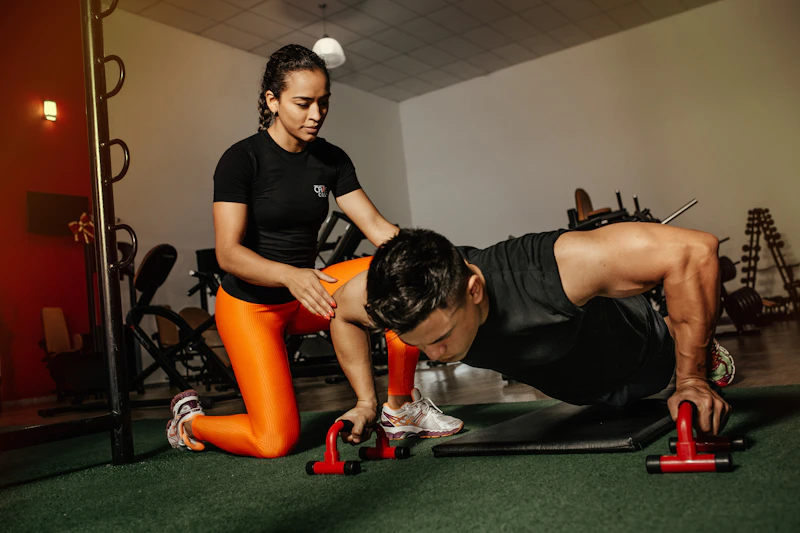
Assessment (20–30 minutes)
Your instructor will ask about your back pain history: when it started, what movements trigger it, what helps. They'll perform postural screening, checking for asymmetries, muscle imbalances, and range of motion limitations. This assessment is crucial—it shapes your entire programme.
Movement Screening
Simple movements like spinal flexion (touching toes), extension (arching back), and lateral flexion reveal functional limitations. Your instructor watches for pain patterns and compensation strategies.
Exercise Introduction (30–40 minutes)
You'll begin with foundational movements—pelvic tilts, breathing techniques, and simple core engagement. Don't expect a hard workout; the first session focuses on teaching correct form and building awareness.
Breathing & Body Awareness
Pilates emphasises conscious breathing and mind-body connection. You'll learn to pair breath with movement, a skill that reduces pain and improves engagement of deep stabilisers.
Home Programme
Your instructor may prescribe 3–4 exercises to practise daily at home. Consistency between sessions matters enormously—one session per week without home practice will show minimal results. Aim for 2–3 sessions weekly plus daily 10-15 minute home practice for optimal outcomes.
Timeline to First Results
- Week 1–2: Increased body awareness, reduced muscle tension
- Week 3–4: Noticeable reduction in pain during daily activities
- Week 6–8: Significant pain reduction, improved posture and mobility
- Week 12+: Lasting functional improvement, reduced reliance on pain medication
Pilates for Back Pain: Pricing in Dubai
| Service Type | Format | Price Range |
|---|---|---|
| Regular Pilates Class | Group (8–12 participants) | AED 80–150 per session |
| Clinical Pilates (1-on-1) | Physiotherapist-led, personalised | AED 350–600 per session |
| Reformer Pilates (Private) | Equipment-based, rehabilitation-focused | AED 300–500 per session |
| 10-Session Clinical Package | Bundled at discount | AED 2,800–5,000 |
Tip: Most practitioners offer package discounts for 6, 10, or 12-session commitments. Investing in a package also increases your accountability and consistency—key factors in success.
How Long Before You Feel Results?
Patience and consistency are critical. Back pain didn't develop overnight, and it won't vanish overnight either. That said, Pilates is typically faster than passive treatments.
Short-Term (2–4 weeks)
You'll notice increased body awareness, reduced muscle tension, and improved posture. Some participants report less pain by the end of week 2, particularly if their pain is postural.
Medium-Term (6–8 weeks)
This is when most people experience significant improvement. Pain during daily activities (sitting, standing, bending) noticeably decreases. You may feel stronger and more confident in your body. Many reduce or discontinue pain medication under medical supervision.
Long-Term (3–6 months)
Consistent practitioners often achieve near-complete pain relief and restored mobility. The deeper stabiliser muscles are now reactivated, spinal alignment is improved, and postural habits have shifted. At this stage, maintenance becomes key—typically 1–2 sessions per week or daily home practice.
Factors That Speed Up Results
- Consistency: 2–3 sessions per week beats one session weekly
- Home practice: 10–15 minutes daily at home accelerates progress
- Ergonomic improvements: Desk setup, seating, and daily movement habits matter
- Complementary care: Working with a physiotherapist or osteopath alongside Pilates optimises outcomes
- Stress management: Chronic stress tightens muscles; meditation or breathing work helps
Are You a Pilates or Physio Professional in Dubai?
Join GetFitDXB and connect with Dubai residents seeking expert help for back pain and rehabilitation. Free profile — upgrade to Pro for featured placement.
Frequently Asked Questions
Is Pilates good for lower back pain?
Yes—multiple clinical studies show Pilates is highly effective for chronic lower back pain. It strengthens the deep core muscles (transversus abdominis, multifidus) that support the spine, improves posture, and increases spinal mobility. Results typically appear within 6-8 weeks of regular practice.
Can I do Pilates with a herniated disc in Dubai?
Pilates can be beneficial for herniated disc recovery, but you must work with a qualified clinical Pilates instructor or physiotherapist. Certain movements need modification or avoidance during the acute phase. Always get medical clearance first and tell your instructor about your diagnosis.
How often should I do Pilates for back pain?
For back pain relief, aim for 2-3 Pilates sessions per week. Consistency is more important than intensity—even one to two 30-minute sessions per week will produce meaningful improvements over 6-12 weeks compared to no exercise.
What's the difference between clinical Pilates and regular Pilates for back pain?
Clinical Pilates is supervised by a physiotherapist who has additional Pilates training. It is specifically designed for injury rehabilitation and involves a full clinical assessment before starting. Regular Pilates can also help back pain but is not medically supervised and may not be appropriate for severe or complex spinal conditions.
Explore related Pilates and fitness topics to deepen your understanding:
Back pain doesn't have to be a permanent fixture of your Dubai lifestyle. With the right Pilates programme, consistent practice, and professional guidance, you can rebuild a strong, pain-free spine. Start with a clinical Pilates assessment, commit to 8-12 weeks of dedicated practice, and watch your pain transform into mobility and strength. Your back—and your quality of life—will thank you.