Table of Contents
- The Complete Guide to Pilates in Dubai
- Pilates Origins and Core Principles
- Types of Pilates in Dubai
- Best Pilates Studios in Dubai 2026
- Reformer Pilates: The Most Popular Style
- Pilates Pricing in Dubai 2026
- Pilates for Different Goals
- Pilates vs Yoga: Which Should You Choose?
- How to Choose a Pilates Studio
- Getting Started: Your First Class
The Complete Guide to Pilates in Dubai: Everything You Need to Know
Dubai's fitness landscape has undergone a remarkable transformation over the past five years, and pilates has emerged as one of the most sought-after exercise modalities in the emirate. From the gleaming studios of Dubai Marina to the boutique reformer spaces tucked away in DIFC and Downtown Dubai, pilates has become woven into the fabric of how Dubai's residents—both locals and expatriates—approach their health and wellness.
The growth has been nothing short of explosive. Since 2020, pilates participation in Dubai has surged by over 300%, reflecting a global trend but with distinctly local characteristics. Unlike western markets where pilates studios saturated before 2015, Dubai is still in a growth phase where new studios open regularly, established operators expand their footprint, and pricing remains more accessible than in London or New York.
This comprehensive guide cuts through the noise and confusion surrounding pilates in Dubai. Whether you're a complete beginner wondering if pilates is right for you, a seasoned practitioner seeking the best reformer studio in your neighborhood, or someone exploring pilates as part of injury recovery, this article provides everything you need to make informed decisions about your pilates journey in Dubai.
We've researched every major pilates operator in the emirate, analyzed pricing structures, interviewed instructors certified by APPI, BASI, and STOTT (the world's leading pilates certification bodies), and compiled practical advice that reflects Dubai's unique fitness ecosystem. What you'll discover is that Dubai offers world-class pilates opportunities at prices significantly better than comparable markets, with quality instruction that rivals any international fitness hub.
Pilates Origins and Core Principles: Understanding the Method
To truly appreciate pilates in Dubai today, it's worth understanding the method's origins and the principles that distinguish it from other forms of exercise. Pilates wasn't invented by accident—it was methodically designed with specific principles that remain relevant nearly a century later.
The History: From Joseph Pilates to Modern Dubai
Pilates was developed by Joseph Pilates, a German-born fitness pioneer who created the method in the early 1920s. Originally called "Contrology," pilates was designed as a system of physical and mental conditioning. Joseph initially developed the method while interned during World War I, using springs attached to hospital beds to help injured soldiers rehabilitate. This foundation explains why clinical pilates remains so effective for injury recovery—it's literally what the method was born to accomplish.
After emigrating to the United States, Joseph Pilates established his studio in New York, where dancers initially flocked to the method. The low-impact nature of pilates, combined with its ability to build lean muscle and improve body awareness, made it perfect for dancers recovering from injuries or enhancing their performance. This legacy continues today—many pilates instructors in Dubai began their careers as dancers or movement professionals.
The Six Core Principles That Define Pilates
Modern pilates teaching emphasizes six fundamental principles that distinguish it from generic exercise:
1. Breath — Pilates breathing is deliberate and rhythmic. The typical pattern is to inhale through the nose for a count of four, then exhale through the mouth for a count of four. This controlled breathing increases oxygen flow, activates the core, and calms the nervous system. It's one reason pilates classes feel simultaneously energizing and meditative.
2. Centering — Every movement in pilates originates from the "powerhouse"—your core, including the deep abdominal muscles, back extensors, and pelvic floor. Rather than isolating individual muscles, pilates emphasizes drawing all movement from a strong center.
3. Concentration — Pilates demands mental engagement. You're not performing repetitions mindlessly; you're consciously connecting breath to movement, maintaining awareness of alignment, and adjusting your body position continuously. This mind-body connection is partly why pilates feels so different from traditional strength training.
4. Control — Joseph Pilates believed that uncontrolled movement was wasted movement. Every exercise in pilates follows a specific range of motion performed with precision. There are no jerking, bouncing, or momentum-driven movements. Every repetition is intentional.
5. Precision — Related to control, precision means proper form is non-negotiable. A single repetition performed correctly is considered superior to ten repetitions performed with poor alignment. This is why experienced instructors constantly cue alignment and encourage modifications.
6. Flow — Pilates movements transition fluidly from one exercise to the next without pausing. This continuous movement pattern increases cardiovascular engagement and creates an almost meditative quality to the practice.
These six principles explain why pilates feels fundamentally different from typical gym workouts. You're not just moving weight through space; you're practicing a methodical system designed to integrate breath, movement, and awareness into a cohesive whole.
Types of Pilates in Dubai: Which Style is Right for You?
One of the biggest sources of confusion for pilates beginners is that "pilates" isn't a single monolithic practice. There are several distinct styles and formats, each with different characteristics, benefits, and typical pricing. Understanding these differences will help you choose the right option for your goals and preferences.
Mat Pilates: Accessible, Community-Driven, Affordable
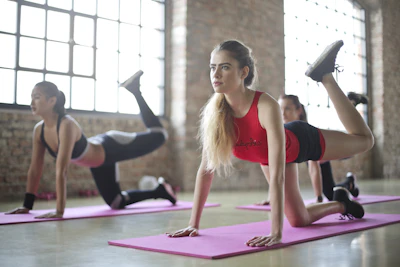
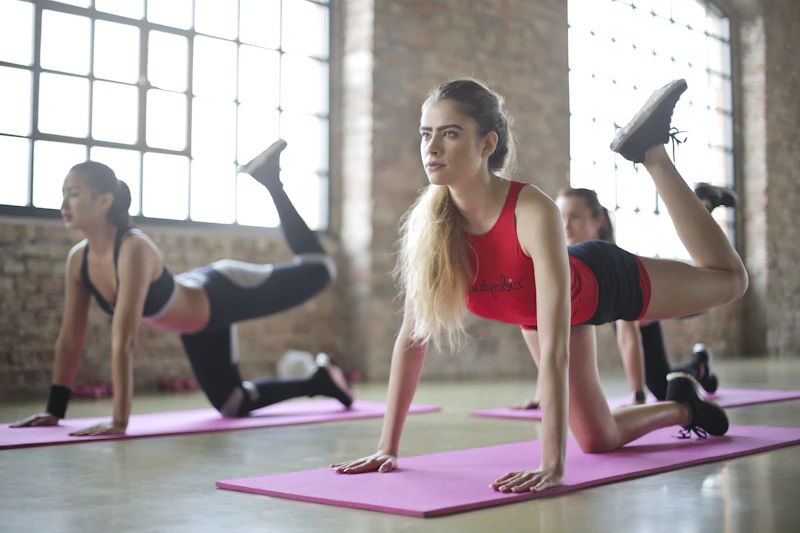
Mat pilates uses only your body weight and gravity as resistance, performed on a padded mat. This is the most accessible form of pilates and the most affordable. A typical mat pilates class in Dubai costs between AED 50–90 per class, or AED 300–600 per month for unlimited classes. Many gyms include mat pilates classes in their membership—particularly mainstream chains like GymNation.
Mat pilates classes are typically performed in groups (8–30 people), making them sociable and cost-effective. They're excellent for building foundational strength, understanding proper form, and determining whether you genuinely enjoy pilates before investing in more expensive options like reformer classes.
The downside? Mat pilates is less customizable than other formats. Instructors can offer modifications, but resistance is determined by bodyweight alone. Heavier individuals find some exercises challenging, while lighter individuals may find certain movements too easy. It's still an excellent workout, but it has inherent limitations that reformer pilates overcomes.
Reformer Pilates: Machine-Based Resistance, Most Popular in Dubai
Reformer pilates is the dominant form in Dubai's premium studios. A reformer is a machine with a moving carriage, springs, and adjustable resistance. Exercises are performed using the resistance of the springs and the weight of the carriage to build strength. Reformer pilates classes are significantly more customizable than mat classes—instructors can adjust spring resistance for each person, creating appropriate challenge levels for absolute beginners and advanced practitioners in the same class.
Reformer classes in Dubai typically cost AED 90–200 per class, depending on the studio's positioning. Boutique reformer studios in premium locations (Dubai Marina, DIFC, Palm Jumeirah) charge the higher end of this range, while mid-tier studios charge AED 90–130. Group reformer classes (typically 2–6 people) are the most popular format, though private sessions and semi-private "duet" sessions are available at premium studios.
Reformer pilates appeals to a wider demographic than mat pilates. You'll encounter everything from elite athletes and dancers using the reformer for advanced training to post-surgical patients using it for rehabilitation. The versatility is remarkable.
Clinical & Physiotherapy Pilates: For Rehabilitation and Recovery
Clinical pilates is essentially pilates prescribed as part of a rehabilitation program, usually under guidance from a physiotherapist. You'll find clinical pilates offered in physiotherapy clinics across Dubai, often in conjunction with other therapeutic treatments. Sessions are typically private or semi-private and cost AED 150–300 per session.
Clinical pilates is specifically indicated for conditions like lower back pain (where it's backed by substantial research), knee problems, shoulder injuries, post-surgical recovery, and chronic pain conditions. If you have an existing injury or chronic condition, consulting a physiotherapist before starting regular pilates classes is wise. Many physiotherapists now incorporate pilates into their standard treatment protocols. Browse physiotherapy resources in Dubai to locate qualified practitioners.
Classical vs Contemporary Pilates: Philosophical Differences
You may encounter references to "classical" and "contemporary" pilates. Classical pilates (also called "pure" pilates) adheres more strictly to Joseph Pilates' original method and terminology. Contemporary pilates incorporates modern exercise science research, sometimes blending concepts from yoga, biomechanics, or dance. Some instructors view contemporary pilates as evolution; others view it as dilution. In practical terms, the differences are subtle—both approaches will deliver results.
Pilates Fusion: Combining Methods for Variety
Several Dubai studios offer "pilates fusion" classes that blend pilates with yoga, barre, or cardio elements. These classes appeal to people seeking variety or wanting hybrid benefits. Pilates + barre classes, for example, combine pilates' core focus with barre's leg-focused, ballet-inspired movements. Pilates + yoga classes blend the strengthening aspects of pilates with yoga's flexibility and mindfulness elements. These fusion classes typically cost the same as standard pilates classes (AED 80–150) and are excellent for preventing workout monotony.
Best Pilates Studios in Dubai 2026: Comprehensive Directory & Reviews
Dubai's pilates studio landscape is diverse, ranging from boutique reformer studios with 4–6 machines to large fitness facilities with dozens of classes per week. Here's a comprehensive breakdown of the major operators and most respected studios across the emirate:
Premium Boutique Reformer Studios
Pulse Pilates Studio (Dubai Marina) — One of Dubai's most respected boutique reformer studios, Pulse specializes in small-group reformer classes (maximum 4 people per class) and private sessions. Located in the heart of Dubai Marina, Pulse attracts both beginners and advanced practitioners. Instructors are APPI-certified. Group classes cost AED 160–200 per class; unlimited packages are AED 2,200/month. Private sessions start at AED 350/hour.
Core & Flow Studio (DIFC) — Core & Flow occupies a premium location in DIFC and combines reformer pilates with complementary offerings like yoga and mobility work. Their reformer classes are semi-private (2–3 people) with meticulous attention to form. Cost: AED 170–190 per class; monthly packages from AED 2,400. They offer a free trial class for new members.
Elements Pilates (Downtown Dubai) — A high-end boutique studio near the Burj Khalifa, Elements offers reformer pilates, mat classes, and advanced apparatus training. Instructors hold BASI and STOTT certifications. The facility is luxurious with amenities including changing rooms, showers, and a small café. Single class: AED 180; unlimited monthly: AED 2,600.
Reformer Life (Palm Jumeirah) — Catering to Dubai's wealthiest residents, Reformer Life on the Palm offers exclusive, high-end reformer classes in a stunning oceanfront location. Emphasis on personalization and low student-to-instructor ratios. Classes are AED 200–220; private sessions are AED 400–450/hour.
Mid-Range Studios & Studios with Multiple Locations
Zenith Pilates (multiple locations: Marina, Business Bay, JLT) — Zenith is Dubai's most accessible high-quality pilates operator, with three locations offering both mat and reformer classes. Group reformer classes: AED 100–130 per class. Monthly unlimited: AED 1,200–1,400. They offer excellent customer service and regular schedule updates. Zenith appeals to people wanting professional instruction without premium pricing.
Balance & Strength (JBR & Dubai Marina) — A hybrid studio offering group fitness classes alongside reformer pilates. Their reformer classes (AED 95–125 per class) are well-structured and instructor-led by APPI-qualified instructors. Monthly packages: AED 1,100–1,300. Good for people who enjoy variety—they also offer yoga and HIIT classes.
Mindful Movement Studio (Al Barsha) — A well-regarded mid-range studio offering pilates, yoga, and functional training. Reformer classes are AED 100–120 per class. Their instructors are knowledgeable and the studio maintains high class quality standards. Conveniently located in Al Barsha, slightly south of the main tourist areas, with free parking.
Mainstream Fitness Chains (Budget-Friendly Mat Pilates)
GymNation — Dubai's largest fitness chain, operating 7+ locations across the emirate. GymNation memberships (AED 99–149/month) include access to mat pilates classes, among hundreds of other classes. While not specialized, GymNation's pilates classes are well-instructed and an exceptional value if you want pilates as part of a comprehensive fitness program rather than your sole focus. Great for beginners exploring whether pilates suits them.
Fitness First — The premium mainstream chain with locations in Jumeirah, Dubai Marina, and Downtown. Fitness First membership (AED 350–500/month) includes pilates, strength training, cardio, swimming, and spa access. Their pilates classes are typically mid-morning and evening schedule. Good option if you want pilates integrated into a full wellness facility with premium amenities.
NAS Sports (JLT, Dubai Marina, and other locations) — Abu Dhabi-based luxury fitness operator operating several locations in Dubai (AED 400–600/month). Pilates is one of 20+ class options. NAS attracts a health-conscious demographic and emphasizes holistic wellness alongside fitness.
Specialized Offerings & Niche Studios
Prenatal & Postnatal Pilates (Specialized Classes) — Several studios offer specialized pilates for pregnant women and postpartum recovery. These include dedicated mat classes and modified reformer sessions. Browse prenatal and postnatal fitness options in Dubai for comprehensive listings.
Clinical Pilates at Physiotherapy Clinics — Beyond general fitness studios, clinical pilates is offered at physiotherapy practices across Dubai. These are more prescription-based and often more expensive (AED 150–300 per session) but directly address injury and rehabilitation.
Find Your Perfect Pilates Studio Today
Ready to start your pilates journey? Browse our complete directory of pilates studios, classes, and pricing across Dubai's best neighborhoods.
Reformer Pilates in Dubai: The Most Popular Style
While mat pilates remains the entry point for many, reformer pilates has become the dominant form in Dubai's fitness industry. Understanding reformer pilates—what it is, how it works, and why it's so effective—will help you decide whether to invest in premium reformer classes or stick with mat-based options.
What is a Reformer Machine and How Does It Work?
A pilates reformer is a rectangular machine about 8 feet long and 2.5 feet wide, with the following key components: a moving carriage (the platform you lie or sit on), springs (typically ranging from 1–4 springs, providing variable resistance), adjustable footbars, and handles. The springs are the critical innovation—they provide accommodating resistance, meaning they become harder to move against as you progress through the range of motion.
This accommodating resistance is fundamentally different from dumbbells or resistance machines at mainstream gyms, where resistance is constant. Reformer springs require you to engage your stabilizer muscles throughout the movement, creating superior core activation and functional strength development.
Modern reformers also include adjustable headrests, carriage stoppers for varying exercise ranges, and various attachments (loops, straps, boxes) that expand exercise possibilities exponentially. A single reformer machine can literally perform hundreds of different exercises, making each class feel fresh and varied despite using the same equipment.
Benefits of Reformer Pilates Over Mat Work
Reformer pilates offers several advantages over mat work:
- Customizable resistance — Spring resistance can be adjusted for each person. The same exercise that challenges an athlete can be regressed for someone post-injury or recovering from surgery. This makes reformer classes genuinely appropriate for mixed-ability groups.
- Joint-friendly loading — Springs provide accommodating resistance that's gentler on joints than fixed weights. This makes reformers particularly suitable for rehabilitation and people with arthritis or other joint conditions.
- Greater variety — The reformer's design allows for greater exercise variety than mat work. This prevents adaptation and boredom while targeting muscles from multiple angles.
- Momentum prevention — Springs prevent you from using momentum to complete repetitions. You must move with control or the carriage won't cooperate. This enforces the "control" principle that's central to pilates.
- Postural loading — Reformer exercises inherently challenge your posture and proprioception. You develop better body awareness and alignment simply by using the machine.
Class Formats: Solo, Duet, Small Group, Semi-Private
Reformer studios in Dubai offer several class formats at different price points:
Small Group Classes (4–6 people per class) — Most common in Dubai, priced at AED 90–180 per class. Instructors provide personalization within a group format. Good balance of social connection and individualized attention.
Semi-Private Duet Classes (2 people) — Two clients work together on reformers side-by-side with one instructor. Costs AED 200–280 per class (AED 100–140 per person). Popular for couples, friends, or people wanting more personal attention than group classes.
Private Sessions (1-on-1) — Individualized instruction with completely customized programming. Costs AED 250–450 per hour depending on the studio and instructor certification level. Justifiable if you have specific rehabilitation goals, want intensive form correction, or are training for advanced pilates mastery.
Mat Classes at Reformer Studios — Many reformer-focused studios also offer mat pilates at lower cost (AED 60–90 per class). These serve as entry-level options and allow studio members to vary their training.
Typical Reformer Class Progression
Most reformer classes follow a similar structure: warm-up (5 minutes), primary exercises (35–40 minutes), and cool-down/stretching (5 minutes). A typical class might include: footwork variations, leg circles, squats, bridges, side-lying leg work, ab series, spine articulation exercises, and closing stretches. Instructors will provide modifications and progression options, allowing the same class to serve beginners through advanced students.
Pilates Pricing in Dubai: What to Expect in 2026
One of the most appealing aspects of pilates in Dubai compared to Western markets is pricing. Compared to equivalent classes in London, New York, or Los Angeles, Dubai pilates is remarkable value. Here's a comprehensive breakdown of what you'll actually pay:
| Studio Type | Format | Per-Class Cost | Monthly Package | Best For |
|---|---|---|---|---|
| Mainstream gym (GymNation) | Group mat | Included in membership | AED 99–149 | Beginners, value seekers |
| Mid-range studio | Group reformer (4–6 people) | AED 100–130 | AED 1,100–1,400 | Regular practitioners, steady progress |
| Premium boutique | Small group reformer (2–4 people) | AED 160–200 | AED 1,800–2,600 | Quality-focused, experienced practitioners |
| Boutique studio (semi-private) | Duet (2 people, 1 instructor) | AED 220–280 total (AED 110–140 per person) | Package discounts available | Partners, friends, moderate personalization |
| Private session | 1-on-1 instruction | AED 250–450/hour | Package discounts: 4–10 sessions | Rehabilitation, advanced training, form correction |
| Clinical pilates | Private or semi-private (medical) | AED 150–300/session | Usually 8–12 session packages | Injury recovery, physical therapy |
Class Packages vs Monthly Memberships: Which is Better Value?
Most studios offer both per-class and monthly pricing. At mid-range studios, a monthly unlimited membership (typically AED 1,100–1,400) usually represents better value than per-class pricing if you plan to attend 2+ classes per week. If you'll attend fewer than 2 classes weekly, per-class pricing might be better. Premium boutique studios are similar—unlimited monthly packages make financial sense only if you're committed to attending 2–4 times per week.
Some studios also offer multi-class packages—e.g., 10 classes for AED 950 instead of AED 1,100 per month. These are useful for people unsure about committing to unlimited but wanting better pricing than per-class rates.
Budget Strategy: Getting Started Affordably
If you're budget-conscious, here's the most economical path to beginning pilates: Start with a mainstream gym like GymNation (AED 99–149/month), where you'll get access to mat pilates classes plus hundreds of other fitness options. Use this period to determine whether you genuinely enjoy pilates and can commit to regular practice. After 2–3 months, if you're hooked, upgrade to a mid-range reformer studio where you'll get superior instruction and equipment. This staged approach costs less than premium studio membership from day one but gets you quality instruction quickly.
Alternatively, many studios offer intro packages: four classes for AED 300–400, or trial memberships for one month at reduced rates. Always ask about these when inquiring at studios.
Pilates for Different Goals: Weight Loss, Rehabilitation, Prenatal, Senior Fitness
Pilates is remarkably versatile, serving different populations with different objectives. Here's how to approach pilates based on your specific goals:
Pilates for Weight Loss: Does It Work?
This is the question many people ask. The honest answer: pilates alone is not the most effective exercise for weight loss. A single hour of mat pilates burns roughly 240–360 calories depending on intensity and body composition. Comparable vigorous activity burns more—running burns 600–800 calories; HIIT training burns 400–500. However, pilates remains excellent for weight loss when combined with proper nutrition and regular practice because:
- Pilates builds lean muscle, which increases resting metabolic rate
- The mind-body connection pilates develops improves dietary awareness and adherence
- Pilates is sustainable—many people practice consistently for years, whereas high-intensity workouts often cause burnout
- Low-impact pilates is knee-friendly for people carrying excess weight, making consistency easier
For weight loss, consider combining pilates (3–4 times per week) with cardiovascular activity (running, cycling, swimming 2–3 times per week) and dietary modification. This combination approach yields superior results to pilates alone.
Rehabilitation & Clinical Pilates for Injury Recovery
This is where pilates truly excels. If you have a specific injury or chronic condition, clinical pilates under physiotherapy guidance is exceptional. Pilates is particularly evidence-supported for lower back pain—research consistently shows pilates reduces pain and improves function in people with non-specific lower back pain better than general exercise.
If you're recovering from injury, consider this approach: Begin with clinical pilates at a physiotherapy clinic (AED 150–300 per session, often covered partially by insurance). Once cleared by your physiotherapist, transition to regular pilates classes at a studio. This bridges rehabilitation into long-term wellness.
Prenatal Pilates: Safe Strength During Pregnancy
Pilates is particularly suitable during pregnancy because it maintains core strength without high-impact stress. Several Dubai studios offer specialized prenatal pilates classes with modifications for each trimester. Benefits include reduced back pain (common during pregnancy), easier labor preparation, faster postpartum recovery, and maintained fitness.
If you're pregnant, ensure your instructor has prenatal specialization. General pilates instructors may not understand necessary modifications. Cost: typically AED 80–150 per class, often available in small group formats.
Senior Pilates: Maintaining Strength and Balance in Later Years
Pilates is increasingly recognized as excellent for older adults because it improves balance, core strength, and proprioception—all critical for fall prevention. Many studios now offer senior-specific pilates classes or can easily modify regular classes. Benefits for seniors include improved posture, reduced fall risk, better mobility, and maintained independence.
If you're over 60 and new to exercise, mat pilates classes are an excellent starting point. The controlled, low-impact nature is joint-friendly while still building meaningful strength. Cost is typically in the AED 60–100 range per class.
Pilates vs Yoga in Dubai: Which Should You Choose?
The pilates-versus-yoga question comes up constantly. Both are excellent practices, and the answer depends on your goals. Here's a detailed comparison:
| Factor | Pilates | Yoga |
|---|---|---|
| Primary focus | Core strength, postural alignment, functional movement | Flexibility, mindfulness, spiritual/philosophical practice |
| Muscle building | Moderate to significant (especially reformer) | Minimal (mostly bodyweight maintenance) |
| Flexibility improvement | Modest (not primary focus) | Significant (primary benefit) |
| Mental/spiritual aspect | Present but secondary (mind-body connection) | Primary (meditation, philosophy, mindfulness) |
| Injury rehabilitation | Excellent (especially clinical pilates) | Good (with experienced modifications) |
| Typical cost | AED 60–200 per class | AED 50–150 per class |
When to Choose Pilates
Choose pilates if you want to build core strength, improve postural alignment, recover from injury, or develop functional movement patterns. Pilates is ideal if you enjoy structured, precision-based practice or if you're recovering from back pain or knee issues. Browse comprehensive yoga resources in Dubai for comparison.
When to Choose Yoga
Choose yoga if flexibility is your primary goal, if you're seeking a spiritual or philosophical practice, or if you want strong stress-relief and mindfulness benefits. Yoga tends to feel more meditative than pilates, with less emphasis on precision and more emphasis on creating internal stillness.
The Best Answer: Both
Honestly, many fitness enthusiasts benefit from practicing both. They're complementary—pilates builds the strength that allows deeper, safer yoga stretches. Yoga provides flexibility that helps pilates movements feel more fluid. Several studios in Dubai now offer pilates + yoga fusion classes (AED 80–150 per class) combining both approaches. If you have the time and budget for 4–5 weekly workouts, pilates 2–3 times per week with yoga 2 times per week creates excellent balance.
Become a Pilates Instructor in Dubai
Are you passionate about pilates? Dubai has strong demand for certified instructors. Explore training, certification pathways, and business opportunities in the growing Dubai pilates market.
How to Choose a Pilates Studio in Dubai: Essential Questions & Evaluation Criteria
With dozens of pilates options across Dubai, how do you choose? Here are the most important factors and questions to ask:
Instructor Certifications: What Matters?
The three major pilates certification bodies are:
- APPI (Australian Physiotherapy & Pilates Institute) — Emphasizes clinical applications and rehabilitation. APPI instructors typically have strong anatomy knowledge and are excellent if you're recovering from injury.
- BASI (Body Arts and Science International) — Emphasizes classical pilates methodology with modern sports science integration. BASI-certified instructors provide comprehensive training across mat and apparatus work.
- STOTT (based on Stott Pilates methodology) — Developed for dance and athletic training, emphasizing proper spinal alignment and contemporary exercise science. Popular with dancers and athletes.
All three certifications represent legitimate, rigorous training. The difference between them is subtle and philosophical rather than quality-based. Any instructor certified by these bodies has completed 600+ hours of training and passed certification exams. That's the standard that matters.
Key Questions to Ask Any Studio
- "What certifications do your instructors hold?" — A studio that can immediately answer this and cite specific names (APPI, BASI, STOTT) is a good sign. Vague answers like "internationally certified" are less reassuring.
- "Do you offer a trial class or free session?" — Reputable studios almost always offer a trial. Be wary of studios refusing this.
- "What's your student-to-instructor ratio?" — For group classes, more than 6 people per instructor makes personalization difficult. For semi-private, 1 instructor per 2 clients is standard.
- "What's your cancellation policy?" — Legitimate studios have professional cancellation policies (typically 12–24 hours notice for group classes).
- "Do you modify exercises for injuries or limitations?" — Any competent studio can modify on the spot. Instructors should ask about injuries during the first class and provide adjustments.
- "What's included in monthly membership?" — Some studios limit unlimited classes to certain times or class types. Know exactly what you're getting.
Red Flags to Avoid
- Studios unable or unwilling to provide instructor credentials
- High-pressure sales tactics or complicated contract terms
- Overcrowded classes (more than 6–8 people) presented as "exclusive group sessions"
- Classes led by someone without pilates-specific certification
- Refusal to offer trial classes or an initial consultation
- Pressure to commit to 12-month contracts upfront
Testing a Studio: What to Observe During Your Trial Class
When attending a trial class, pay attention to:
- Does the instructor cue alignment and correct form actively?
- Are modifications offered for different fitness levels?
- Is the environment welcoming to beginners without being patronizing?
- Does the class feel rushed or appropriately paced?
- Are you able to ask questions after class?
- How is the studio cleanliness and equipment maintenance?
Getting Started: Your First Pilates Class in Dubai
Nervous about starting pilates? Here's everything you need to know to walk into your first class with confidence:
What to Wear
Wear fitted but comfortable clothing that allows full range of motion. Yoga pants, leggings, or athletic shorts paired with a fitted top are ideal. Avoid baggy clothes—you need to see your own alignment, and your instructor needs to see your form to offer corrections. Socks are optional for mat classes (many studios provide non-slip grip socks); reformer classes typically require socks or grip socks for safety on the reformer carriage.
What to Bring
Most studios provide everything you need: mats, props (blocks, straps, cushions), water, and sometimes towels. Bring a small towel if you sweat heavily. Bring your own water bottle (most studios provide water refilling stations). Arrive 10 minutes early for your first class to introduce yourself to the instructor and mention any injuries or limitations.
What to Expect in Your First Session
Your first pilates experience will likely feel strange—the movements are controlled and deliberate rather than vigorous, and you'll be very aware of muscles you didn't know you had. This is completely normal. The instructor will probably teach fundamental movement patterns before introducing complex exercises. You might feel mildly sore the next day, particularly in your core, glutes, and legs. This soreness (DOMS—Delayed Onset Muscle Soreness) is normal after new exercise and typically subsides after 2–3 classes.
How Often Should You Practice?
For meaningful results and habit formation, aim for 2–3 classes per week minimum. If you can only manage once per week, you'll still benefit but progress will be slower. If you're attending a large gym (GymNation, Fitness First), combining one pilates class per week with other workouts provides good variety. For dedicated pilates practitioners, 3–4 times per week is ideal, with one or two rest days.
Setting Realistic Expectations: Timelines for Results
Here's what you can realistically expect at different time intervals:
- After 1 week (2–3 classes): Better body awareness, possibly some muscle soreness, improved sense of core engagement
- After 1 month (8–12 classes): Noticeable improvement in posture, reduction in back or neck tension, stronger core activation, improved balance
- After 3 months (24–36 classes): Visible improvement in posture, measurable core strength gains, improved body composition (especially with proper nutrition), movement quality noticeably improved
- After 6 months (48+ classes): Significant physical changes, including visible muscle definition (especially core), substantially improved flexibility and mobility, confidence in your own movement patterns
These timelines assume consistent practice. Sporadic attendance yields slower results. The good news: pilates is cumulative, and people rarely regret starting. Most practitioners report that once they experience the benefits, maintaining regular practice becomes self-motivating.
Beginner's Mindset Tips
Finally, here are some mindset principles that will help your pilates journey:
Embrace "beginner's mind." Even if you're fit in other modalities (running, CrossFit), pilates requires learning its specific movement patterns. Be patient with yourself and your body's learning process.
Quality over quantity. Ten excellent repetitions with perfect form will develop strength better than twenty sloppy ones. This is pilates' core philosophy—honor it.
Listen to your body. Pilates should never cause sharp pain. Muscle fatigue and temporary soreness are normal; pain is a signal to stop and ask your instructor.
Invest in variety. Once you've settled into a home studio, occasionally try different instructors or class formats. This prevents adaptation and keeps the practice fresh.
The mind-body connection is real. Pilates is more effective than exercise performed on "autopilot." Stay mentally engaged during classes, concentrate on breathing and alignment, and you'll see better results faster.
Conclusion: Your Dubai Pilates Journey Starts Now
Dubai's pilates landscape offers something for everyone—from accessible mat classes at mainstream gyms costing under AED 150/month to exclusive private sessions in premium locations. Whether you're a complete beginner or an experienced practitioner, a person recovering from injury or an elite athlete, a busy professional or a retiree—pilates has a format, price point, and studio that fits your life.
The principles Joseph Pilates developed nearly a century ago remain extraordinarily relevant today. In a world of rushed, high-intensity fitness options, pilates offers something increasingly rare: a methodical, thoughtful practice that builds strength while cultivating body awareness and inner calm.
Start with a trial class at a local studio. Experience firsthand why over 300% more people practice pilates in Dubai than five years ago. The practice, the community, and the results speak for themselves. Your stronger, more aligned, more aware body is waiting—begin your pilates journey today.