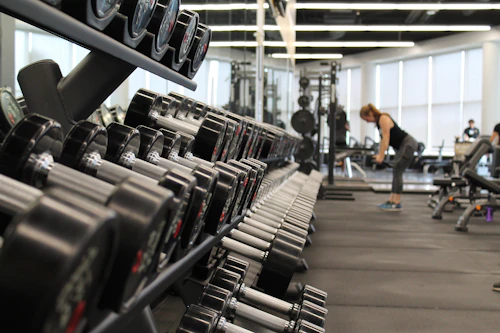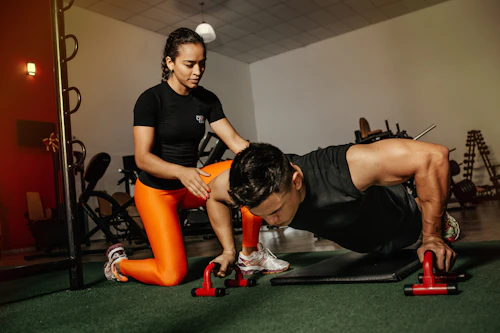
Shoulder injuries are among the most common gym-related injuries in Dubai, affecting everyone from CrossFit enthusiasts to casual weightlifters. Whether you're dealing with rotator cuff strain, impingement, or SLAP tears, understanding prevention and recovery is critical for getting back to full training safely. This comprehensive guide covers everything you need to know about shoulder injuries at the gym, plus physio costs and recovery timelines in Dubai.
Quick Navigation
Why Shoulder Injuries Are So Common in Dubai Gyms
The shoulder is the most mobile joint in the human body, which makes it incredibly versatile—but also inherently unstable. When you add high-rep overhead pressing, CrossFit-style movements, swimming, and inadequate warm-ups (common in busy Dubai gym environments), you create the perfect storm for injury.
Dubai's growing CrossFit and functional fitness community has contributed to a rise in shoulder injuries. Many people jump into high-intensity training without proper conditioning, lack access to comprehensive injury prevention strategies, or follow programming that emphasizes volume over movement quality.
The Perfect Recipe for Shoulder Injuries
- Overhead dominance: Pressing movements (bench press, overhead press, push-ups) performed repeatedly without adequate horizontal pulling work
- Poor scapular control: Lack of stabilizer muscle development (rotator cuff, serratus anterior)
- Limited mobility: Tight chest, anterior shoulders, and thoracic spine restricting full range of motion
- Heavy loads + high reps: Training too heavy, too frequently, without proper progression
- Inadequate warm-up: Jumping into heavy sets without activating rotator cuff muscles
- Swimming in heat: Dubai's warm pools encourage longer sessions, which can fatigue stabilizers
Understanding these risk factors is the first step toward preventing gym injuries entirely.
Anatomy of Shoulder Injuries: What's Actually Being Damaged
The shoulder complex consists of four bones (clavicle, scapula, humerus, sternum) and dozens of muscles and ligaments. Most gym-related shoulder injuries fall into a few specific categories:
Rotator Cuff Strain or Tear
The rotator cuff consists of four small muscles (supraspinatus, infraspinatus, teres minor, subscapularis) that stabilize the ball-and-socket joint. Strains are partial tears that cause inflammation; full tears involve complete rupture of the tendon.
Symptoms: Pain with overhead movements, weakness, clicking or popping, pain at night when lying on injured shoulder.
Recovery: Mild strains (4-8 weeks), moderate (8-16 weeks), severe tears may require surgery and 4-6 months recovery.
Subacromial Impingement (Impingement Syndrome)
This occurs when the space between the acromion (shoulder bone) and rotator cuff tendons narrows, pinching the tendons during overhead movements. Often caused by tight chest muscles and weak serratus anterior.
Symptoms: Pain between 60-120 degrees of arm elevation, pain reaching overhead, pain during sleep.
Recovery: 6-12 weeks with proper rehabilitation and mobility work.
SLAP Lesion (Superior Labral Anterior-Posterior Tear)
The labrum is cartilage that deepens the shoulder socket. SLAP tears typically occur at the top where the biceps tendon attaches, common in overhead athletes and heavy lifters.
Symptoms: Deep shoulder pain, weakness with overhead lifting, catching sensation, pain with throwing motions.
Recovery: Conservative treatment (12-16 weeks) or surgery (6-9 months).
AC Joint Separation or Arthritis
The acromioclavicular (AC) joint connects the clavicle to the acromion. Separation occurs from direct trauma or heavy pressing; osteoarthritis develops from repetitive stress.
Symptoms: Localized pain at the top of shoulder, tenderness on AC joint, pain with cross-body adduction.
Recovery: Mild separation (4-8 weeks), arthritis managed long-term with mobility and exercise modification.
Most shoulder injuries develop gradually from repetitive micro-trauma, not single incidents. Early recognition and conservative treatment prevent progression to severe injuries requiring surgery.
Warning Signs You Should Not Ignore
The shoulder is notorious for athletes "training through" pain, which often makes injuries worse. Learn to distinguish between normal muscle soreness and warning signs that demand immediate action.
Pain Types That Signal Injury
Sharp or Pinching Pain
Sharp pain that feels like something is pinching or catching indicates acute irritation or impingement. This is NOT normal soreness and requires immediate rest and assessment.
Pain That Worsens Throughout the Set
If pain increases as you continue an exercise (rather than improving with warm-up), stop immediately. Progressive pain signals structural damage.
Pain at Night or During Sleep
Rotator cuff injuries characteristically cause night pain. If you can't sleep on your shoulder or wake with pain, this indicates inflammation that needs treatment.
Weakness or Loss of Power
Sudden loss of strength (not muscle soreness) suggests muscle or tendon damage. You might feel like you can't press heavy weight or reach overhead without the arm feeling unstable.
Clicking, Popping, or Catching
Any mechanical clicking, popping, or catching sensation indicates soft tissue irritation or labral involvement. These sounds are red flags.
- Sharp or pinching pain (any level)
- Pain that progressively worsens during exercise
- Sudden loss of strength or instability
- Clicking/popping with pain
- Pain that disrupts sleep
Do not "push through" these warning signs. Continuing to train on a shoulder injury dramatically extends recovery time and can turn a 4-week issue into a 16-week (or surgical) one.
Prevention: Proper Form, Programming, and Pressing Ratios
The best shoulder injury treatment is prevention. This section covers the specific programming, form, and habits that keep shoulders healthy in high-volume training environments.
The 2:1 Pressing Ratio Rule
For every set of vertical or horizontal pressing you do, perform at least 2 sets of pulling movements. This maintains balance between anterior (front) and posterior (back) shoulder stability.
- Pressing: Bench press, overhead press, dips, push-ups
- Pulling: Rows, pull-ups, face pulls, band pull-aparts, reverse pec deck
If you bench press 3x per week, include 6+ sets of rowing per week. This prevents the anterior shoulder dominance that leads to impingement.
Rotator Cuff Activation: The Non-Negotiable Warm-Up
Before any upper body session, dedicate 5-8 minutes to activating your rotator cuff. This primes the stabilizers to control heavier loads.
Essential warm-up exercises:
- Band pull-aparts: 3 sets x 15 reps (light band)
- Scapular push-ups: 3 sets x 10-12 reps
- Prone Y-T-W raises: 3 sets x 8-10 reps each (light weight)
- Dead bugs or bird dogs: 2 sets x 10 reps (establishes core-shoulder connection)
Spend 2-3 minutes on these before touching a heavy weight. This dramatically reduces injury risk.
Form Principles for Shoulder Safety
Maintain Full Scapular Control
Your shoulder blade (scapula) should retract during pulling and rotate upward during pressing. Avoid shrugging shoulders toward ears or allowing the shoulder blade to "wing" off the ribcage.
Keep Elbows in Safe Positions
Bench pressing: Keep elbows at approximately 75 degrees (not flared 90 degrees). Pressing: Elbows slightly in front of shoulders (not directly overhead). Rows: Pull to ribcage, not neck.
Respect Range of Motion
If you lack shoulder mobility, reduce range of motion rather than forcing full range with poor form. A partial rep with perfect mechanics beats a full rep with compensation patterns.
Progressive Loading: The "Start Light" Principle
When learning any new pressing movement, start with 25-50% of your expected weight for 2-3 weeks. This allows stabilizer muscles to adapt before heavy loads.
Never return to a previous heavy weight immediately after injury. Start conservatively and progress 5-10% per week once pain-free.
Video your pressing movements from the side and back. You'll often see form breakdowns (shoulder shrugging, scapular winging, asymmetries) that feel fine but damage joints over time.
Shoulder Mobility & Strengthening Exercises for Injury Prevention
Beyond the basic warm-up, you should integrate targeted mobility and strengthening work 2-3x per week to bulletproof your shoulders against injury.
Essential Mobility Drills (Hold 15-30 seconds each, 2-3x/week)
- Sleeper stretch: Lie on side, externally rotate shoulder (stretches subscapularis)
- Cross-body shoulder stretch: Pull arm across body, focus on posterior shoulder
- Doorway pec stretch: Arm in doorway at 90 degrees, lean forward
- Chest opener: Arms behind back, clasp hands, straighten arms and lift
- Thoracic rotations: Half-kneeling position, rotate torso toward lifted arm
Rotator Cuff Strengthening Protocol (2-3x/week, 3 sets x 10-12 reps)
Use light weight or resistance bands. The goal is muscular endurance, not strength.
External Rotation (Supraspinatus & Infraspinatus)
Lie on side with elbow bent at 90 degrees. Rotate forearm upward against light resistance. Perform 10-12 reps, rest 60 seconds, repeat 3 sets on each side.
Face Pulls (Posterior Deltoid & Infraspinatus)
Attach rope to cable machine at eye height. Pull rope toward face, spreading ends to sides. Focus on squeezing shoulder blades together. 3 sets x 12-15 reps.
Band Pull-Aparts (Scapular Retractors)
Hold resistance band at arm's length in front of you. Pull band apart by retracting shoulder blades, then slowly release. 3 sets x 15-20 reps. Use different band tensions for variation.
Prone Y-T-W-I Raises (All Rotator Cuff Muscles)
Lie face-down on an incline bench. Perform raises in four positions: Y (arms at 120-degree angle), T (arms perpendicular), W (arms at 90 degrees, elbows bent), I (arms overhead). 8-10 reps each position, 2-3 sets.
Serratus Anterior Activation (Band Hold)
Lie on back, hold a light dumbbell or plate overhead with straight arms. Reach upward, protracting scapulae (shoulder blades spread outward). Hold 10 seconds, 3 sets x 5-8 reps. This is critical for pressing stability.
Add one of these protocols to every upper body session. On days 1-2, perform mobility work (5 minutes). On days 3-4, perform strengthening work (8-10 minutes). This rotation ensures continuous development and injury prevention.
Safe Training While Recovering From Shoulder Injury
The worst advice injured lifters receive is "stop all upper body training." In reality, strategic exercise modification allows continued training while protecting healing tissue.
What You CAN Still Do (Week 1-2 of Injury)
- Lower body training: Full intensity squats, deadlifts, lunges (pain-free)
- Core work: Planks, pallof press, dead bugs (no overhead component)
- Rowing (machine or water): If pain-free, low-impact cardio
- Gentle stretching and mobility: Self-myofascial release with foam roller
- Light band work: Rotator cuff exercises if pain-free
- Walking or incline walking: Full cardio effort without upper body impact
Modified Upper Body Work (Week 2-4)
Once acute pain subsides, begin controlled pressing and pulling at 30-50% normal intensity.
Neutral Grip Pressing
Neutral grip (palms facing each other) is gentler than pronated (palms forward). Perform dumbbell bench press or neutral grip press 2-3x/week at light-moderate intensity. Stop sets 2-3 reps short of any pain.
Scapular-Controlled Pulling
Focus on rows with strict form. Chest-supported rows (less shoulder stress than barbell), machine rows, and resistance band rows allow pulling work while protecting anterior shoulder.
Lateral Raises (Modified)
Limit range of motion to 60-90 degrees abduction (not full overhead). Use light weight and high reps (3 sets x 12-15 reps). This develops deltoids without stressing rotator cuff.
If any exercise causes pain during or lasting 2+ hours after, remove it immediately. Pain indicates tissue irritation; you're not yet ready for that movement.
Return to Sport/Activity Timeline
- Week 1-2: Rest, ice, compression, elevation. Focus on pain management.
- Week 2-4: Gentle mobility work, low-load rotator cuff strengthening, pain-free lower body training.
- Week 4-8: Progressive upper body work, introduce light pressing/pulling, increase range of motion.
- Week 8+: Return to full training based on sports physiotherapy clearance.
Physiotherapy for Shoulders in Dubai: Costs, Treatments, and Timeline
Dubai offers excellent sports physiotherapy services, though costs vary significantly by clinic. Here's what to expect:
Typical Physio Session Costs in Dubai
| Clinic Type | Initial Assessment | Follow-up Session | Package Deals (4 weeks) |
|---|---|---|---|
| Standard Private Clinic | AED 200-250 | AED 180-220 | AED 700-900 |
| Mid-Range Sports Physio | AED 250-350 | AED 220-300 | AED 900-1,200 |
| Premium/International Clinics | AED 350-450 | AED 300-400 | AED 1,200-1,600 |
| Hospital Physio Departments | AED 120-180 | AED 100-150 | AED 450-600 |
Common Physio Treatments for Shoulder Injuries
Manual Therapy & Soft Tissue Mobilization
The physio uses hands-on techniques to release tension, improve mobility, and reduce pain. Includes massage, myofascial release, and joint mobilization. Cost: Included in session rate.
Ultrasound Therapy
Sound waves penetrate tissue to reduce inflammation and promote healing. Particularly effective for tendinopathy and early-stage tears. Sessions: 2-3x/week. Cost: AED 50-100 per session (additional to physio cost, or included in premium rates).
Shockwave Therapy (ESWT)
Advanced treatment for chronic tendon injuries. Stimulates healing through controlled shock waves. Highly effective for SLAP tears and chronic impingement. Cost: AED 800-1,500 per session. Usually requires 3-5 sessions.
Dry Needling / Acupuncture
Fine needles inserted into trigger points to reduce muscle tension and pain. Effective for rotator cuff muscle tightness. Cost: AED 100-200 per session (often included in premium physio packages).
Kinesiology Taping
Specialized tape provides proprioceptive feedback and scapular support. Commonly used during recovery to improve mechanics. Cost: AED 30-50 per application (often included).
Recommended Physio Frequency by Injury Severity
- Mild strain (Grade 1): 2 sessions/week for 4-6 weeks = AED 1,440-2,640
- Moderate strain (Grade 2): 3 sessions/week for 8 weeks = AED 4,320-9,600
- Severe tear (Grade 3) or post-surgery: 3-4 sessions/week for 12+ weeks = AED 7,200-19,200
Book a Sports Physiotherapist in Dubai Today
Don't let shoulder pain linger. Professional assessment ensures accurate diagnosis and faster recovery. Find experienced sports physios in your area with real patient reviews.
Return to Full Training: Progressive 8-12 Week Plan
This periodized approach ensures sustainable return to heavy pressing, pulling, and functional movement without re-injury. Follow this timeline based on your injury severity and physio clearance.
Phase 1: Passive Range of Motion (Weeks 1-2)
Goal: Restore pain-free range of motion without loading.
- Passive stretching: doorway pec stretch, cross-body shoulder stretch, sleeper stretch (3 sets x 30 seconds each)
- Pendulum circles: shoulder relaxed, make gentle circles with arm (3 sets x 10 each direction)
- No resistance training of shoulder
- Pain-free lower body training continues (squats, deadlifts, etc.)
- Walking or stationary cardio as tolerated
Phase 2: Controlled Strengthening (Weeks 3-5)
Goal: Rebuild rotator cuff and scapular stabilizer strength at 30-50% effort.
- Rotator cuff strengthening: external rotation, face pulls, band pull-aparts (3 sets x 12-15 reps, 2-3x/week)
- Scapular control: prone Y-T-W raises, serratus activation (2 sets x 10 reps, 2x/week)
- Light horizontal pulling: supported machine rows, resistance band rows (3 sets x 10-12 reps, 2x/week)
- Light horizontal pressing: neutral grip dumbbell press at 20-30% max (3 sets x 10 reps, 1x/week)
- Mobility work before every session (thoracic rotation, chest stretch, lat stretch)
Phase 3: Sport-Specific Loading (Weeks 6-8)
Goal: Increase pressing and pulling volume to 60-80% normal intensity while maintaining strict form.
- Horizontal pressing: dumbbell bench press 2x/week, neutral grip press 1x/week (3 sets x 8-10 reps at 60% max)
- Vertical pressing: light overhead press or push press 1x/week (3 sets x 6-8 reps at 50% max)
- Rowing: barbell or dumbbell rows 2x/week (3 sets x 8-10 reps at 70% max)
- Pull-ups (assisted if needed): 2-3 sets x 5-8 reps, 1x/week
- Accessory work: face pulls, band pull-aparts, lateral raises (light, 3 sets x 12 reps)
- Heavy lower body: Full intensity squats and deadlifts
Phase 4: Return to Competition/Full Training (Weeks 9-12+)
Goal: Progressively increase intensity and volume toward pre-injury levels while maintaining the 2:1 pulling-to-pressing ratio permanently.
- Pressing: Gradually increase intensity to 85-100% max over 4 weeks. Maintain volume limits (no more than 2 heavy sessions/week)
- Pulling: Match or slightly exceed pressing volume (2:1 ratio)
- Sport-specific movements: CrossFit athletes may return to Olympic lifting; swimmers return to full swimming stroke
- Ongoing prehab: Maintain rotator cuff and mobility work even as intensity increases
- Weekly monitoring: If pain returns, regress immediately to previous phase for 1-2 weeks
The 2:1 pulling-to-pressing ratio should become a permanent habit. Even after full recovery, maintain this ratio in your training split. This prevents re-injury and keeps shoulders healthy for years of training.
Frequently Asked Questions About Shoulder Injuries at the Gym
Can I continue training legs while recovering from a shoulder injury?
Yes, absolutely. Lower body training (squats, deadlifts, lunges) continues at full intensity unless the pain affects your core stability or balance. This maintains fitness and morale during shoulder recovery. Lower body work actually supports shoulder recovery by maintaining systemic conditioning and blood flow.
How do I know if my shoulder injury requires surgery?
Most shoulder injuries (80%) respond to conservative treatment (physio, rest, exercise modification) within 8-16 weeks. You may need imaging (MRI or ultrasound) to confirm the diagnosis, but surgery is typically reserved for: (1) complete rotator cuff tears in active athletes, (2) SLAP tears that don't improve after 12 weeks of physio, (3) AC joint separation with significant instability. Discuss imaging options with your physio; they can recommend whether imaging is necessary based on your symptoms and response to treatment.
What's the difference between a strain and a tear?
A strain is partial muscle or tendon damage (Grade 1: mild, 2: moderate, 3: severe). A tear is complete rupture of the muscle or tendon. Both respond to the same conservative treatment initially, but tears take longer to heal (12-16+ weeks) and may require different rehabilitation progressions. Imaging (ultrasound or MRI) is required to confirm whether you have a strain or tear.
Is it normal for physio to hurt during treatment?
Some discomfort is normal during soft tissue work or mobilization, but it should be tolerable ("good pain"). Sharp pain, pinching, or unbearable sensation means the physio is working too aggressively. Communicate this immediately; they can adjust pressure or technique. The goal is therapeutic discomfort, not pain.
How long before I can return to CrossFit or Olympic lifting after shoulder injury?
For mild strains: 6-8 weeks before sport-specific movements. For moderate-to-severe injuries: 12-16+ weeks. Follow the 4-phase progression above. Return should be gradual: week 1, return to scaled movements (lighter weight, reduced range); week 2-3, perform movements at 50% volume; week 4+, progress toward full participation. Work with a certified personal trainer familiar with injury rehabilitation to ensure proper scaling.
Find a Certified Personal Trainer in Dubai
Recovery is just the start. A knowledgeable trainer helps rebuild strength, prevent re-injury, and optimize your training program for long-term shoulder health.
Final Thoughts: Shoulder Health Is a Long-Term Commitment
Shoulder injuries are common but preventable. The key strategies are: (1) maintain proper pressing-to-pulling ratios, (2) never skip rotator cuff activation and mobility work, (3) respect warning signs and stop training immediately if pain occurs, and (4) follow a progressive return-to-training protocol after injury.
Dubai's thriving fitness community offers world-class physio clinics and personal trainers who specialize in shoulder injury rehabilitation. Don't hesitate to seek professional guidance—the investment in proper treatment and recovery prevents months of pain and loss of training time.
Your shoulders are critical to every pressing, pulling, and functional movement. Protect them, strengthen them, and they'll support your training goals for decades to come.