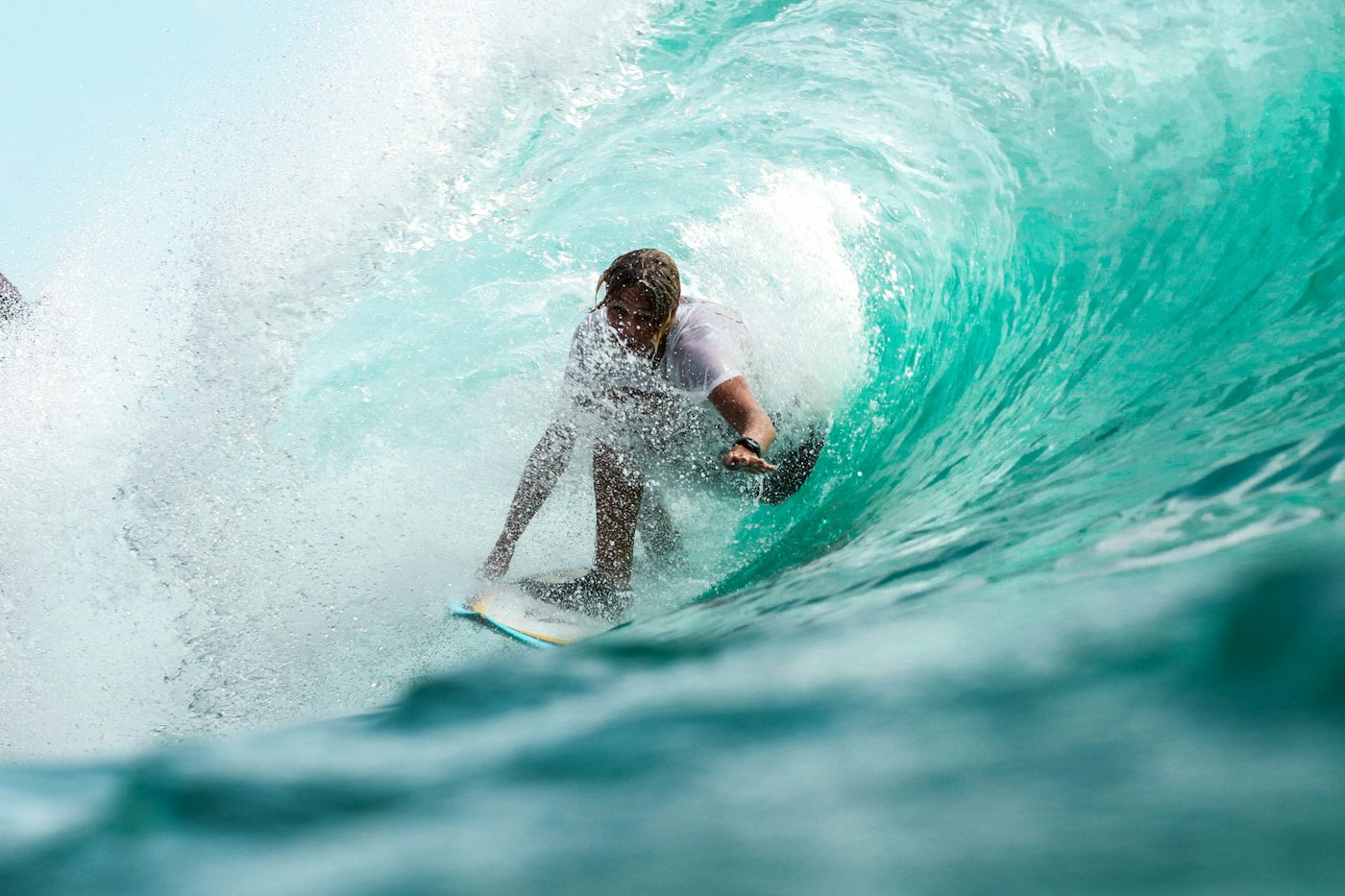
Dubai sits on the Arabian Gulf — one of the calmest, warmest bodies of water on the planet. Traditional ocean surfing requires ocean swell, which the Gulf rarely provides. But that hasn't stopped Dubai from developing a genuine surf culture through wavepools, wakesurf behind boats, and even the occasional winter groundswell. Whether you want to learn to surf from scratch or are chasing a fitness programme built around wave riding, this guide covers every option available in the UAE in 2026.
Can You Surf in Dubai?
The honest answer is: it depends on what counts as surfing to you. The Arabian Gulf is an enclosed shallow sea with limited fetch (the distance over which wind blows to generate waves), which means natural ocean swell of the type that creates surfing waves is rare. However, Dubai and the wider UAE offer several excellent alternatives that have built a thriving surf-adjacent water sports community.
Wakesurf
Wakesurfing is the most popular surf-style activity in Dubai. A specially shaped boat with wake-shaping ballast tanks creates an artificial wave behind it. Riders use a short surf-shaped board (no binding) and surf the boat's wake, eventually releasing the tow rope and riding the wave freely. It's remarkably similar to ocean surfing in terms of body mechanics and balance demands, and genuinely good wakesurf boats in Dubai produce rideable waves of 0.6–1.2 metres — plenty for learning and progression.
Wavepools
Several wavepool attractions operate in the UAE, most notably at water parks like Aquaventure on the Palm Jumeirah and Laguna Waterpark at La Mer. These are primarily bodysurf or flowboard attractions rather than genuine standing surf experiences, but they provide an excellent introduction to wave dynamics and balance for complete beginners.
Natural Waves — East Coast and Oman
The UAE's east coast on the Gulf of Oman (accessible from Dubai in approximately 90 minutes) receives genuine Indian Ocean swell and has surfable waves — particularly at spots near Fujairah, Dibba and the Musandam Peninsula. Swell is most consistent from October to April. For serious surfing, many Dubai-based surfers make regular day or weekend trips to these spots, or travel to Oman's increasingly popular surf destination of Muscat. See our water sports guide for Dubai for more outdoor water activities in the region.
The Fitness Benefits of Surfing and Wakesurf
Surfing is one of the most complete, functional fitness activities available — it demands upper body strength for paddling, core stability and balance for riding, lower body power for take-offs, and cardiovascular fitness for sustained water time. Here's a detailed breakdown of the fitness demands.
Upper Body and Paddle Fitness
Traditional ocean surfing is dominated by paddling — roughly 50–60% of surf session time is spent paddling. This develops exceptional endurance in the shoulders, upper back (particularly the latissimus dorsi and rhomboids), triceps and serratus anterior. Swimmers transition easily to surfing because of this shared demand. Even wakesurf, which doesn't require paddling, demands significant shoulder stability during the pop-up and lateral shoulder work during turns.
Complement your surf training with specific shoulder strengthening — see our shoulder workout guide for exercises that directly support water sports performance.
Core Strength and Stability
Surfing is perhaps the purest functional expression of core strength and stability. The surfboard is an unstable surface in a constantly moving medium — every movement on the board is mediated through the core. The obliques, transverse abdominis, and deep spinal erectors are all heavily recruited. Regular surf training produces core strength gains that translate remarkably well to gym performance, yoga and virtually every other sport. Complement with core stability training.
Balance and Proprioception
Standing and manoeuvring on a moving board develops exceptional balance and proprioceptive ability — the body's sense of its own position in space. This is one of the most transferable fitness benefits of surfing, reducing injury risk in all other sports and activities. Research shows surfers have measurably superior single-leg balance and reaction time compared to non-surfing athletes of similar overall fitness levels.
Leg Power and Explosive Strength
The 'pop-up' — the move from prone paddling position to standing — is an explosive full-body movement that demands hip flexor flexibility, tricep strength, and lower body power simultaneously. Repeated pop-up practice develops functional explosive power. Once standing, bottom turns, cutbacks and manoeuvres demand significant quad, glute and calf power applied through a dynamically unstable stance.
Cardiovascular Fitness and Mental Wellbeing
A two-hour surf session in moderate conditions burns 600–1,000 calories and significantly elevates cardiovascular output. The mental wellbeing benefits are equally well-documented — the combination of physical challenge, nature exposure, and the meditative focus required to read and react to waves consistently ranks surfing among the highest-rated activities for mood improvement and stress reduction. In Dubai's high-pressure professional environment, this mental dimension is often the primary draw for many practitioners.
Find Outdoor Fitness & Water Sports in Dubai
Discover outdoor training, sports coaching and water activities across Dubai's best beaches and waterways.
Outdoor Training Find a CoachWakesurf in Dubai: The Complete Guide
Wakesurf is by far the most accessible surf-style activity in Dubai and has seen explosive growth over the past five years. Here's everything you need to know to get started.
How Wakesurf Works
A dedicated wakesurf boat (Malibu, Mastercraft, Centurion, Nautique or similar) uses ballast tanks filled with water to create additional displacement, which generates a larger, more surfable wave off the boat's stern. A weighted ballast also tilts the boat to one side to create an asymmetric wave — a better, longer-breaking wave on the weighted side. Modern wakesurf boats can generate genuinely impressive waves rivalling beginner ocean surf conditions.
You start in the water holding a short rope, the boat accelerates slowly to around 11–12 mph (much slower than wakeboarding at 22–26 mph), you stand up, position yourself correctly in the wave, and then — if you've got it right — release the rope and surf freely behind the boat. Sessions typically last 2–3 hours with multiple riders rotating in and out of the water.
Dubai Wakesurf Venues and Pricing
Wakesurf sessions operate across Dubai's waterways — Dubai Marina, Jumeirah Beach, Palm Jumeirah, and Jebel Ali. Most operators offer 2-hour private boat sessions that include equipment (board, wetsuit if desired, rope) and instruction for beginners. Pricing for wakesurf boats in Dubai is higher than equivalent activities in Europe or North America due to operational costs, but the warm, calm water and year-round availability are significant advantages.
| Activity | Typical Cost | Duration | Riders |
|---|---|---|---|
| Private wakesurf boat session | AED 900–1,800 | 2 hours | Up to 6 people |
| Shared boat session | AED 200–350/person | 2–3 hours | 4–6 per boat |
| Beginner lesson (instructed) | AED 350–500/person | 1.5 hours | 1–3 students |
| Wavepool surf session | AED 100–200 | 30–60 min | Groups |
Best Time to Wakesurf in Dubai
Unlike outdoor land sports, wakesurf isn't constrained by air temperature since you're in the water regardless. However, practical comfort varies significantly by season.
Perfect. 28–32°C water, mild air, calm seas.
Good. 22–26°C water. Wetsuit optional for sensitive.
Excellent. Warming up, comfortable air and water.
Hot (35°C+) but rideable. Early morning sessions best.
Learning to Surf in Dubai: Beginner Progression
Whether you're approaching wakesurf or planning to advance to ocean surfing on the UAE's east coast, the skill progression follows a predictable path.
Stage 1: Land Drills and Board Fundamentals
Before getting in the water, a good instructor will cover the fundamental pop-up movement on land. This explosive push-up and leg drive movement is the foundation of all surfing — getting it right on land significantly accelerates water learning. You'll also learn about board positioning, weight distribution, and how waves (or wakesurf waves) break. Most beginners skip this stage by jumping straight in the water — those who do the land drills progress faster.
Stage 2: First Pop-Ups (Sessions 1–3)
In the water, the first goal is simply getting to your feet and holding the stance momentarily. Most beginners achieve their first pop-up within 1–3 sessions. The most common mistakes are: looking down at your feet (look forward), standing too far back on the board (causing it to sink), or adopting a narrow stance (stand wider than you think you need to). Progress here feels rapid and generates significant satisfaction and motivation to continue.
Stage 3: Riding Without the Rope (Sessions 4–10)
For wakesurf specifically, the goal of releasing the tow rope and riding freely is achievable within 4–10 sessions for most people. This requires finding the 'sweet spot' in the wave — not too close to the boat (where turbulent white water creates instability) and not too far back (where you fall out of the wave). This positioning skill is the single most taught concept in wakesurf instruction.
Stage 4: Turns and Tricks (Sessions 10+)
Once you're riding independently, progression accelerates dramatically. Pumping the board (generating speed by shifting weight heel-to-toe), bottom turns, cutbacks and eventually tricks like the shove-it or aerial manoeuvres come within reach. Many Dubai wakesurf enthusiasts spend years developing their riding at this stage — it's an endlessly progressive activity.
- Swimwear — board shorts or bikini (avoid loose shorts that drag in water)
- Rash guard or wetsuit top — highly recommended to prevent board rash and sun protection
- Reef-safe, high-factor waterproof sunscreen — UAE UV index is extreme
- Water shoes are optional — most wakesurf is barefoot
- Towel and change of clothes for after
- Electrolyte drink for after the session — exertion in warm water leads to significant sweat loss
Surf Fitness Training: How to Prepare Your Body
If you're serious about developing your surfing or wakesurf to a high level, targeted land-based fitness training dramatically accelerates progression and prevents injury. A dedicated surf fitness programme addresses the specific muscular demands of the sport.
Paddling Strength and Endurance
For ocean surfing (east coast sessions), paddling capacity is critical. Training should include: swimming freestyle (best direct transfer), lat pulldowns, band pull-aparts, face pulls, and Prone cobra holds (which mimic the paddling position). Shoulder rotator cuff strengthening is essential as paddling overuse injuries are the most common issue affecting regular surfers.
Pop-Up Power and Hip Mobility
The pop-up requires excellent hip flexor flexibility, tricep strength, and explosive hip extension. Training: burpees (the most direct pop-up simulation), hip flexor stretching (lunges, pigeon pose), tricep dips, and box jumps for explosive hip extension. Yoga is widely practiced by surfers for exactly these reasons — our yoga for men guide covers several poses specifically valuable for surfers.
Balance and Core for Riding
Balance training: BOSU ball single-leg work, balance board riding (many surf shops sell these for home use), Indo Board sessions, or simple single-leg exercises. Core: anti-rotation presses, Pallof press, landmine rotations, and cable woodchops all build rotational core strength specific to surfing movements. See our core stability guide for a full programme.
Lower Body Power for Turns
Deep squats, split squats, single-leg Romanian deadlifts and lateral lunges all build the surf-specific leg strength needed for powerful turns. The emphasis should be on unilateral (single-leg) exercises that mimic the asymmetric loading of surfing. See our leg day workout guide for complementary lower body programming.
Get a Surf Fitness Training Plan in Dubai
Work with a personal trainer who understands water sports conditioning to build a training programme that supports your surf progression.
Find a Trainer Join FreeSafety on the Water in Dubai
Dubai's waterways are busy with commercial shipping, leisure boats, jet skis and water taxis. Understanding safety protocols before getting on the water is essential.
UAE Marine Safety Rules
The UAE's waterway safety rules require life jackets or personal flotation devices for non-swimmers in recreational vessels. Most wakesurf operators provide these. Keep a safe distance from other vessels, jetties and navigation channels. Designated watersports zones exist in most Dubai areas — your operator will be familiar with these. All wakesurf and water sports operators in Dubai should be licensed with Dubai Tourism (DTCM) and Dubai Municipality.
Sun and Heat Safety
Combine the reflection of sun off water with Dubai's extreme UV index and you have significant sunburn risk — even on cloudy days. Use SPF 50+ waterproof sunscreen, reapply every 90 minutes in water, wear a rash guard covering your back and shoulders (the most exposed areas while paddling), and wear a cap or visor on the water. Heat exhaustion is also a genuine risk during summer sessions — see our summer fitness and heat guide.
Planning Your East Coast Surf Trip from Dubai
For those who want to experience genuine ocean surfing, the UAE's east coast provides the closest option. Fujairah is accessible in approximately 90 minutes from Dubai via the E611 highway. The drive takes you through the dramatic Hajar Mountains and into a distinctly different landscape from Dubai's coastal plain.
Several spots along the Fujairah and Dibba coastline receive swell from October to April. Local surf shops and instructors operate in the area and can advise on current conditions and appropriate surf spots for different ability levels. Don't expect Bali — the surf here is modest in size and consistency — but for learning the ocean surfing fundamentals before a proper surf trip, it's invaluable. Combine with the east coast's excellent snorkelling and the rock pools near Snoopy Island for a full outdoor adventure day.
Related Water Sports and Fitness Activities
If you enjoy the water and are looking for complementary activities, Dubai has an exceptional range of aquatic fitness options:
- Wakeboarding & Kitesurfing Dubai — more tow-rope water sports for adrenaline seekers
- SUP Paddleboarding Dubai — standing paddleboard fitness on Dubai's calm waters
- Swimming Lessons Dubai — build the swimming fitness that underpins all water sports
- Aqua Fitness Classes Dubai — pool-based fitness classes
- Outdoor Training Dubai — beach and outdoor fitness workouts
- Outdoor Training Category — find outdoor coaches on GetFitDXB
- JBR Area Guide — the best beach fitness area in Dubai