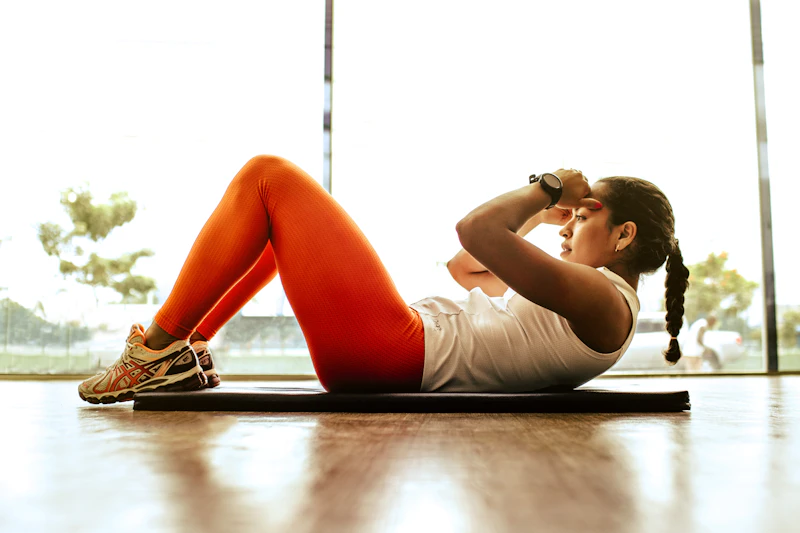
Your core is not your six-pack. This common misconception has led millions of fitness enthusiasts to chase visible abdominal muscles through endless crunches, only to find themselves with chronic back pain, limited athletic performance, and unstable movement patterns. The real core — your body's deep stabiliser system — is largely invisible. It comprises small, powerful muscles buried beneath the surface, including the transverse abdominis, multifidus, diaphragm, and pelvic floor. When trained correctly, these muscles provide the foundational stability that allows you to move powerfully, protect your spine during daily life, enhance athletic performance, and prevent injury. In Dubai, where fitness culture thrives and world-class coaches specialise in functional training, core stability has become a cornerstone of intelligent programming — whether you are preparing for sport, recovering from injury, or simply seeking long-term health and resilience.
1. Core Stability vs. Core Strength: Understanding the Difference
The fitness industry often conflates these two concepts, but they are distinctly different — and training one does not automatically develop the other.
Core Stability
Core stability refers to the ability of your spinal stabiliser muscles to create and maintain a neutral, protected spine position during static holds, dynamic movement, and external perturbation. It emphasises:
- Coordinated activation of deep stabilisers (transverse abdominis, multifidus)
- Isometric holds and resistance to movement
- Proprioceptive awareness and neuromuscular control
- Protection of the lumbar spine under load and during movement
- Spinal alignment and postural integrity
Stability training produces a strong, resilient core but typically does not create visible abdominal definition.
Core Strength
Core strength refers to the raw power and force-generating capacity of your trunk muscles, particularly the rectus abdominis (the "six-pack" muscle). It emphasises:
- Dynamic movement and spinal flexion
- High force production and muscular hypertrophy
- Visible muscle development
- Performance in explosive movements
A person with exceptional core strength can perform hundreds of crunches but may still have poor stability, weak performance in rotational movements, and significant back pain risk.
The Smart Approach: Train Both Wisely
The modern evidence-based approach emphasises stability first, strength second. Once you have built a foundation of spinal stability through proper stabiliser training, you can safely add strength work without compromising spinal integrity. This sequence prevents injury and produces far superior long-term results.
🔧 Find Your Core Coach in Dubai
Browse certified strength coaches specialising in core stability, pilates, and functional training across Dubai.
2. Key Muscle Groups: Understanding Core Anatomy
To train your core effectively, you must understand which muscles matter and why. Not all core work is created equal.
The Transverse Abdominis (TrA)
This is the deepest of the abdominal muscles, running horizontally around your abdomen like a corset. It provides foundational intra-abdominal pressure and spinal stability. When contracted, it "cinches" your torso and stabilises your lumbar spine. This muscle is the cornerstone of core stability training.
The Multifidus
Running vertically along both sides of your spine, the multifidus muscles provide segmental spinal stability and control of spinal extension and rotation. Unlike the erector spinae (which are more about power), the multifidus provides fine motor control and proprioceptive input. This muscle atrophies rapidly after spinal injury and must be reactivated systematically.
The Diaphragm
Your primary breathing muscle is also a core stabiliser. Proper breathing patterns — diaphragmatic rather than chest breathing — enhance stability and intra-abdominal pressure. Many people with poor core stability also breathe inadequately, creating a vicious cycle of instability and tension.
The Pelvic Floor
These muscles form the base of your core, providing spinal stability and controlling continence. Pelvic floor dysfunction is far more common than commonly recognised, particularly in sedentary populations. Strengthening these muscles is essential for complete core function.
The Rectus Abdominis
The visible "six-pack" muscle runs vertically down your abdomen and is responsible for spinal flexion. While important for complete core function, it is not the primary stabiliser. Overemphasis on this muscle (through excessive crunches) often leads to poor posture, reduced spinal stability, and pain.
The Obliques (Internal & External)
These muscles support rotation and lateral flexion of the spine. They are trained effectively through anti-rotation exercises (like Pallof presses) and functional movements, but isolation work is typically unnecessary.
3. Evidence-Based Core Stability Exercises
Forget crunches. Modern core training prioritises functional, challenging movements based on decades of research. Here are the gold-standard exercises that actually build stability.
Dead Bugs
Lie supine with arms extended toward ceiling and knees bent at 90°. Slowly lower opposite arm and leg (left arm, right leg) until they hover just above the floor, then return. This teaches coordinated, controlled core stabilisation and is perfect for beginners.
Why it works: Demands isolated limb movement without losing spinal stability. Builds transverse abdominis activation.
Bird Dogs
From quadruped position (hands and knees), extend opposite arm and leg simultaneously, creating a straight line from fingertips to toes. Hold for 2–3 seconds, maintain neutral spine, and alternate sides.
Why it works: Requires active spinal stability during limb extension. Builds integrated core control and anti-rotation stability.
Pallof Press
Holding a cable or resistance band at chest height, step perpendicular to the anchor point. Press the handle away from your body, resisting the rotational force. Return and repeat.
Why it works: Builds anti-rotation stability — arguably the most functionally important core quality. Prevents unwanted spinal twisting during daily activity.
Plank Variations
Standard front plank: Forearm plank for 30–60 seconds, maintaining neutral spine and engaged core. Progress to hand plank for increased difficulty.
Side plank: Lie on your side, raise hips until body is straight, hold 20–45 seconds. Builds lateral stability and oblique endurance.
Why it works: Isometric holds build muscular endurance and co-contraction of stabiliser muscles. Directly translates to posture and spinal protection.
Quadruped Shoulder Taps
From quadruped position, slowly tap one hand to opposite shoulder while maintaining spinal stability. Alternate sides rhythmically.
Why it works: Demands fine motor control and continuous core engagement. Builds anti-rotation endurance.
Ab Wheel Rollouts (Advanced)
Kneeling with an ab wheel, roll forward while extending hips, chest, and arms toward the floor, then roll back. Start with partial range of motion.
Why it works: Extreme anti-extension challenge. Builds profound core control and strength. Requires solid foundation before attempting.
Core stability is neuromotor — your nervous system must learn proper muscle activation patterns. Sloppy high-repetition work teaches poor patterns. Instead, perform fewer reps with perfect form, pausing to feel active core engagement before moving again.
4. Programming & Progression: Building a Core Routine
Effective core training follows clear progressions and intensity variables. Here is a science-based approach.
Beginner Program (Weeks 1–4)
- Dead bugs: 3 sets × 10–12 reps per side
- Bird dogs: 3 sets × 8–10 reps per side
- Quadruped shoulder taps: 3 sets × 10 taps per side
- Front plank: 3 sets × 20–30 seconds
- Side plank: 2 sets × 15–20 seconds per side
- Frequency: 3–4 times weekly
Intermediate Program (Weeks 5–12)
- Dead bugs (feet on ground): 3 sets × 12–15 reps per side
- Bird dogs (with 2-second pause): 3 sets × 12 reps per side
- Pallof press (light resistance): 3 sets × 10–12 reps per side
- Front plank: 3 sets × 45–60 seconds
- Side plank: 3 sets × 30–45 seconds per side
- Frequency: 4–5 times weekly, or 2 dedicated sessions + core work 2–3x in other sessions
Advanced Program (Beyond 12 Weeks)
- Ab wheel rollouts: 3 sets × 8–12 reps
- Pallof press (moderate to heavy): 3 sets × 12 reps per side
- Anti-rotation wood chops: 3 sets × 10–12 per side
- Hand plank holds: 3 sets × 60–90 seconds
- Suitcase carries: 3 sets × 30–40m per side
- Frequency: 3–4 dedicated sessions weekly, or integrated into strength work
Progression Variables
- Duration: Increase hold times (for planks)
- Repetitions: Add reps before increasing load
- Resistance: Add weight or band tension gradually
- Range of motion: Decrease stability (e.g., ab wheel full rollout vs. partial)
- Surface: Progress to unstable surfaces (stability ball, BOSU) only after demonstrating control on stable ground
5. The Yoga & Pilates Connection: Complementary Approaches
Traditional yoga and modern Pilates both build core stability effectively, though through different means and philosophies. Understanding how they complement conventional strength training is valuable.
Pilates for Core Stability
Pilates was designed specifically for core development and spinal alignment. The method emphasises:
- Precise movement patterns with conscious core engagement
- Low repetition, high control approach
- Use of props (reformer, magic circle) to provide variable challenge
- Postural integration and movement efficiency
Dubai has excellent Pilates studios, particularly reformer Pilates classes which offer excellent progression and feedback. For people seeking intelligent core training, Pilates reformer work is outstanding.
Yoga for Core Stability
While often seen as purely flexibility work, yoga builds exceptional core stability through sustained holds (planks, boat pose, warrior variations) and integrated movements. Yoga practice, particularly vinyasa and yin approaches, develops:
- Proprioceptive awareness and body control
- Integrated movement patterns
- Breathing coordination with movement (pranayama)
- Spinal mobility alongside stability
Integration Strategy
Optimal results come from combining approaches:
- Strength work (2–3x weekly): Dedicated core stability exercises as outlined above
- Pilates (1–2x weekly): Reformer or mat Pilates for functional integration and movement efficiency
- Yoga (1–2x weekly): For mobility, breathing integration, and sustained core endurance
This combination provides stability, strength, mobility, and movement quality — the complete package.
6. Core Stability for Back Pain Prevention & Rehabilitation
Perhaps the most compelling reason to train core stability seriously: preventing and eliminating chronic back pain.
The Back Pain Epidemic
Lower back pain affects approximately 80% of people at some point in their lives. Most cases (90%+) are mechanical — meaning they result from poor posture, weak stabilisers, and dysfunctional movement patterns, not structural damage. Remarkably, properly designed core stability training resolves or dramatically improves most mechanical back pain within 4–8 weeks.
Why Poor Stability Causes Pain
When your core stabilisers are weak or poorly coordinated:
- Your lumbar spine becomes hypermobile, creating excessive shear forces on intervertebral discs and facet joints
- Surrounding muscles (erector spinae, quadratus lumborum) overwork, becoming tight and painful
- Movement patterns become dysfunctional, creating repetitive stress and inflammation
- Posture deteriorates, worsening mechanical stress
Over time, this creates chronic pain, reduced function, and psychological stress.
The Evidence-Based Rehabilitation Approach
Clinical research consistently shows that specific core stability training eliminates back pain better than passive treatments. The approach:
- Begins with activation: Reawaken dormant stabilisers through gentle isometric work (bird dogs, planks)
- Progresses systematically: Add dynamic movement, load, and challenge as control improves
- Emphasises movement quality: Relearning proper movement patterns is as important as muscle strength
- Combines with stretching: Address tight hip flexors, hamstrings, and thoracic spine mobility issues
- Integrates with functional work: Once stable, train compound movements (squats, deadlifts) to build integrated strength
Most people with mechanical back pain benefit from working with a qualified physiotherapist or strength coach experienced in rehabilitation initially. Dubai has excellent specialists who can assess your specific dysfunction and prescribe appropriate progressions.

7. Core Stability for Athletic Performance
Elite athletes know that core stability is foundational for performance. Here is why and how to train it for sport.
Why Athletes Need It
In virtually every sport — running, cycling, martial arts, swimming, tennis, football — a strong, stable core:
- Transfers force efficiently from lower body to upper body (throwing, striking)
- Improves rotational power and stability
- Reduces injury risk significantly
- Enhances proprioception and movement control
- Improves movement efficiency, reducing wasted energy
Sport-Specific Programming
For runners: Emphasise anti-rotation (Pallof press) and single-leg stability work. A strong core prevents excessive spinal rotation and lateral flexion during running.
For martial artists: Focus on rotational power (wood chops, cable rotations) alongside stability. Building ability to rotate powerfully while maintaining spinal safety is critical.
For swimmers: Emphasise shoulder stability and anti-rotation work, as swimming places extreme demands on core stability under fatigue.
For cyclists: Build anti-extension stability (front plank progressions) and hip stability. Poor core stability leads to lower back pain in cyclists.
Elite athletes typically integrate core work into their training 4–6 times weekly, combining dedicated sessions with integrated core work within other training.
8. Finding Certified Core Stability Coaches in Dubai
Not all trainers understand core stability deeply. Here is how to find a genuinely qualified coach.
Credentials to Look For
- Pilates certification (Polestar, ISSA, or international equivalent): Indicates deep understanding of core function and progression
- Physiotherapy background with strength specialisation: Excellent for rehabilitation and movement correction
- Strength & conditioning certification (CSCS, ISSA-CPT): With demonstrated knowledge of core programming
- CIMSPA or REPS Level 3+: UK standards indicating structured qualification
- Back pain rehabilitation specialisation: If addressing pain is your goal
Questions to Ask Potential Coaches
- "How do you differentiate between core stability and core strength in your programming?"
- "Can you explain the difference between stabiliser muscles and prime movers in core work?"
- "What is your approach to progression — how do you advance clients who master basic exercises?"
- "How often should a typical client train core, and why?"
- "Do you use movement assessment to identify specific stability deficits?" (Good answer: yes, and they explain how)
Top Dubai Locations for Core Training
Dubai Marina & JBR: Premium fitness studios, multiple Pilates reformer facilities, excellent personal trainers.
Downtown Dubai & DIFC: Corporate wellness centres with physiotherapists, strength specialists, and integrated rehab.
Business Bay: Corporate fitness facilities, many with rehabilitation specialists.
Al Wasl & Umm Suqeim: Boutique studios specialising in Pilates, yoga, and functional training.
| Service Type | Duration | Price Range | Best For |
|---|---|---|---|
| 1-on-1 Core Coaching | 60 minutes | AED 250–450 | Personalised assessment and programming |
| Pilates Reformer Class | 50–60 minutes | AED 180–350 | Structured progression and feedback |
| Small Group Core Training | 45–60 minutes | AED 120–250 | Community and affordability |
| Package (5 sessions) | 60 min each | AED 1,100–2,000 | Commitment-based savings and results |
Cost-Saving Strategies
- Commit to packages for 15–25% discounts
- Group classes offer excellent value and community
- Combine 1-on-1 sessions with independent practice between appointments
- Look for newly certified trainers with solid training but lower rates than established practitioners
- Online coaching is increasingly available for those seeking flexibility
Learn more about finding personal trainers in Dubai and functional fitness approaches for integrated strength development alongside core stability work.
Can you hold a front plank for 60+ seconds with perfect form? Can you perform 15 bird dogs per side with controlled, precise movement? Can you do a single-leg deadlift with stability? If you answered no to any of these, your core stability needs work. Start with foundational exercises outlined in this article, or consult a qualified coach for personalised assessment.