Dubai is uniquely positioned for both swimming and running — a world-class city with excellent public pools, beach access, and (at least for half the year) superb outdoor running conditions. But with summer temperatures regularly pushing past 45°C, the question of which cardio modality suits Dubai's climate — and your fitness goals — requires a more nuanced answer than in most cities. This guide breaks down every major factor: calorie burn, fat loss, cardiovascular benefits, joint health, Dubai heat suitability, and who should choose which activity.
📋 In This Guide
- Overview: Two Great Cardio Modalities
- Calorie Burn: Swimming vs Running Compared
- Cardiovascular Benefits: What the Research Shows
- Joint Impact & Injury Risk
- Muscle Engagement: Upper Body vs Lower Body
- Dubai Climate Suitability — The Key Differentiator
- Swimming in Dubai: Pools, Open Water, and Where to Train
- Running in Dubai: Routes, Groups, and Season Planning
- Goal-by-Goal Guide: Which to Choose
- The Best Approach: Using Both
Overview: Two Great Cardio Modalities
Swimming and running are both among the most effective cardiovascular exercises known to science. Both have robust evidence bases supporting improvements in cardiovascular fitness, weight management, mental health, longevity, and metabolic health. Both are accessible across a broad range of ages and fitness levels. Both are deeply woven into Dubai's fitness culture.
The debate between them is not about which is "better" in some absolute sense — it is about which is better for your specific goals, body, lifestyle, and the very specific environmental conditions of living and training in the UAE. Understanding those specific factors is what this guide is designed to help with.
Calorie Burn: Swimming vs Running Compared
Calorie expenditure during exercise depends on multiple factors: body weight, exercise intensity, duration, and technique (particularly relevant for swimming). The figures below are estimates for a 75 kg adult performing each activity at moderate effort for 60 minutes:
| Activity | Intensity | Approx. Calories/Hour (75kg) | Notes |
|---|---|---|---|
| Running | Moderate (10 km/h) | 600–750 kcal | Higher at faster paces |
| Running | Easy (8 km/h) | 480–570 kcal | Sustainable long duration |
| Swimming (freestyle) | Moderate lap pace | 480–600 kcal | Technique-dependent |
| Swimming (freestyle) | Hard effort | 600–750 kcal | Elite technique maximises burn |
| Swimming (mixed strokes) | Moderate | 420–550 kcal | Breaststroke burns less than freestyle |
| Open water swimming | Moderate | 500–650 kcal | Current and waves add challenge |
The key takeaway: at matched effort levels, running typically burns slightly more calories than swimming. However, swimming's lower perceived exertion and lower impact often allow athletes to sustain longer sessions — potentially equalling or exceeding total calorie burn. The practical difference in calorie expenditure is less significant than most people assume.
Cardiovascular Benefits: What Research Shows
Both swimming and running are outstanding cardiovascular exercises with strong long-term health data. A landmark study published in the International Journal of Aquatic Research and Education found that recreational swimmers had a 41% lower risk of premature death compared to sedentary individuals — similar to the mortality benefits seen in regular runners.
Research comparing the two directly shows some meaningful differences:
- VO2 max development: Running tends to produce slightly higher VO2 max gains in the short term because it recruits a larger proportion of body mass. Swimming, however, produces significant VO2 max improvements with less musculoskeletal stress.
- Blood pressure: Both activities are equally effective for reducing blood pressure. Swimming may have a slight advantage for individuals with already elevated BP because the horizontal position reduces cardiac workload during exercise.
- Cholesterol and metabolic health: Both produce comparable improvements in HDL cholesterol, triglycerides, and insulin sensitivity.
- Longevity: Large-scale population studies show both activities are associated with significant reductions in all-cause mortality, with swimming showing particular benefits for older adults.
Joint Impact & Injury Risk
This is one of the most meaningful practical differences between the two activities, and particularly relevant in Dubai where the high-volume training culture can lead to overuse injuries.
Running is a high-impact activity. Every footstrike generates ground reaction forces of 2–3 times body weight, which are transmitted through the foot, ankle, knee, hip, and spine. For a 75 kg runner striking the ground approximately 160 times per minute, these forces accumulate rapidly. Running injury rates are high: studies consistently show that 30–50% of regular runners experience at least one overuse injury per year, with the knee, shin, and plantar fascia being the most common sites. In Dubai, the additional joint stress of running in heat (altered gait patterns and neuromuscular fatigue in high temperatures) amplifies injury risk.
Swimming is essentially zero-impact. The buoyancy of water supports 85–90% of body weight, meaning the musculoskeletal loading during swimming is dramatically lower than any land-based exercise. This makes swimming an excellent choice for individuals with knee pain, hip arthritis, stress fractures, or any lower-limb injury — and for anyone who wants high cardiovascular volume without accumulating joint stress. For injured Dubai runners, see the running injury guide for rehabilitation and cross-training options.
If you currently run regularly and experience recurring knee, hip, or foot pain, adding 1–2 weekly swimming sessions as a replacement for one running session can maintain your cardiovascular fitness while dramatically reducing cumulative joint load. Many Dubai physiotherapists prescribe this approach specifically for overuse injury management.
Muscle Engagement: Upper Body vs Lower Body
Running is primarily a lower-body exercise. The quadriceps, hamstrings, calves, and glutes do the majority of the work, with the core engaged for stability and the arms contributing to forward propulsion and balance. Upper body muscular development from running is minimal.
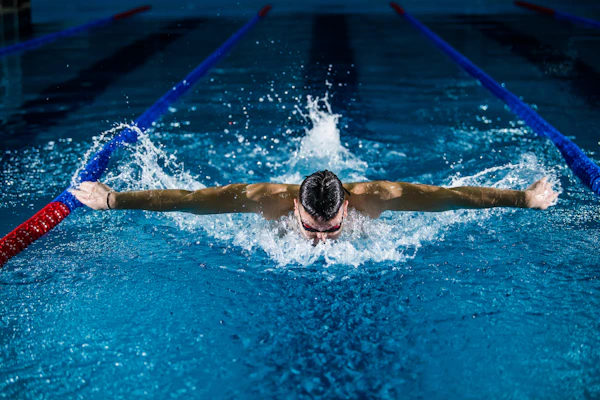
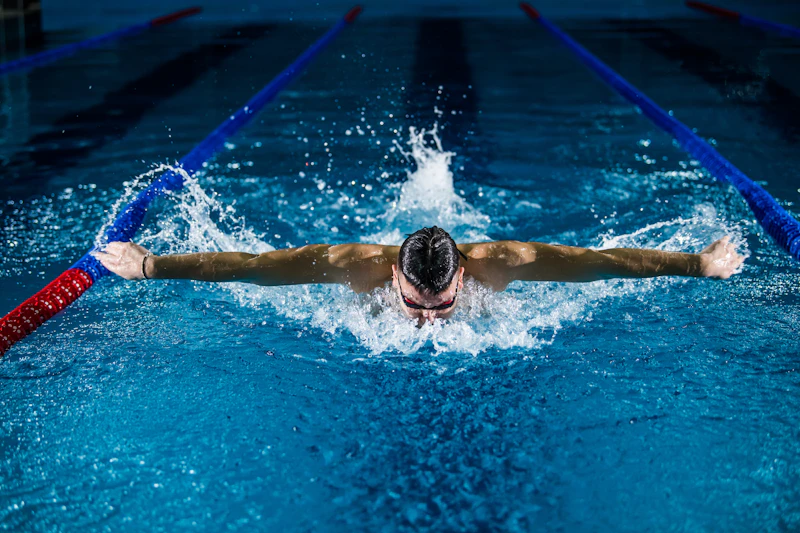
Swimming is a full-body exercise. Freestyle and butterfly develop the latissimus dorsi, shoulders, and triceps significantly, in addition to the core and hip flexors. The different strokes engage different muscle groups: breaststroke emphasises inner thighs and hip flexors; backstroke develops posterior shoulder and upper back; butterfly (the most physically demanding stroke) builds extraordinary upper body strength and power.
For athletes who also strength train, swimming's upper-body component provides useful additional stimulus — or can interfere with recovery from upper-body sessions if volume is high. For runners specifically, swimming is an ideal cross-training activity because it develops cardiovascular fitness without redundant lower-body loading.
Find a Swimming Coach or Running Trainer in Dubai
Whether you want to improve your freestyle technique, build a run training plan, or combine both activities intelligently, GetFitDXB connects you with certified coaches across Dubai.
Dubai Climate Suitability — The Key Differentiator
This is where the Dubai context makes the swimming vs running decision fundamentally different from the same comparison in London, Singapore, or New York. Dubai's climate is extreme, and it affects both activities very differently across the calendar year.
Year-Round Suitability
- Swimming (indoor pool): ✅ Year-round. Completely unaffected by Dubai's outdoor climate. Air-conditioned natatoriums maintain consistent water temperatures of 26–28°C throughout the year.
- Swimming (outdoor / open water): ✅ Year-round, but water temperature varies from ~18°C (January) to ~34°C (August). Summer open water swimming is warm but safe from a temperature perspective; the heat on land walking to and from the water remains a consideration.
- Running (outdoor): ⚠️ Seasonal. Excellent conditions October–April (15–28°C). Challenging but manageable May and September–October with early morning timing. Potentially hazardous May–September during daylight hours with temperatures exceeding 40°C and humidity above 80%.
- Running (indoor treadmill): ✅ Year-round, but loses the psychological and physiological benefits of outdoor running (terrain variation, proprioception development, vitamin D exposure).
During Dubai's summer months — roughly May through September — swimming has a clear practical advantage for athletes who prefer or require outdoor or non-gym training. The ability to train in water effectively dissipates body heat and allows high-intensity cardiovascular work even during the peak of Dubai's heat. See the summer fitness guide for Dubai for complete advice on year-round training strategies.
Swimming in Dubai: Pools, Open Water, and Where to Train
Dubai has excellent swimming infrastructure. The best public swimming pools in Dubai include purpose-built Olympic-standard facilities at Dubai Sports City and Hamdan Sports Complex, as well as residential community pools and hotel pools accessible by day pass. For competitive or performance swimming, dedicated natatoriums with lane discipline and timing systems are available at specialist facilities.
Open water swimming options include the JBR coastline, Al Mamzar Beach Park, and Kite Beach. The Dubai Open Water Swimming Club and several triathlon training groups run regular organised open water sessions, which are excellent for safety (group swimming) and motivation. For beginners to open water, see the open water swimming guide for Dubai.
If you want to improve your swimming technique — which dramatically affects both calorie burn and overall enjoyment — a qualified swimming coach in Dubai can provide significant efficiency gains even for intermediate swimmers. A few technique sessions can reduce your energy expenditure per length by 15–25%, meaning you can swim further and longer for the same effort.
Running in Dubai: Routes, Groups, and Season Planning
When Dubai's climate cooperates — October through April — the city offers genuinely world-class outdoor running conditions. The Dubai Marina Walk, JBR beachfront, Kite Beach boardwalk, Al Qudra cycling and running tracks, and the best running routes in Dubai offer varied terrain and scenery that rivals any city in the world.
Dubai's running community is vibrant and well-organised, with running clubs and groups meeting at locations across the city from early morning. These groups are welcoming to all paces and provide structure, accountability, and social connection that solo running cannot match. The Dubai Marathon and several 5K and 10K races throughout the cooler months provide goal events that structure training effectively.
Year-round runners in Dubai need a strategic approach to summer: transitioning to treadmill running or very early morning sessions (pre-5:30 AM), reducing volume and intensity appropriately, and prioritising recovery more carefully during the hot months. For a complete seasonal training plan, see the Dubai running training plan guide.
Goal-by-Goal Guide: Which to Choose
Goal: Fat Loss
Verdict: Running (slight edge) or Swimming for year-round adherence. Running burns slightly more calories per hour at matched effort. However, swimming's lower impact means you can sustain higher weekly volume without injury risk — and total weekly calorie expenditure is what drives fat loss. In Dubai's summer, swimming is the more practical and sustainable fat-loss cardio option.
Goal: Cardiovascular Fitness and VO2 Max
Verdict: Running (slight edge). Running's whole-body weight-bearing demand produces marginally greater VO2 max gains in most studies. Both are excellent choices. If training for a running event, run. If training for general cardiovascular health, both are outstanding.
Goal: Low-Impact / Joint-Friendly Training
Verdict: Swimming, clearly. Zero ground reaction force makes swimming the superior choice for anyone with joint issues, recovering from injury, older athletes, or those with high training volumes who want to minimise cumulative joint stress.
Goal: Training Year-Round in Dubai
Verdict: Swimming or indoor running. Running outdoors in Dubai's summer is genuinely hazardous without careful management. Swimming in an indoor pool is completely season-independent and allows uninterrupted year-round training with no heat risk.
Goal: Full-Body Fitness
Verdict: Swimming. Running is predominantly a lower-body exercise. Swimming engages the upper body, core, and lower body simultaneously, producing more balanced whole-body fitness.
Goal: Training for a Running Event
Verdict: Running (obviously). Specificity of training is the fundamental principle here. If you are training for a 10K or half marathon, running is the primary modality. Swimming can serve as valuable cross-training to maintain fitness while managing cumulative load.
The Best Approach: Using Both Strategically
The false dichotomy of "swimming OR running" misses the most effective strategy available: using both activities complementarily in a periodised annual plan. Dubai's climate makes this approach particularly logical:
- October–April (cool season): Prioritise outdoor running. Optimal conditions for long runs, track work, and racing. Supplement with 1 weekly swimming session for active recovery and upper-body stimulus.
- May–September (hot season): Prioritise indoor pool swimming. Maintain cardiovascular fitness without heat risk. Replace 1–2 outdoor runs per week with pool sessions. Retain morning treadmill running on the days you prefer land-based training.
- Year-round: Triathlon training incorporates both activities with cycling — see the triathlon training guide for Dubai for a fully integrated programme.
- Best for summer training: Swimming
- Best for calorie burn per session: Running (slight edge at matched effort)
- Best for joint health: Swimming (clearly)
- Best for full-body fitness: Swimming
- Best for racing/events: Running
- Best for year-round Dubai fitness: Both, used strategically
Find certified swimming coaches and running coaches on GetFitDXB to help you optimise either activity or build a programme that intelligently combines both across Dubai's seasons.