📋 In This Guide
- Does Swimming Really Work for Weight Loss?
- Calorie Burn by Stroke and Intensity
- A 12-Week Swimming Weight Loss Programme
- Best Pool Workout Formats for Fat Loss
- Nutrition: The Other Half of the Equation
- Common Mistakes That Kill Progress
- Finding a Weight Loss Swimming Coach in Dubai
- Frequently Asked Questions
Swimming is one of Dubai's most underrated fat-loss tools. Unlike the relentless heat that makes outdoor running brutal for eight months of the year, Dubai's air-conditioned pools are available year-round, and the sport's unique combination of cardiovascular demand and muscular engagement makes it a complete body transformation tool — if you train with the right programme.
Does Swimming Really Work for Weight Loss?
The honest answer: yes, absolutely — but with some important nuances. Swimming is a highly effective calorie-burning activity that also preserves and builds lean muscle mass, creating a favourable hormonal environment for fat loss. The key question isn't whether swimming works, but how to structure your swimming programme to maximise fat burning rather than just fitness maintenance.
The common concern about swimming for weight loss — that cold water increases appetite — is partly valid for very cold water environments, but barely applicable in Dubai, where pool water is typically maintained at 26–28°C (indoor pools) to 32–35°C (outdoor hotel pools in summer). At these temperatures, the compensatory hunger response is minimal for most people.
Research published in the International Journal of Obesity found that regular swimming produced comparable fat loss to cycling and running over 12-week programmes, while participants reported significantly lower perceived exertion and higher enjoyment scores. For long-term adherence — the real driver of sustainable weight loss — swimming's enjoyability factor is a significant advantage.
Swimming also builds a toned physique. The sport inherently develops shoulder, back, core, and leg musculature, and increased lean muscle mass raises resting metabolic rate, burning more calories at rest. Combine regular swimming training with appropriate nutrition, and you have a genuinely effective weight loss programme.
Calorie Burn by Stroke and Intensity
Not all swimming burns calories equally. Stroke selection and intensity dramatically affect caloric expenditure — and understanding this lets you optimise your training for fat loss.
| Stroke | Easy Pace (cal/hr) | Moderate (cal/hr) | Hard Effort (cal/hr) |
|---|---|---|---|
| Freestyle (front crawl) | 300–350 | 420–500 | 550–650 |
| Breaststroke | 250–300 | 380–450 | 500–580 |
| Backstroke | 280–330 | 400–470 | 520–600 |
| Butterfly | 450–550 | 560–650 | 700–800 |
| Aqua HIIT (class) | N/A | 400–500 | 500–600 |
| Aqua aerobics | 250–300 | 320–400 | 400–480 |
*Estimates based on 75kg individual. Caloric burn is proportional to body weight — heavier individuals burn more.
Why Butterfly Burns So Much More
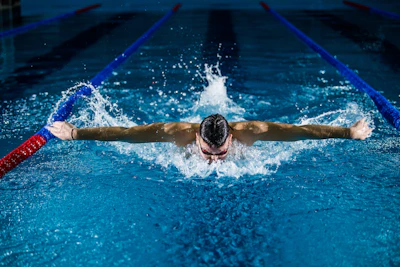
Butterfly requires the largest muscle groups to work simultaneously — both arms pull together while the core and legs perform the dolphin kick in unison. The total body recruitment drives caloric expenditure to levels unmatched by any other swim stroke. The downside: butterfly is technically demanding and extremely fatiguing. Most recreational swimmers can maintain butterfly for only short intervals, making it a prime interval tool rather than a steady-state stroke.
A 12-Week Swimming Weight Loss Programme
Structure matters enormously in swimming for weight loss. Many people swim the same distance at the same pace session after session and wonder why they plateau after four weeks. Progressive overload, interval training, and stroke variety are the keys to continuous adaptation and calorie burn.
Phase 1: Foundation (Weeks 1–4)
Phase 2: Development (Weeks 5–8)
Phase 3: Peak Fat Burn (Weeks 9–12)
Get a Personalised Swimming Programme
A certified swimming coach will design a weight loss programme tailored to your current level, goals, and available pool time. Find yours on GetFitDXB.
Best Pool Workout Formats for Fat Loss
Beyond structured lap swimming, several pool workout formats are particularly effective for fat loss — and more accessible to those who aren't strong swimmers.
Swimming Intervals (HIIT in the Pool)
High-intensity interval training adapted for the pool is arguably the most time-efficient fat-burning approach available. Short bursts of maximum effort (25–50m sprint) followed by brief recovery periods elevate heart rate and produce an excess post-exercise oxygen consumption (EPOC) effect — the "afterburn" — that continues burning calories for hours after your session. Even a 30-minute pool HIIT session produces significant fat-loss stimulus.
Aqua HIIT Classes
For non-swimmers, aqua HIIT classes deliver comparable caloric expenditure to lap swimming HIIT without requiring swimming competence. The water's resistance provides the overload. These structured group sessions are highly motivating and often produce greater effort than solo lap swimming due to the group dynamic and instructor cuing.
Continuous Steady-State Swimming
Don't discount sustained aerobic swimming. A 60-minute steady-state freestyle session burns 400–500 calories and improves aerobic base fitness that supports interval performance and overall energy expenditure. Include at least one long, easy swim session per week even if your primary fat-loss strategy involves intervals.
Nutrition: The Other Half of the Equation
No amount of pool time will produce meaningful weight loss without appropriate nutritional management. Swimming does not exempt you from the fundamental principle: sustainable fat loss requires a caloric deficit maintained consistently over weeks and months.
The specific challenge with swimming and nutrition is appetite. While warm-water swimming in Dubai does not dramatically increase hunger for most people, longer sessions and higher intensities will increase caloric demand. Many swimmers unknowingly compensate for training calories by eating more — maintaining a caloric balance rather than deficit. Tracking food intake honestly for the first four weeks of a swimming weight loss programme almost always reveals this pattern.
For practical Dubai-specific nutrition guidance, see our dedicated articles on Dubai meal plans for fitness and the complete weight loss guide for Dubai residents. Working with a nutrition specialist alongside your swimming coach is the most reliable path to transformation.
Eat a light carbohydrate-based meal 60–90 minutes before swimming for fuel without discomfort. Post-swim, prioritise protein (20–30g) within 30 minutes to support muscle recovery and reduce hunger. Avoid high-fat meals before swimming — they slow digestion and can cause cramps. Stay well-hydrated; pool swimming causes significant fluid loss through respiration that you don't feel because you're wet.
Common Mistakes That Kill Progress
If you've been swimming regularly and not losing weight, one or more of these patterns is almost certainly at play.
- Same session, same pace, every time — Your body adapts rapidly to repeated stimuli. Without progressive overload (more intensity, more distance, less rest), adaptation stops and weight loss plateaus.
- Too much gentle exercise, not enough intensity — A leisurely 20-minute pool "workout" has minimal fat-loss impact. Weight loss sessions should leave you genuinely fatigued by the end.
- Rewarding training with food — "I swam today, I deserve this" is the most common sabotage pattern. Training calorie burns are smaller than most people estimate.
- Skipping strength work — Exclusively swimming without any land-based resistance training can limit muscle development, particularly in the lower body. Adding two resistance training sessions per week significantly enhances body composition outcomes.
- Not tracking progress appropriately — Weight fluctuates daily by 1–3kg due to hydration and glycogen stores. Measure progress weekly, at the same time of day, and also track how clothes fit and how you feel rather than daily weight alone.
Finding a Weight Loss Swimming Coach in Dubai
The most effective investment you can make in your swimming weight loss journey is working with a coach who understands both swimming technique and exercise physiology for fat loss. Many swim coaches are excellent at developing swimming performance but have limited knowledge of programme design for weight loss goals specifically.
Look for coaches who hold swim coaching certifications (Swim England Level 2+, ASA, ASCA) combined with fitness or personal training qualifications. Ask about their experience designing fat-loss programmes and whether they can integrate nutrition guidance. Some of Dubai's most effective swimming coaches for weight loss work as dual specialists — swim coach and personal trainer in one.
GetFitDXB lists certified swimming coaches across Dubai with specialist weight loss experience. Use the category filter to find coaches in your area — whether you're in Dubai Marina, Downtown Dubai, or JBR.