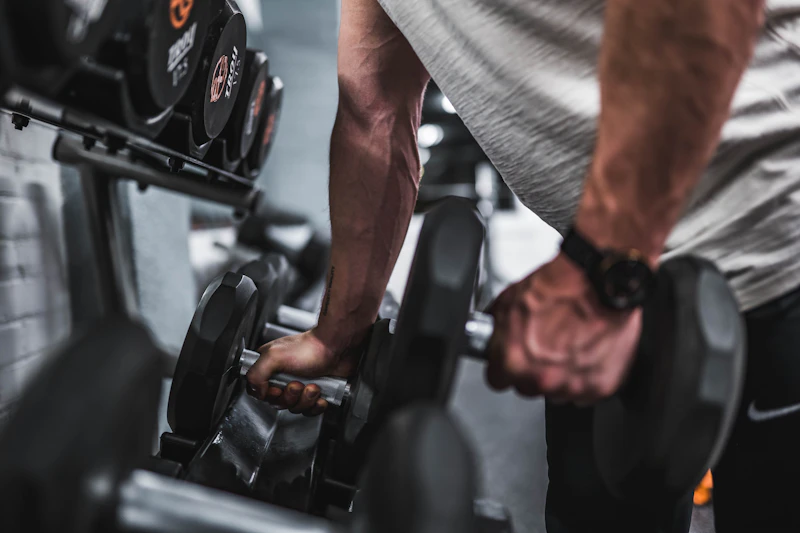
This guide is part of our complete Women's Fitness Training Guide for Dubai. This 12-week programme is designed specifically for women training in Dubai, incorporating progressive overload principles, hormonal cycle adjustments, and practical guidance for training in Dubai's gym environment and climate. Whether you are a beginner lifting for the first time or an intermediate athlete seeking a structured progression, this plan delivers results.
1. Programme Overview and Founding Principles
This 12-week programme is built on four evidence-based principles that are especially important for women:
- Progressive overload: Systematically increasing the stimulus placed on muscles over time — the fundamental driver of strength and hypertrophy adaptations. Each week, you will either add weight, increase reps, or reduce rest periods to create progressive challenge.
- Compound movement priority: The programme centres on five foundational movements (squat, hip hinge, horizontal push, horizontal pull, vertical pull) that recruit the most muscle mass and drive the greatest hormonal and metabolic responses.
- Periodisation: The 12 weeks are divided into three four-week phases (Foundation, Build, Peak), each with a distinct rep range and intensity focus. This prevents adaptation plateaus and allows targeted development of different physical qualities.
- Cycle sensitivity: The programme includes built-in adjustments for your menstrual cycle phase, respecting the hormonal science covered in our cycle training guide. These adjustments are optional but recommended for optimal results.
Who This Programme Is Designed For
This programme is suited to women who can already perform a bodyweight squat, push-up (modified or full), and hip hinge with good form, and who have access to a gym with barbells, dumbbells, and a cable machine. If you are brand new to resistance training, we recommend starting with a 4-week introduction with a certified female personal trainer in Dubai before beginning this programme. For women experiencing perimenopause, adjustments are recommended — see our perimenopause fitness guide for modifications.
Equipment Required
- Barbell and weight plates (or a Smith machine as a progression-friendly alternative)
- Dumbbells (range of weights)
- Cable machine or resistance bands
- Bench (flat and adjustable)
- Pull-up bar or lat pulldown machine
- Hip thrust pad or barbell pad (highly recommended)
All major Dubai gym chains — Fitness First, Warehouse Gym, GymNation, Gold's Gym, and UFC Gym — have this equipment. Women who feel more comfortable in a women-only environment should look for Ladies World branches or the women's sections in major gyms across Dubai Marina, Downtown, and Business Bay.
2. Foundation Phase: Weeks 1–4 — Build Your Base
The Foundation Phase establishes movement quality, joint resilience, and a neuromuscular base that will support heavier loading in subsequent phases. The rep ranges here are higher (12–15 reps per set) with moderate weights, creating the metabolic stress and motor pattern learning that makes later heavy training safe and effective.
Training frequency: 3 sessions per week (e.g., Monday / Wednesday / Friday)
Rest between sets: 60–90 seconds
RPE target: 6–7 out of 10 (moderately challenging, could do 3–4 more reps)
| Exercise | Sets × Reps | Coaching Cue |
|---|---|---|
| SESSION A — Lower Body + Core Focus | ||
| Goblet Squat | 3 × 12–15 | Chest tall, knees track over toes, depth to parallel |
| Romanian Deadlift (Dumbbell) | 3 × 12–15 | Hinge at hips, soft knee, bar close to legs, neutral spine |
| Glute Bridge (Bodyweight or Barbell) | 3 × 15–20 | Drive through heels, posterior pelvic tilt at top, 1-sec pause |
| Leg Press | 3 × 12–15 | Feet hip-width, full range of motion |
| Plank (Variation) | 3 × 20–30 sec | Neutral spine, avoid hip sagging or piking |
| SESSION B — Upper Body Push + Pull | ||
| Dumbbell Bench Press | 3 × 12–15 | Elbows at 45° angle, full range of motion |
| Seated Cable Row | 3 × 12–15 | Retract scapula, avoid shrugging, controlled eccentric |
| Lat Pulldown | 3 × 12–15 | Slight lean back, pull elbows to floor, bar to upper chest |
| Dumbbell Shoulder Press | 3 × 12–15 | Neutral grip, core braced, avoid overextending lower back |
| Face Pull (Cable or Band) | 3 × 15 | External rotation at end range, targets rotator cuff health |
| SESSION C — Full Body Metabolic | ||
| Dumbbell Sumo Squat | 3 × 15 | Wide stance, toes out, focus on inner thigh tension |
| Push-Up (Full or Modified) | 3 × Max reps | Track progress — aim to increase by 1–2 reps each week |
| Dumbbell Single-Leg RDL | 3 × 10 per leg | Balance focus, hip hinge pattern, controlled tempo |
| Dumbbell Bent-Over Row | 3 × 12 per side | Flat back, elbow drives to ceiling |
| Dead Bug | 3 × 8 per side | Lower back pressed to floor throughout |
Want a Personal Trainer to Guide This Programme?
A certified female PT in Dubai can coach your technique, track your progress, and ensure safe progressive overload across all 12 weeks.
3. Build Phase: Weeks 5–8 — Progressive Overload
The Build Phase increases intensity by transitioning to heavier loads across a 6–10 rep range. You will notice that the compound lifts now include barbell variations (or their equivalent), the rest periods lengthen to allow full recovery for heavier sets, and the RPE target increases to 7–8 out of 10. By this point, the movement patterns established in the Foundation Phase should feel confident and comfortable.
Training frequency: 4 sessions per week (e.g., Monday / Tuesday / Thursday / Friday, or Upper-Lower split)
Rest between sets: 90–120 seconds (compound lifts), 60–90 seconds (accessories)
RPE target: 7–8 out of 10
The upper-lower split in this phase means you train each muscle group twice per week — the optimal frequency for hypertrophy according to current research meta-analyses. The programme becomes:
- Day 1 — Lower Body A: Back squat or goblet squat (heavy), barbell Romanian deadlift, barbell hip thrust, Bulgarian split squat, leg curl
- Day 2 — Upper Body A: Barbell bench press or dumbbell press (heavy), cable row (heavy), lat pulldown, overhead press, face pull, tricep pushdown
- Day 3 — Lower Body B: Conventional deadlift, leg press (heavy), walking lunges, cable pull-through, leg extension
- Day 4 — Upper Body B: Dumbbell incline press, chest-supported row, cable pull-apart, close-grip lat pulldown, dumbbell curl, overhead tricep extension
The barbell hip thrust deserves special mention for women: it is one of the most effective gluteus maximus exercises available, with EMG research consistently showing higher glute activation than squats or deadlifts. Many Dubai gyms now have dedicated hip thrust benches, and numerous female PTs include it as a core compound movement. The recommended progression is to add 2.5–5kg per week in weeks 5–8 as long as form remains excellent.
Deload Week After Week 8
After 8 weeks of progressive loading, a deload week is essential to allow connective tissue, joints, and the nervous system to recover. During deload week, reduce volume by 40–50% (fewer sets) and reduce load by 20%. This temporary reduction leads to supercompensation — the body rebuilds stronger — making the Peak Phase more productive. Do not skip the deload. Women who notice their cycle phase falls in the luteal phase during deload week will find this doubly appropriate timing.
4. Peak Phase: Weeks 9–12 — Maximum Strength
The Peak Phase shifts the training emphasis to lower rep ranges (3–6 reps) with maximal loads. This phase develops neurological strength — the ability to recruit more motor units and synchronise their firing — resulting in significant one-rep-max (1RM) improvements. Women often experience their most dramatic strength gains in this phase, as neuromuscular efficiency is a primary driver of strength that is not limited by testosterone levels.
Training frequency: 4 sessions per week (same Upper-Lower split)
Rest between sets: 2–3 minutes (compound lifts), 90 seconds (accessories)
RPE target: 8–9 out of 10 for top sets
The Peak Phase structure prioritises a single heavy "top set" on each major compound lift, performed at 85–90% of estimated 1RM, followed by 2–3 back-down sets at 70–75% of 1RM at higher reps. This combination builds strength through the heavy singles while maintaining hypertrophy stimulus through the volume work.
Testing Your Maxes at Week 12
At the end of week 12, perform a strength test to measure your progress. Following a structured warm-up protocol (progressively heavier warm-up sets building to your maximum), attempt a 3-rep max (3RM) on each major compound lift — this is safer and more reliable than a true 1RM for most non-competitive athletes. Record your results and compare to your week 1 baseline. Most women completing this programme see 15–30% strength increases on major lifts across the 12 weeks.
For support with testing your maxes safely and with correct form, working with a certified personal trainer in Dubai for your testing sessions is highly recommended, even if you have been training independently throughout the programme.
5. Cycle-Phase Adjustments: Personalising Your Programme
The programme as written assumes a relatively consistent training stimulus week-to-week. To incorporate cycle syncing, use the following adjustments as guides — they are evidence-informed but should be adapted to how you personally feel:
- Follicular phase (days 6–13): This is your performance window. Schedule your heaviest sessions (top sets, PR attempts, and high-intensity work) in this phase. If your programmed deload falls here, consider shifting it a week to capitalise on the elevated performance capacity.
- Ovulatory phase (days 14–16): Peak performance continues, but warm up extra thoroughly to account for elevated ligament laxity. An ideal time for attempting new personal bests if form feels solid.
- Luteal phase (days 17–28): Reduce working weights by 5–10% and focus on technique and volume rather than maximal effort. Prioritise sleep and recovery nutrition. Supplement with magnesium (400mg before bed) which has evidence for reducing luteal phase symptoms including sleep disruption and muscle cramping.
- Menstrual phase (days 1–5): If energy is very low, replace Session A with yoga, light walking, or mobility work. If energy is moderate, continue as programmed at 70–75% intensity. Never force heavy training during menstruation — the elevated prostaglandins and low hormones do not support maximal performance.
For a deeper understanding of the hormonal science behind these adjustments, read our complete menstrual cycle training guide. For women experiencing significant hormonal disruptions including severe PMS, these adjustments become even more important.
6. Nutrition to Support Your 12-Week Programme
A strength programme without appropriate nutritional support delivers a fraction of the potential results. The three most important nutritional variables for this programme are protein intake, total energy availability, and carbohydrate timing around training.
Protein Requirements
Target 1.6–2.0g of protein per kilogram of bodyweight per day. For a 65kg woman, this means 104–130g of protein daily. Distribute this across 3–4 meals, targeting at least 30–40g per meal to maximise muscle protein synthesis. Good Dubai protein sources include chicken, fish, eggs, Greek yoghurt, cottage cheese, legumes, and high-quality whey protein supplements (available from iHerb, GNC, and Optimum Nutrition retailers across Dubai; expect to pay AED 180–350 for a 2kg tub).
Energy Availability: Fuel for Adaptation
One of the most common mistakes women make when strength training is under-eating. This is particularly common in Dubai, where social and aesthetic pressures can drive excessive calorie restriction. Under-fuelling while strength training leads to muscle loss, hormonal disruption, elevated cortisol, and poor recovery — the opposite of the desired outcome. If fat loss is your goal alongside strength gain, a modest calorie deficit of 200–300 kcal per day is the maximum recommended while following this programme. Larger deficits interfere with adaptation and risk RED-S consequences. See our women's sports nutrition guide for detailed meal planning guidance.
Carbohydrates Around Training
Consuming 30–50g of carbohydrates in the 60–90 minutes before training provides glycogen substrate for high-intensity sets. Post-training, a meal containing both protein (30–40g) and carbohydrates (40–60g) within 2 hours maximises muscle protein synthesis and glycogen resynthesis. In Dubai's dining culture, excellent post-workout options include rice with grilled protein, hummus with pitta and lean meat, or a smoothie with banana, protein powder, and milk.
Women completing this programme during Ramadan should shift training to 1–2 hours before Iftar. The Suhoor meal should provide 40–50g of slow-digesting protein (casein, eggs, legumes) and 60–80g of complex carbohydrates to sustain energy during daylight hours. Reduce programme intensity to 70–80% during the first week of Ramadan while the body adapts to the fasting schedule. Many Dubai gyms open late during Ramadan and are busiest in the 2 hours after Iftar — plan accordingly.
7. Best Dubai Gyms for This Programme
This programme requires a well-equipped gym with barbells, dumbbells, and cable machines. Dubai's gym landscape is excellent for this purpose. Here are the best options by area:
- Dubai Marina and JBR: Warehouse Gym (Dubai Marina) — excellent free weight selection, female-friendly environment, multiple branches. GymNation (JBR) — affordable AED 199/month membership, full barbell setup. Fitness First (Marina Walk) — popular with working professionals, clean equipment.
- Downtown Dubai and Business Bay: Warehouse Gym (Downtown) — flagship location with full barbell platforms. Gold's Gym (Business Bay) — strong powerlifting community. UFC Gym (Business Bay) — good equipment plus group class options.
- JLT and TECOM: Fitness First (Cluster W) — well-maintained women's section. Gymnation (JLT) — budget-friendly option with full free weight access.
If you are new to barbell training, consider investing in even 4–6 sessions with a certified personal trainer in Dubai at the start of this programme. Correct barbell technique from the beginning pays dividends across the entire 12 weeks and prevents the common form breakdown errors that accumulate when self-taught.
A Note on Women-Only Spaces
For women who prefer women-only training environments, Ladies World (multiple locations), Fitness First women-only sections (available at select branches), and women-only studio gyms including Reformer Pilates studios and yoga studios provide alternatives for the non-barbell elements of this programme. Some sessions — particularly the hip thrust, glute work, and cable machine exercises — can be adapted for these environments with the help of a knowledgeable trainer.
Start Your 12-Week Strength Journey in Dubai
Connect with a certified female PT who can supervise your technique, track your progression, and help you achieve your best results from this programme.
This 12-week programme is a powerful framework — but it is only as effective as the consistency, technique, and nutritional support you bring to it. The women who see the best results are those who track their progress, adjust intelligently, and seek expert support when needed. Return to the complete Women's Fitness Training Guide for Dubai for the broader context of women's hormonal health, cycle syncing, and finding the right training support in Dubai. You can also explore our free Dubai Fitness Starter Guide or contact GetFitDXB for a personalised trainer recommendation.