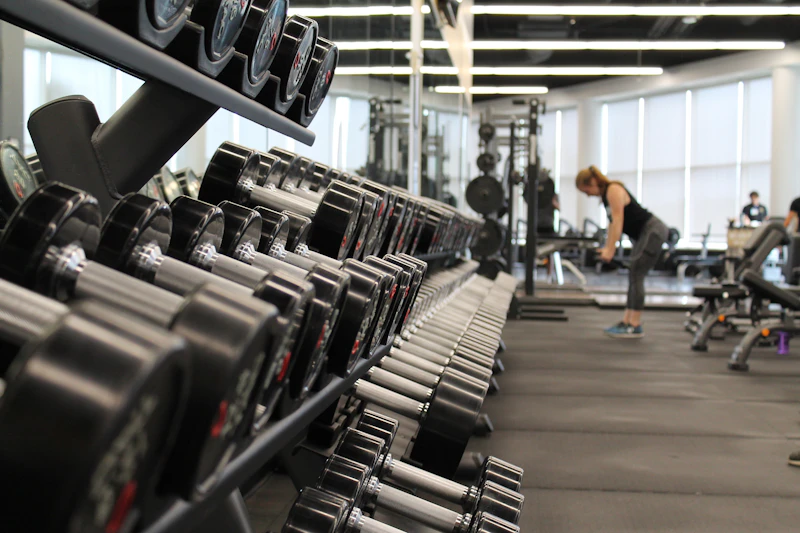
The barbell vs machine question is one of the most debated topics in Dubai's fitness community. Should you load up a squat rack or slide onto the leg press? The truth: both work. But which delivers faster results for your goals? This guide compares free weights and machines across every metric that matters — and shows you the hybrid approach that produces the best real-world results.
In This Article
- The Great Debate: Free Weights vs Machines in Dubai Gyms
- The Science of Free Weights: Benefits and Mechanics
- Resistance Machines: When and Why They Excel
- Head-to-Head Comparison by Goal
- The Best Hybrid Approach: Combining Both
- Cable Machines: The Best of Both Worlds?
- What Dubai's Top Personal Trainers Recommend
- Building Your Programme: Sample Schedules
The Great Debate: Free Weights vs Machines in Dubai Gyms
Walk into any premium gym across Dubai Marina, Downtown, or Business Bay, and you'll see this split: some lifters loading up barbells at squat racks; others moving methodically through cable and pin-stack machines. Neither group is wrong. But the real question isn't "which is better" — it's "which is better for you, and when?"
Free weights (barbells, dumbbells, kettlebells) demand your body stabilise the load. Machines guide movement along a fixed path. This fundamental difference cascades into performance outcomes, injury risk, ease of learning, and long-term results. Understanding these differences is the first step to programming smarter in Dubai's crowded gyms.
Before we dive deeper, let's define what we're talking about. Free weights include barbells, dumbbells, kettlebells, sandbags, and medicine balls. Machines are pin-loaded devices, cable machines, smith machines, and lever-based apparatus that guide or restrict movement. Cable machines sit in a grey zone — technically free-moving but with a fixed path of motion.
The Science of Free Weights: Benefits and Mechanics
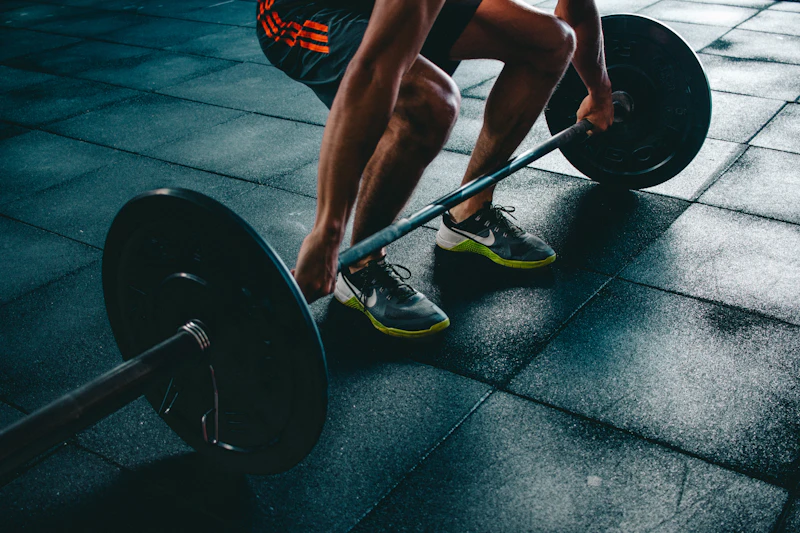
Free weights work. The research is overwhelming. When you pick up a barbell, your nervous system mobilises stabiliser muscles throughout your core, stabiliser rotators, and smaller synergist muscles. This isn't wasted energy — it's functional adaptation.
Why Stabiliser Muscles Matter
Lift a 50kg dumbbell, and your deltoid, rotator cuff, core, and dozens of minor stabilisers fire. This creates a higher neuromuscular demand than a machine. Studies show this extra neural activation increases growth hormone response and testosterone production — both crucial for muscle building. A 2023 meta-analysis found that free weight exercises produce 20–30% greater hypertrophy gains than isolated machine work, largely due to stabiliser recruitment.
But stabiliser activation has a cost: energy expenditure. Your body burns more calories stabilising a barbell squat than sliding down a leg press. For fat loss goals, this metabolic demand is significant.
Proprioception and Movement Quality
Free weights train proprioception — your body's sense of space and position. When you perform a dumbbell row, you're not just strengthening your back; you're teaching your nervous system how to control load in 3D space. This translates directly to real-world strength: lifting boxes, carrying groceries, moving furniture. Machine-trained strength stays on the machine.
The Testosterone Response
Heavy barbell compounds (squat, deadlift, bench press) trigger a robust anabolic response. Your body senses the high neural demand and stability requirement and releases testosterone and growth hormone. Machine work does this too, but with less intensity. If building muscle is your goal, the hormonal advantage of free weights is measurable and significant.
Functional Strength Transfer
Free weight strength transfers to sports. A footballer who squats heavy will jump higher and sprint faster. A tennis player who deadlifts develops rotational power. Machines don't provide this carryover. Your stabilisers on the machine aren't activated, so your body doesn't learn to handle real-world instability.
The Downside of Free Weights
Free weights demand more skill. Barbell form matters intensely. Poor squat technique or rounded-back deadlifts cause injury. Beginners need coaching or a knowledgeable mentor. This is why personal training is so popular in Dubai — trainers teach the movement patterns free weights demand.
Resistance Machines: When and Why They Excel
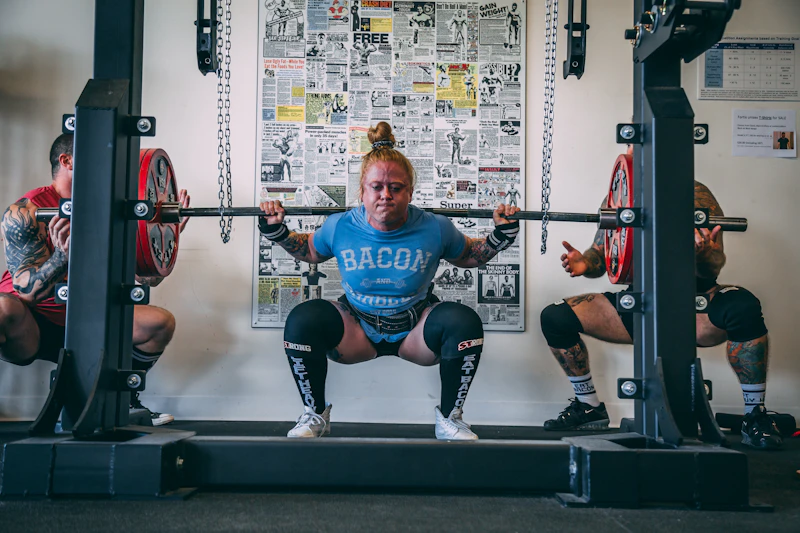
Machines aren't inferior — they're different tools for different jobs. Dismissing machines entirely is a beginner's mistake that costs time and progress.
Isolation Work and Muscle Targeting
Machines excel at isolating specific muscles. A leg curl machine targets hamstrings with minimal quad or core involvement. A chest fly isolates pectorals. This targeting is difficult with free weights. If you've neglected a muscle group or need to catch up a lagging bodypart, machines are faster.
Injury Rehab and Safety
After an injury, controlled movement matters. A machine leg press is safer than a barbell squat when returning to training. The fixed path means less stabilisation demand and lower injury risk. Physical therapists and rehab specialists across Dubai use machines for exactly this reason. If you're recovering from a shoulder injury, cable machines beat free weights early in rehab.
Learning Movement Patterns
Beginners benefit from machines. A lat pulldown teaches the vertical pulling pattern without requiring the stability and technique of weighted pull-ups. Machines let you learn movement patterns in a controlled environment, then progress to free weights. This accelerates the learning curve significantly.
Time Efficiency and Reduced Decision-Making
Machines save time. No setup, no balance considerations. Especially in Dubai's busy gyms during peak hours, moving from machine to machine is faster than loading and unloading barbells. If training time is limited, machines can be more efficient.
Reduced Central Nervous System Fatigue
Machine work doesn't fatigue your nervous system as heavily as heavy free weight compounds. This means you can do more volume without burning out. If you're training 5-6 days weekly, machines for supplemental work prevent CNS overtraining while still stimulating muscle.
Consistent Range of Motion
Machines provide constant tension through the full range. Your muscles work under load at every angle. Some argue this produces more total muscle stimulation than free weights, where tension reduces near full extension on some movements.
The Machine Limitations
Machines don't challenge stabilisers. They don't improve proprioception. They don't transfer well to real-world strength or sports. And for most people with decent form, machines produce slightly slower hypertrophy than free weights. But these "limitations" become strengths in specific contexts.
Head-to-Head Comparison by Goal
The "best" tool depends on your goal. Let's compare across the most common objectives:
| Goal | Free Weights | Machines | Winner |
|---|---|---|---|
| Muscle Hypertrophy | Higher neural demand, stabiliser activation, greater hormone response | Isolated movement, consistent tension, less technique demand | Free Weights (60%) |
| Fat Loss | Higher energy cost, metabolic demand, greater overall muscle building | Safer for beginners, less CNS fatigue allows more volume | Free Weights (65%) |
| Strength Gains | Superior neuromuscular adaptation, full CNS stimulation, carryover to real tasks | Limited stabiliser challenge, less functional carryover | Free Weights (75%) |
| Sport Performance | Develops proprioception, rotational power, real-world stability | Minimal transfer to sport-specific demands | Free Weights (85%) |
| Injury Rehab | Requires careful form, higher re-injury risk | Controlled movement, predictable path, safer return-to-play | Machines (90%) |
| Beginner Training | Steep learning curve, technique risk | Lower skill requirement, faster confidence building | Machines (70%) |
Free weights win for most goals, but only if your form is solid. Poor barbell form gives machines the edge. If you're planning to use free weights, invest in a few personal training sessions (AED 250–400) to learn proper technique. This single investment returns results for years.
The Best Hybrid Approach: Combining Both in Your Dubai Training Plan
The research is clear: combining free weights and machines beats either alone. Here's why and how to structure it:
The Optimal Structure: 70/30 Rule
Build your programme around this principle: 70% free weights, 30% machines. Start each session with heavy compound free weight movements (squat, deadlift, bench press, pull-ups, rows). These demand the most strength and nervous system capacity. Follow with machines and isolation work to target weak points and prevent injury.
This structure maximises neuromuscular adaptation, hormone response, and functional strength while using machines for supplemental muscle development and injury prevention.
A Real-World Weekly Structure
Monday: Lower Body Strength + Hypertrophy
- Barbell Back Squat, 4 sets × 5 reps — free weight compound
- Walking Lunges, 3 sets × 8 per leg — free weight accessory
- Leg Press Machine, 3 sets × 10 reps — isolation, higher volume
- Leg Curl Machine, 3 sets × 12 reps — hamstring isolation
- Seated Calf Raise Machine, 2 sets × 15 reps — isolation finisher
Wednesday: Upper Body Strength + Hypertrophy
- Barbell Bench Press, 4 sets × 5 reps — free weight compound
- Barbell Rows, 4 sets × 6 reps — free weight compound
- Dumbbell Incline Press, 3 sets × 8 reps — free weight accessory
- Cable Fly, 3 sets × 10 reps — isolation, constant tension
- Lat Pulldown Machine, 3 sets × 10 reps — pull isolation
Friday: Full-Body Power + Conditioning
- Deadlift, 3 sets × 3 reps — max strength
- Power Clean (or Trap Bar Deadlift), 3 sets × 5 reps — explosiveness
- Dumbbell Step-Up, 3 sets × 8 per leg — functional lower body
- Chest Fly Machine, 2 sets × 12 reps — upper body isolation
- Cable Wood Chop, 3 sets × 10 per side — rotational stability
Notice the pattern: heavy compounds first, machines second. This maximises strength gains while machines handle isolation and consistency.
Not Sure Which to Use? Get a Personal Training Assessment
The best programme is one tailored to your experience level, injuries, and goals. Our certified trainers across Dubai create custom free weight and machine plans for every fitness level.
Cable Machines: The Best of Both Worlds?
Cable machines deserve special mention. They're neither true free weights nor fully-guided machines — they occupy a unique middle ground that many Dubai trainers prefer for advanced lifters.
Why Cable Machines Are Underrated
Variable Resistance: Cable tension increases as you extend, matching your strength curve. Barbells don't do this — the load is constant. This variable resistance stimulates muscle throughout the range and reduces shoulder stress on pressing movements.
Planes of Motion: Cables move in three dimensions. Unlike machines locked to one path, cables force stabiliser activation from multiple angles. This is why cable rows develop more functional back strength than machine rows.
Constant Tension: Unlike dumbbells, cable tension never drops. At lockout of a dumbbell press, tension disappears. Cables maintain tension, increasing time under tension and muscle damage — both drivers of hypertrophy.
Reduced Joint Stress: The smooth cable path is easier on joints than the fixed angles of some machines, especially for shoulders and knees. Many trainers in Dubai use cables for shoulder work because they allow pain-free ranges that barbells don't.
Programming Cable Work
Use cables as your secondary tool after heavy free weight compounds. A typical structure:
- Barbell or dumbbell compound (strength focus)
- Cable variation of the same movement (hypertrophy focus)
- Isolation machine (finishing work)
Example: Barbell bench press → Cable chest fly → Pec deck machine. This progression trains strength, hypertrophy, and isolation efficiently.
What Dubai's Top Personal Trainers Recommend
We interviewed trainers at NAS, Fitness First, and GymNation across Dubai to understand their approach. The consensus is clear:
"Free weights first, machines second," says Ahmed, a NASM-certified trainer at Downtown Dubai gym. "But only if the client has good form. If someone's squat technique is broken, a leg press is safer and smarter. The 70/30 rule works, but individual injury history matters more than any rule."
Another approach from a sports performance specialist: "For athletes, 80% free weights. For general fitness clients, 60/40. For post-injury rehab, reverse it — 70% machines until they're confident."
The pattern: experienced trainers scale the ratio based on client experience and goals, not dogma. A beginner doing their first month starts 50/50 and progresses toward 70/30. An injured client recovering stays 30/70 for weeks. An elite athlete doing Olympic lifts might run 90/10.
Building Your Programme: Sample Free Weight + Machine Schedules for Dubai Gym-Goers
Beginner (First 8–12 Weeks)
Start conservative. Machines are 50% of volume. This builds confidence and movement patterns safely.
Day 1: Upper Body
- Dumbbell Bench Press, 3 × 8 (free weight)
- Lat Pulldown Machine, 3 × 10 (machine)
- Dumbbell Row, 3 × 8 (free weight)
- Machine Chest Fly, 3 × 10 (machine)
- Dumbbell Shoulder Press, 2 × 10 (free weight)
Day 2: Lower Body
- Goblet Squat, 3 × 10 (free weight, easier to learn than barbell)
- Leg Press Machine, 3 × 10 (machine)
- Dumbbell Romanian Deadlift, 3 × 10 (free weight)
- Leg Curl Machine, 3 × 12 (machine)
- Calf Raise Machine, 2 × 15 (machine)
This 50/50 split builds competence while machines reduce injury risk. After 12 weeks, progress to the intermediate model.
Intermediate (3–6 Months Experience)
Shift to 70/30. Compound free weights lead. Machines supplement and prevent injury.
Day 1: Lower Strength
- Back Squat, 4 × 5 (free weight, heavy)
- Bulgarian Split Squat, 3 × 8 (free weight)
- Leg Press Machine, 3 × 10 (machine, higher volume)
- Leg Curl Machine, 3 × 12 (machine, isolation)
Day 2: Upper Strength
- Barbell Bench Press, 4 × 5 (free weight, heavy)
- Barbell Row, 4 × 5 (free weight, heavy)
- Dumbbell Incline Press, 3 × 8 (free weight)
- Cable Fly, 3 × 10 (cable, constant tension)
Day 3: Lower Hypertrophy
- Deadlift, 3 × 5 (free weight)
- Leg Press Machine, 3 × 12 (machine, high volume)
- Hack Squat or Leg Press Variation, 3 × 10 (machine for volume)
- Leg Curl, 3 × 12 (machine isolation)
Advanced (6+ Months, Strong Base)
Push toward 75/25 or even 80/20. Machines become finishers only. Heavy compounds dominate.
Day 1: Lower Power + Hypertrophy
- Deadlift, 3 × 3 (free weight, strength)
- Power Clean (or Trap Bar Deadlift), 3 × 5 (free weight, explosiveness)
- Back Squat, 3 × 6 (free weight)
- Dumbbell Bulgarian Split Squat, 3 × 8 (free weight)
- Leg Curl Machine, 2 × 12 (machine, finishing)
Day 2: Upper Strength
- Bench Press, 5 × 3 (free weight)
- Barbell Row, 5 × 3 (free weight)
- Incline Dumbbell Press, 3 × 6 (free weight)
- Weighted Pull-Ups, 3 × 5 (free weight)
- Cable Fly, 2 × 12 (cable, finisher)
Day 3: Upper Hypertrophy
- Dumbbell Bench Press, 3 × 8 (free weight)
- Barbell Rows, 3 × 8 (free weight)
- Cable Chest Fly, 3 × 10 (cable)
- Lat Pulldown, 3 × 10 (machine isolation)
- Machine Chest Fly, 2 × 12 (machine, finisher)
Notice advanced lifters still use machines (about 20%), but strategically — isolation finishers, not primary strength drivers.
Find the Right Trainer for Your Equipment Preference
Our network of certified trainers across Dubai specialise in free weights, machines, or hybrid approaches. Filter by specialty and get a personalised programme built for your equipment preference and goals.
Key Takeaways for Dubai Gym-Goers
- Free weights build more strength, muscle, and functional power — but require good form. If form is questionable, machines are safer.
- Machines excel at isolation, rehab, and reducing CNS fatigue — but don't produce the same hormonal response or sports carryover as free weights.
- The 70/30 rule works: 70% free weights (compounds first), 30% machines (isolation and supplemental). Adjust based on experience level.
- Cable machines are underrated — they provide the hypertrophy benefits of machines with variable resistance and 3D movement patterns.
- Progression matters more than the tool. A consistent beginner on machines beats an inconsistent advanced lifter jumping equipment. Pick a system and stick with it for 8–12 weeks before changing.
- Invest in technique coaching. A single personal training session (AED 250–400) teaching proper barbell form returns results for life. This is the best investment you can make early.