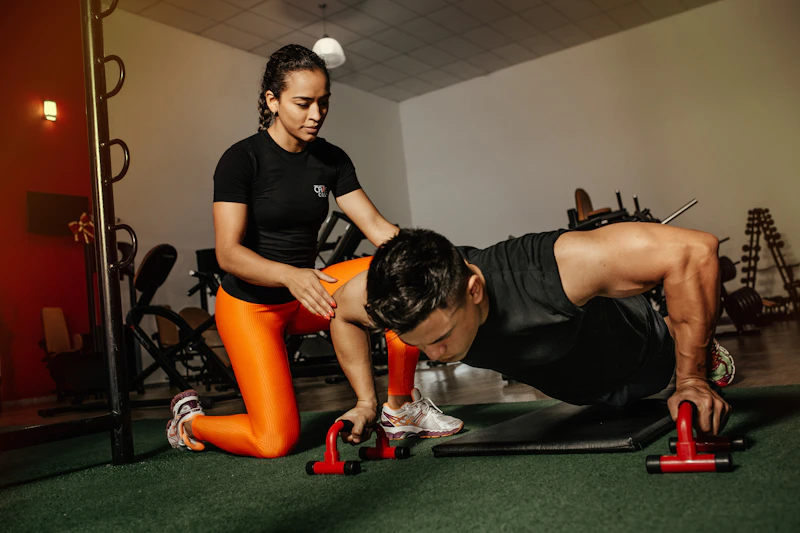
Functional Movement Screening (FMS) is a systematic evaluation tool that assesses movement quality and identifies asymmetries, limitations, and compensatory patterns that increase injury risk. In Dubai's competitive fitness landscape, FMS testing has become essential for athletes, gym beginners, and desk workers alike. This guide explains what FMS is, how the seven movement tests work, how to interpret your score, and where to find certified trainers in the UAE. For more, browse our personal trainer directory with verified Dubai coaches and pricing.
What Is Functional Movement Screening? The Basics
Functional Movement Screening (FMS) is a standardized assessment system developed by Gray Cook, a legendary strength coach and physical therapist, in collaboration with Lee Burton. Designed initially for NFL athletes and military personnel, FMS has evolved into a globally recognized tool used by elite sports organizations, personal trainers, physiotherapists, and fitness facilities worldwide.
Unlike traditional fitness tests that measure strength or endurance, FMS focuses on movement quality. It evaluates how well your body performs fundamental movement patterns without pain, compensation, or imbalance. Think of it as a diagnostic tool that reveals hidden movement inefficiencies before they turn into injuries.
Why Was FMS Developed?
Gray Cook created FMS because he noticed a critical gap in sports medicine: athletes with high strength and power scores still suffered preventable injuries due to movement dysfunction. Traditional testing (VO2 max, bench press numbers) ignored the quality of movement, focusing instead on capacity and output.
FMS bridges that gap by asking: Can you move well? Not just how much can you lift or how fast you can run, but how do you move through space? This shift in perspective has revolutionized injury prevention across fitness, sports, and rehabilitation.
Research shows that FMS scores below 14 out of 21 correlate significantly with increased injury risk in athletes and active populations. Many Dubai fitness professionals now use FMS as a baseline assessment before designing personalized training programs.
Who Uses FMS in Dubai?
Across Dubai and the UAE, FMS has been adopted by:
- Elite Sports Clubs: NAS, Fitness First, and boutique studios use FMS for athlete assessment and program design.
- Professional Sports Teams: UAE national teams and professional football clubs integrate FMS into their conditioning protocols.
- Personal Trainers: NASM, ACE, and ISSA-certified trainers in Dubai increasingly pursue FMS Level 1 certification to offer value-added services.
- Physiotherapy Clinics: Sports physios use FMS to identify compensation patterns and guide rehabilitation.
- Corporate Wellness Programs: Companies like ADNOC, Emirates, and DP World use FMS to assess employee movement quality and injury risk.
Personal trainers in Dubai who offer FMS assessment often command premium rates because the screening provides data-driven insights that generic training programs cannot match.
The 7 FMS Movement Tests Explained
FMS consists of seven standardized movement tests, each scored 0-3. The tests evaluate fundamental movement patterns: bending, lunging, rotating, and stabilizing. Each test is performed with precise form requirements, and a trained assessor scores based on the quality of movement observed.

1. Deep Squat
The deep squat evaluates lower-body and thoracic mobility, ankle dorsiflexion, and lower-spine extension. You hold a dowel overhead with arms fully extended and descend into the deepest squat possible while keeping the dowel in line with your heels and torso upright.
- Score 3: Full squat depth, neutral spine, knees aligned with toes, heels down.
- Score 2: Can achieve squat depth with compensation (heels elevated, forward torso lean, or asymmetry).
- Score 1: Cannot achieve full squat depth despite compensation attempts.
- Score 0: Pain or inability to perform.
Common Issues: Tight ankles (from sitting in an office chair all day), restricted thoracic spine, or tight hip flexors often limit squat depth. This is especially common in Dubai's desk-worker population.
2. Hurdle Step
This test assesses hip mobility, stability, and single-leg coordination. You hold a dowel horizontally at hip height and step over a waist-high hurdle (adjusted to 1/6 of your height) with controlled movement.
- Score 3: Smooth stepping motion, neutral spine, no hip drop or torso lean, dowel level and aligned with hips.
- Score 2: Can clear the hurdle with minor compensation (hip drop, dowel tilt, torso rotation).
- Score 1: Steps with obvious compensation or touches the hurdle.
- Score 0: Cannot clear the hurdle or experiences pain.
This test is crucial for runners, footballers, and athletes in Dubai who need unilateral strength and control.
3. Inline Lunge
The inline lunge evaluates single-leg stability, hip mobility, balance, and lower-body symmetry. You hold a dowel vertically behind your back and step forward into a lunge along a straight line.
- Score 3: Deep lunge, rear knee nearly touches ground, neutral spine, dowel vertical and aligned.
- Score 2: Can achieve lunge with compensation (loss of balance, torso lean, asymmetry).
- Score 1: Lunge depth limited, balance issues, or dowel misalignment.
- Score 0: Cannot balance or experiences pain.
4. Shoulder Mobility
This test assesses upper-body mobility and bilateral symmetry in shoulder internal/external rotation. You make a fist with each hand, place one arm overhead and one behind your back, and measure the distance between your fists.
- Score 3: Hands within one hand length of each other (excellent bilateral shoulder mobility).
- Score 2: Hands within one hand length of each other but with asymmetry between sides.
- Score 1: Hands more than one hand length apart.
- Score 0: Pain or significant restriction.
Shoulder mobility is often limited in desk workers and swimmers. Many Dubai office professionals score poorly here due to forward shoulder posture.
5. Active Straight-Leg Raise
This test evaluates hamstring and calf flexibility, plus hip mobility. You lie on your back, keeping one leg straight on the ground, and raise the opposite straight leg as high as possible without bending the knee.
- Score 3: Leg raises to 70+ degrees with neutral pelvis and extended knee.
- Score 2: Leg raises to 70+ degrees but with compensation (opposite leg lift or slight knee bend).
- Score 1: Cannot raise leg to 70 degrees even with compensation.
- Score 0: Pain or inability to perform.
6. Trunk Stability Push-Up
This test assesses core stability, scapular control, and proper sequencing of movement. You begin in a push-up position and perform a controlled push-up while maintaining neutral spine alignment.
- Score 3: Full push-up completed with perfect form, elbows at 90 degrees, neutral spine throughout.
- Score 2: Can complete push-up with compensation (back arch, scapular winging, asymmetry).
- Score 1: Cannot maintain proper form or completes only half depth.
- Score 0: Cannot perform or experiences pain.
7. Rotary Stability
This final test assesses core stability, anti-rotation control, and neuromuscular control. You start in a quadruped position (hands and knees) and extend your opposite arm and leg while maintaining a neutral spine.
- Score 3: Full extension without torso rotation, loss of balance, or hip drop.
- Score 2: Can extend limbs with compensation (torso rotation, hip drop, or loss of balance).
- Score 1: Cannot extend fully without falling.
- Score 0: Cannot perform or experiences pain.
Understanding Your FMS Score
Each of the seven tests is scored 0-3, giving a maximum total score of 21. Your FMS score tells you how well your body moves and whether you're at elevated injury risk.
| Score | Interpretation | Movement Quality |
|---|---|---|
| 0 | Pain during movement | Requires medical evaluation; do not proceed with training |
| 1 | Cannot perform pattern | Serious movement limitation; priority corrective focus |
| 2 | Compensated movement | Pattern achieved through compensation; at elevated injury risk |
| 3 | Optimal movement | Ideal movement quality; low injury risk for this pattern |
- Below 14: Elevated injury risk. Corrective training and mobility work essential before progressive strength training.
- 14-17: Moderate injury risk. Include corrective exercises in warm-up and cool-down.
- 18+: Low injury risk. Ready for aggressive training programming.
Asymmetry Scoring
FMS also flags asymmetry — when one side of your body scores lower than the other. If your right side scores 3 and left side scores 2, that asymmetry is noted. Research shows that asymmetries increase injury risk as much as low absolute scores, so your trainer will prioritize correcting imbalances.
Injury prevention hinges on recognizing these imbalances early. Many Dubai runners, for example, develop compensatory patterns that FMS reveals before injury occurs.
Who Should Get an FMS Assessment in Dubai?
FMS is valuable for anyone with a body, but certain populations benefit most from assessment. Here's who should prioritize FMS testing:
1. Competitive Athletes
Football players, cricketers, runners, and CrossFit athletes in Dubai use FMS to baseline movement quality and identify injury risk before it becomes a problem. Elite sports clubs like NAS use FMS as part of their athlete profiling.
2. Gym Beginners
Starting a strength program with movement dysfunction is a recipe for injury. FMS reveals which patterns need correcting before you attempt heavy squats, deadlifts, or overhead presses.
3. Desk Workers
Dubai's corporate population — office staff, financial professionals, IT workers — spends 8+ hours seated, leading to anterior chain tightness, weak glutes, and compromised mobility. FMS reveals these imbalances, which trainers then address through corrective programming.
4. Post-Injury Returners
Recovering from knee surgery, back strain, or shoulder injury? FMS identifies residual movement limitations before you return to full training. It answers: Are you truly ready, or are you compensating?
5. Distance Runners
Running clubs in Dubai increasingly recommend FMS for members training for marathons or half-marathons. Poor movement patterns (hip drop during running, limited ankle mobility) show up on FMS testing and can be corrected before injury strikes.
6. CrossFit Athletes
CrossFit demands perfect movement quality under load. FMS helps identify limitations before you attempt Olympic lifts or gymnastic movements that can cause serious injury if movement is compromised.
FMS vs Other Fitness Assessments in Dubai
You may have heard of other fitness tests: InBody composition analysis, VO2 max testing, DEXA scans. How does FMS compare?

FMS vs InBody Scan (Body Composition)
InBody measures body composition: muscle mass, fat percentage, water distribution. FMS measures movement quality. They answer different questions. You could have perfect body composition (low body fat, high muscle mass) but terrible movement quality — and still be at injury risk.
Ideal approach: Combine both. Use InBody/DEXA for body composition insight and FMS for movement quality insight. Together, they provide a complete fitness picture.
FMS vs VO2 Max Testing (Cardiovascular Fitness)
VO2 max measures aerobic capacity — how much oxygen your body can utilize. This is valuable for endurance athletes but says nothing about movement quality. You could have a VO2 max of 50 ml/kg/min (elite level) but fail the deep squat due to poor ankle mobility.
FMS vs DEXA (Bone Density)
DEXA measures bone mineral density, important for osteoporosis screening and aging populations. FMS measures movement patterns. They're complementary, not competitive.
For comprehensive health insight, combine: FMS (movement quality), InBody/DEXA (body composition & bone density), VO2 max (cardiovascular fitness), and strength testing (1RM, powerlifting metrics).
Finding FMS-Certified Trainers in Dubai
Not every personal trainer can conduct FMS. The certification requires specific training, and only trainers with recognized credentials can perform valid assessments. Here's how to find qualified professionals in Dubai.
What FMS Certification Means
FMS Level 1 is the entry-level certification. Trainers complete a 2-day in-person workshop (or online + practical combination) covering the seven tests, scoring protocols, and corrective strategies. The certification requires passing a written exam and demonstrating competency on a model client.
Gray Institute (NASM) and other credible organizations administer the certification. When vetting trainers, ask for proof of Level 1 certification — not just claims of "FMS knowledge."
Questions to Ask a Potential FMS Trainer
- Are you certified by an accredited FMS body? (Gray Institute, NASM, etc.)
- When did you complete your Level 1 certification?
- How many FMS assessments have you conducted?
- What follow-up corrective programming do you offer after assessment?
- Can you show me examples of FMS results and subsequent training plans?
- What are your fees for full FMS assessment and program design?
Cost of FMS Assessment in Dubai
In Dubai, a full FMS assessment typically costs AED 200–400, depending on the facility and trainer's experience level.
| Service | Typical Cost (AED) | Includes |
|---|---|---|
| FMS Assessment Only | 200–300 | 7-test evaluation, score report, written summary |
| FMS + Program Design | 300–600 | Assessment + 4-week corrective program (10–15 sessions) |
| FMS + Ongoing Training | Varies | Assessment + 12-week progressive training plan with reassessment |
Find FMS-Certified Trainers in Dubai
Browse certified coaches on GetFitDXB marketplace and filter for FMS specialists in your area.
Browse TrainersWhat Happens After Your FMS? Corrective Training
FMS assessment is only the first step. The real value emerges when your trainer designs a corrective strategy based on your specific deficits.
Post-Assessment Protocol
After your FMS, a certified trainer should:
- Explain your results: Walk through each test, your scores, and what compensations were observed.
- Identify priority corrections: Focus on the 1-2 movement patterns with lowest scores or highest asymmetry.
- Design a corrective program: Create a 4-8 week block targeting mobility, stability, and movement quality.
- Integrate corrections into training: Add corrective exercises to your warm-up or as dedicated mobility sessions.
- Reassess in 4-8 weeks: Retest to see if corrections improved your scores.
Common Corrective Strategies
If your FMS reveals limited ankle mobility, your trainer might prescribe:
- Mobility drills: Ankle 90/90 stretches, calf raises on a step, banded ankle mobilization.
- Activation work: Glute bridges to "turn on" weak glutes (common with limited ankle dorsiflexion).
- Movement retraining: Box squats to progressively improve squat depth with proper mechanics.
- Integrated training: Once corrected, add loaded movements (goblet squats) to reinforce new movement patterns.
Mobility and flexibility work is the cornerstone of corrective FMS training. Many Dubai trainers now dedicate 10-15 minutes of every session to corrective mobility based on FMS findings.
Reassessment Timeline
Expect meaningful improvements in 4-8 weeks with consistent corrective work (3x weekly). Full reassessment happens at the 8-week mark to verify progress and update your training program accordingly.
Functional Movement Training Programmes in Dubai
Once FMS identifies your deficits, trainers design personalized functional movement programs that address your specific asymmetries and limitations. Here's how the process works.

Example: FMS Score 12 (Below 14, Elevated Risk)
Deficits identified: Poor deep squat (score 1), limited shoulder mobility (score 2), trunk stability weakness (score 2).
Corrective program focuses on:
- Weeks 1-4: Ankle/hip mobility, scapular stability, core activation. Avoid heavy squats; instead: air squats, assisted squats, planks.
- Weeks 5-8: Progressive squat loading (goblet squats, box squats), upper back mobility work, loaded carries for core stability.
- Weeks 9-12: Full barbell squats with lower loads, complex training integrating improved patterns into sport-specific movement.
How Certified Trainers Use FMS in Programme Design
Functional fitness trainers in Dubai now routinely:
- Baseline clients with FMS before writing any program.
- Use FMS scores to determine exercise selection, load, and progression speed.
- Prioritize corrective work for clients below score 14.
- Modify exercise variations based on identified dysfunction (e.g., landmine squats instead of barbell squats for clients with poor deep squat).
- Reassess every 8-12 weeks to verify improvements and adjust programming.
Common Movement Dysfunctions & Corrective Strategies
| Dysfunction | FMS Test Affected | Corrective Strategy |
|---|---|---|
| Limited Ankle Dorsiflexion | Deep Squat, Hurdle Step | Calf stretching, ankle banded mobilization, wall ankle mobilizations, bodyweight squats with heels elevated initially |
| Hip Flexor Tightness | Inline Lunge, Deep Squat | 90/90 hip stretches, low-lunge holds, glute activation (glute bridges, clamshells), pigeon stretches |
| Limited Shoulder Internal Rotation | Shoulder Mobility, Trunk Stability Push-Up | Sleeper stretch, cross-body shoulder stretch, band pull-aparts, dead bugs with rotation |
| Weak Glutes | Hurdle Step, Inline Lunge, Rotary Stability | Glute bridges, single-leg glute bridges, clamshells, monster walks, Bulgarian split squats |
| Core Weakness | Trunk Stability Push-Up, Rotary Stability | Planks (front & side), dead bugs, bird dogs, carry variations, anti-rotation holds |
| Hamstring Tightness | Active Straight-Leg Raise, Inline Lunge | Prone hamstring stretches, standing forward folds, lying hamstring stretches, NKT activation |
If your FMS includes a pain score (0), consult a physiotherapist or sports physician before starting corrective training. Pain indicates a potential injury or structural issue that needs professional diagnosis first.
Frequently Asked Questions About FMS
Are You an FMS-Certified Trainer?
Connect with clients seeking movement screening and corrective training. List your FMS services on GetFitDXB today.
List Your Services