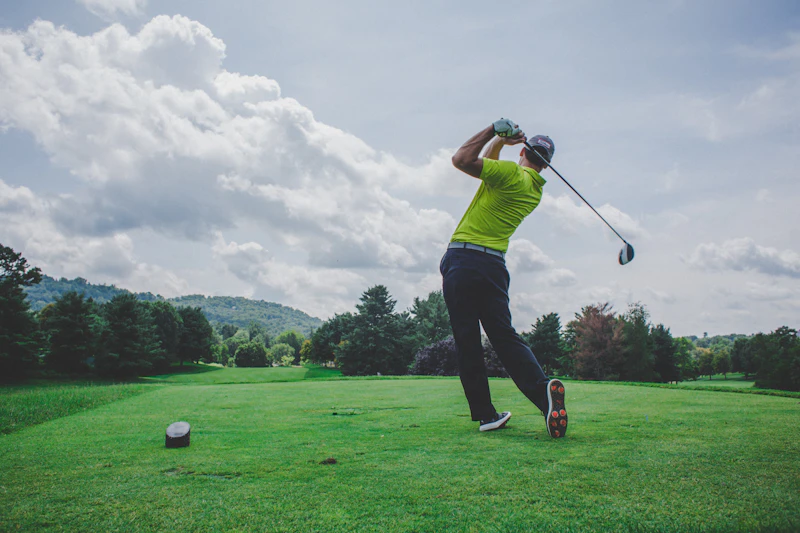
Introduction: Golf as a Complete Fitness Experience
Golf in Dubai has transformed from a leisure activity into a serious sport that demands peak physical conditioning. Walking 18 holes across sprawling desert courses burns significant calories while strengthening core muscles, improving cardiovascular health, and enhancing mental resilience. Dubai's world-class golf courses attract professionals, amateurs, and fitness enthusiasts alike, all seeking to improve their game through dedicated fitness conditioning programmes.
The intersection of golf and fitness has never been more relevant. Modern golf requires explosive rotational power, exceptional hip mobility, bulletproof core stability, and laser-focused mental endurance. Whether you're a beginner taking your first lesson or a competitive player chasing lower handicaps, structured golf-specific conditioning will transform your performance on the course and your overall fitness level.
Golf as a Complete Exercise: Understanding the Fitness Benefits
Many people underestimate golf's physical demands. Walking 18 holes without a golf cart burns between 1,400 and 2,000 calories—equivalent to a moderate running session—while carrying your clubs adds 10-15% more energy expenditure. This natural, low-impact cardio improves cardiovascular health, strengthens leg muscles, and builds endurance without excessive joint stress.
Beyond calorie burn, golf delivers remarkable cardiovascular benefits. A typical 4.5-hour round maintains your heart rate in the aerobic zone (60-70% of max HR), improving cardiac efficiency and oxygen utilisation. The constant movement, varied terrain, and mental focus create a unique fitness stimulus that gym-based training alone cannot replicate.
Golf's mental health benefits are equally compelling. Walking in Dubai's natural landscapes reduces cortisol levels, improves focus, and provides a psychological reset from high-stress professional lives. The sport demands problem-solving skills, emotional regulation, and strategic thinking—mental fitness components that transfer to every life domain. Studies show golfers report lower depression and anxiety rates, better stress management, and improved sleep quality.
Golf-Specific Fitness Training: Building the Perfect Swing
A powerful, consistent golf swing requires more than technique—it demands specifically trained muscles and movement patterns. Tour professionals spend as much time in conditioning as on the practice range because they understand that fitness determines performance ceiling.
Rotational Power Development: The golf swing generates power through explosive hip and thoracic spine rotation. Training anti-rotation movements (Pallof presses, landmine rotations), explosive medicine ball throws, and dynamic twisting exercises builds the rotational power that translates directly to longer drives and more consistent ball striking. This rotational training also prevents one of golf's most common injuries: lower back strain.
Hip Mobility and Stability: Golfers with restricted hip mobility compensate by increasing lumbar spine rotation, dramatically increasing injury risk. Dedicated hip mobility work—90/90 stretches, World's Greatest Stretch, deep bodyweight squats—allows golfers to achieve full hip turn without stressing the lower back. Simultaneously, single-leg stability exercises (Bulgarian split squats, single-leg deadlifts, half-kneeling work) build hip stability that prevents compensation patterns during the swing.
Core Stability Excellence: The core must resist rotation during the swing, generating sequential energy transfer from lower body through upper body. Dead bugs, bird dogs, plank variations, and suitcase carries train true core function rather than isolated 6-pack aesthetics. Golfers with strong, stable cores hit longer, more consistent shots and remain injury-free.
Shoulder and Arm Strength: The shoulders control club path and consistency. Scapular stability work (face pulls, YTW raises), rotational shoulder strength (landmine presses), and explosive pushing power build shoulders that swing accurately and powerfully. Arm strengthening (wrist curls, reverse wrist curls, grip training) protects against tennis elbow and improves club control in critical moments.
Dubai's Premier Golf Courses and Venues
Dubai hosts exceptional golf courses that rival championship venues worldwide. Each presents unique challenges requiring specific fitness adaptations.
Emirates Golf Club: The original championship course opened in 1988, featuring two 18-hole courses (Majlis and Wadi). The Majlis course (par 72, 7,301 yards) demands explosive power off the tee and precise approach play. Walking this demanding layout builds serious cardiovascular fitness alongside golf skill. The club offers professional coaching and membership packages starting around AED 15,000 annually.
Dubai Creek Golf & Yacht Club: Positioned along Dubai Creek with dramatic skyline views, this par-72 course features strategic water hazards and tight fairways requiring shot-making precision. The undulating terrain builds leg strength through constant elevation changes. Daily green fees range from AED 400-600 depending on season.
Jumeirah Golf Estates: Two premium 18-hole courses designed by Greg Norman and Ernie Els, featuring manicured fairways and pristine conditioning. The Greg Norman course stretches 7,423 yards, demanding power and consistency. Green fees start at AED 350 in shoulder seasons, AED 500+ during peak winter. The facilities include excellent practice ranges where golfers refine their swing mechanics.
Trump International Golf Club Dubai: The newest championship venue features a dramatic par-72 course with elevated greens and precision demands. Designed to international championship standards, walking this course builds exceptional aerobic capacity. Premium green fees reflect championship-level conditioning—expect AED 600+ year-round.
Al Badia Golf Club: Nestled near the prestigious Al Badia gated community, this par-72 course offers more accessible rates (AED 250-400) while maintaining championship standards. Perfect for golfers developing their fitness base before tackling more challenging layouts.
Golf Academies and Professional Coaching in Dubai
Dubai's golf academies combine swing instruction with comprehensive fitness coaching, understanding that golf excellence requires integrated development.
Individual Professional Lessons: PGA professionals in Dubai typically charge AED 200-500 per hour depending on experience level and credentials. A Tour-level coach commands premium rates, while developing professionals offer excellent value. Most professionals recommend 8-12 weeks of consistent coaching to establish fundamental swing patterns and grip mechanics.
Group Lesson Programmes: More economical options include group lessons at AED 100-200 per participant, often structured as 4-6 week progressive programmes. These suit beginners establishing fundamentals and intermediate players refining specific skills. Group sessions provide social motivation and peer learning while reducing individual costs.
Package Deals: Most academies offer bundled packages combining lessons, range balls, and fitness assessments. Common structures include:
- Beginner Package: 4 lessons + fitness assessment + swing analysis (AED 1,200-1,600)
- Intermediate Package: 8 lessons + monthly fitness sessions + video analysis (AED 2,400-3,200)
- Performance Package: 12 lessons + weekly conditioning + handicap tracking (AED 4,000-5,500)
Top academies at Emirates Golf Club, Jumeirah Golf Estates, and Dubai Creek Golf Club employ full-time professionals with PGA credentials and international experience. These facilities integrate swing coaching with on-site fitness facilities, creating seamless golf development programmes.
Golf-Specific Fitness Training Programmes with Personal Trainers
Dedicated golf fitness training accelerates improvement and prevents injuries that derail serious players. Personal trainers specialising in golf conditioning structure 8-12 week programmes addressing individual limitations and goals.
Initial Assessment: Golf fitness professionals conduct comprehensive assessments evaluating:
- Hip mobility and hip internal/external rotation range
- Thoracic spine rotation capacity and shoulder mobility
- Core stability through various movement patterns
- Single-leg stability and proprioception
- Power output through medicine ball throws and jump testing
- Current swing tendencies and injury history
Customised Programming: Based on assessment findings, trainers design 3-4 week training blocks emphasising specific qualities:
- Block 1 (Mobility & Stability): Establishing movement foundations, correcting imbalances, improving range of motion
- Block 2 (Strength & Power): Building functional strength relevant to golf swing mechanics
- Block 3 (Integration & Sport-Specific Power): Translating gains into golf-specific movements and explosive power
- Block 4 (Maintenance & Performance): Sustaining fitness while managing volume and managing golf season demands
Expect to invest AED 150-300 per session with specialised golf fitness trainers at Dubai gyms. Most golfers see measurable improvements—typically 10-15 yards additional drive distance, improved consistency, and reduced injury risk—within 8-12 weeks of dedicated conditioning.
Need a Golf Fitness Specialist?
Connect with certified personal trainers specialising in golf conditioning across Dubai. Find professionals who understand rotational power, hip mobility, and sport-specific training.
Find a Golf Fitness TrainerPhysical Conditioning Exercises for Golfers
TRX Rotation Exercises: TRX suspension training develops rotational power with exceptional stability demands. TRX pallof presses, anti-rotation holds, and rotational chops train deceleration and eccentric strength critical for powerful yet controlled golf swings. Perform 3 sets of 10-12 reps per side, focusing on quality movement and core tension.
Hip Flexor Stretching Protocol: Tight hip flexors restrict hip extension during the follow-through, forcing compensation through lower back extension. 90/90 stretches, couch stretches, and deep kneeling hip flexor stretches should be performed daily, holding 90 seconds per side. Include this routine even on non-training days for maximum flexibility development.
Lat Stretching and Thoracic Mobility: Tight lats reduce shoulder mobility and thoracic rotation capacity. Overhead stretches, doorway stretches, and cross-body shoulder stretches improve reaching ability. Thread-the-needle exercises and quadruped thoracic rotations mobilise the thoracic spine, enabling fuller shoulder turn without compensatory lower back rotation.
Single-Leg Stability Progressions: Single-leg Romanian deadlifts, single-leg Bulgarian split squats, and single-leg hop progressions build the stability required to generate power on one leg while maintaining balance. These exercises transfer directly to driving off the back foot, the key to consistent distance and accuracy.
Medicine Ball Power Development: Explosive medicine ball exercises including rotational throws, overhead slams, and lateral throws develop the fast-twitch power essential for longer driving distances. Perform 3-4 sets of 5-6 explosive reps, allowing full recovery between sets to maintain maximal power output.
Pallof Press Variations: Named after physical therapist John Pallof, these anti-rotation exercises develop core stability without spinal extension. Half-kneeling Pallof presses, tall Pallof presses, and Pallof press walks train true functional core strength. Perform 3 sets of 10-12 reps per side, maintaining rigid core tension throughout.
Injury Prevention: Protecting Your Body on the Course
Golf injuries develop insidiously through repetitive strain rather than acute trauma. Understanding injury mechanisms enables targeted prevention.
Lower Back Protection: Excessive lumbar spine rotation causes most golf-related lower back injuries. Prevention requires strong core stability and adequate hip mobility. Regular dead bugs, bird dogs, and plank variations build core endurance. Hip mobility work (90/90 stretches, World's Greatest Stretch, deep bodyweight squats) allows rotation through the hips rather than forcing excessive lumbar extension. Maintain neutral spine during swings rather than overextending through the lower back.
Shoulder Health Strategy: Golfers experience shoulder impingement through repetitive overhead motions. Shoulder health demands scapular stability (face pulls, YTW raises), rotator cuff strengthening (band work, cable external rotations), and adequate mobility (sleeper stretch, cross-body shoulder stretch). Address any clicking or restriction immediately—shoulder injuries progress rapidly if ignored.
Wrist and Forearm Protection: Tennis elbow (lateral epicondylitis) affects golfers through repeated grip stress and impact forces. Prevent this through eccentric wrist strengthening (pronation/supination exercises), gentle forearm stretching, and adequate grip conditioning. Use proper grip pressure during practice—excessive grip tension accelerates wrist injuries.
Knee Stability Focus: Walking courses on uneven terrain loads knees asymmetrically. Build knee resilience through single-leg stability work, glute strengthening, and VMO (vastus medialis obliquus) activation exercises like sissy squats. Properly fitting golf shoes with adequate arch support prevent excessive pronation and knee stress.
Golf Equipment in Dubai: Starter Sets to Premium Configurations
Quality equipment enhances performance and enjoyment, though proper fitting matters more than equipment cost.
Starter Sets and Budget Options (AED 500-1,500): Complete 14-club starter sets from reputable manufacturers (Callaway, TaylorMade, Cobra) provide excellent entry points. These pre-assembled sets balance cost and quality, suitable for developing golfers establishing their game before investing in premium equipment.
Mid-Range Equipment (AED 1,500-3,000): Individual club selection within this range allows customisation based on swing characteristics. Most developing golfers find optimal value here, purchasing mixed-brand clubs matched to their swing speed and game style.
Premium Custom Fit Equipment (AED 3,000+): Professional fitting services analyse swing mechanics, launch characteristics, and shot preferences, resulting in custom configurations optimising performance. Premium equipment from tour manufacturers (Titleist, Ping, Mizuno) offers incremental performance gains meaningful for competitive players.
Where to Buy in Dubai: Major golf retailers including Orbits Golf, Fairways Golf, and pro shops at championship courses provide expert fitting services. Many offer club trial programmes allowing players to test equipment before purchasing. Dubai's competitive market ensures excellent pricing on both new and previous-season models.
| Golf Equipment Category | Price Range (AED) | Best For |
|---|---|---|
| Starter Club Set (14 clubs) | 500–1,500 | Beginners establishing fundamentals |
| Mid-Range Individual Clubs | 150–400 per club | Developing players customising sets |
| Premium Driver or Putter | 800–1,800 | Optimising key scoring clubs |
| Golf Bag (Quality) | 200–600 | Durability and ergonomic carrying |
| Custom Fitting Session | 200–400 | Optimising equipment to swing |
| Golf Shoes (Premium) | 250–500 | Comfort and stability during rounds |
| Golf Watch (GPS/Rangefinder) | 400–1,200 | Course management and distance knowledge |
Driving Ranges and Practice Facilities
Consistent practice on quality facilities accelerates skill development and ingrain fitness adaptations. Dubai offers excellent practice venues.
The Track Golf Studio: Located in Dubai Sports City, The Track features climate-controlled hitting bays with advanced ball-tracking technology (Trackman, FlightScope). Professional instruction combined with technology analysis accelerates improvement. Membership and per-bucket pricing accommodate various commitment levels, with range balls costing AED 20-35 per bucket.
Topgolf-Style Entertainment Venues: While not traditional golf facilities, entertainment golf venues like TopGolf Dubai (when available) provide engaging practice environments combining skill development with social activity. These venues suit casual players and fitness enthusiasts seeking fun golf experiences.
Course Practice Ranges: Championship courses at Jumeirah Golf Estates, Emirates Golf Club, and Dubai Creek provide extensive range facilities with professional instructors. Hit quality range balls while warming up before rounds, refining specific skills during dedicated practice sessions.
Golf and Wellness Retreats in Dubai
Immersive golf experiences combining course play with dedicated conditioning, nutrition coaching, and wellness recovery have gained significant traction among serious players.
Several Dubai resorts and specialist operators offer multi-day golf fitness packages combining daily rounds with personal training, flexibility work, nutritional coaching, and recovery protocols. These immersive experiences (typically 3-5 days, AED 3,000-6,000) accelerate fitness development while building golf-specific confidence. Participants often achieve measurable improvements in swing power, consistency, and overall fitness within a single week.
Wellness components typically include massage therapy, sauna recovery, sleep optimisation coaching, and nutrition planning addressing common golf performance limitations. These holistic approaches recognise that golf excellence extends beyond swing mechanics into complete lifestyle optimisation.
Junior Golf Programmes in Dubai
Dubai's junior golf programmes develop young players while building lifetime fitness habits. Structured programmes at championship courses typically include:
- Ages 5-8 (Introducing Golf): Fundamentals of grip, stance, and short-game skills. Emphasis on fun and motor skill development. Weekly sessions (AED 150-250) introduce golf as an active, healthy pursuit.
- Ages 8-12 (Developing Skills): Progressive swing technique, course management, and competitive play. Integrated fitness includes mobility work, balance development, and coordination. Expect AED 250-400 weekly.
- Ages 12-18 (Competitive Development): Tournament preparation, advanced strategy, and sport-specific conditioning. Serious junior programmes include golf fitness coaching paralleling adult programmes. Investment ranges AED 400-800 weekly depending on intensity.
Junior programmes at Emirates Golf Club, Jumeirah Golf Estates, and Al Badia Golf Club provide pathways from absolute beginners to competitive junior tournaments. These early starts build golf skills, fitness foundations, and lifetime wellness habits that shape healthy adulthood.
Integrating Golf Fitness Into Your Training Week
Optimal golf fitness training integrates three complementary components:
Golf-Specific Strength Days (2x weekly): 45-60 minute sessions emphasising rotational power, hip stability, and core strength. Exercises: Pallof presses, TRX rotations, single-leg deadlifts, medicine ball throws, landmine rotations. Rest 2-3 days between sessions to allow neural recovery.
Mobility and Flexibility Sessions (3-4x weekly): 20-30 minute dedicated sessions or warm-up components focusing on hip flexor stretching, thoracic rotation, shoulder mobility, and ankle dorsiflexion. Can be performed daily without recovery concerns.
Aerobic Conditioning (2-3x weekly): Mix steady-state cardio (Zone 2 running, cycling) with interval training. Golf course walking provides natural aerobic conditioning while improving play, making on-course rounds a component of your training plan.
Most golfers see optimal results dedicating 4-5 hours weekly to structured conditioning while playing 1-2 rounds weekly. This integrated approach builds measurable fitness improvements while maintaining golf skill development. After 8-12 weeks, expect 10-20 yard increases in driving distance, improved consistency, reduced injury risk, and enhanced mental resilience during competitive play.
Nutrition Strategies for Golf Performance and Fitness
Proper fuelling optimises both golf fitness development and on-course performance. Golf's 4-5 hour duration demands sustained energy availability and mental focus.
Pre-Round Nutrition: Consume a carbohydrate-rich breakfast 2-3 hours pre-round (oatmeal with berries, whole grain toast with eggs, fruit smoothie). Adequate carbohydrate availability (150-200g) sustains mental focus and decision-making through 18 holes. Caffeine consumption (1-2 cups coffee) enhances alertness without causing jitters.
During-Round Hydration: Maintain consistent hydration during hot Dubai rounds—aim for 500ml every 9 holes (roughly every 2 hours). Sports drinks containing 4-8% carbohydrates (roughly 6-8 teaspoons sugar per litre) maintain energy availability during extended play. Plain water suffices for rounds under 2.5 hours.
Post-Round Recovery: Consume carbohydrates and protein within 30-60 minutes post-round to replenish glycogen and initiate muscle protein synthesis. A post-round meal combining rice, grilled chicken, and vegetables provides necessary nutrients for recovery and adaptation.
Training Days Nutrition: Fuel strength training days with adequate protein (1.6-2.2g per kg bodyweight daily) distributed across 4-5 meals. This supports muscle adaptation from training stimulus and aids recovery. Carbohydrate intake supporting training intensity ensures quality session execution.
Frequently Asked Questions About Golf Fitness in Dubai
How many calories does walking 18 holes burn?
Walking 18 holes without a motorised cart burns 1,400-2,000 calories depending on bodyweight, pace, terrain, and club carrying method. Carrying clubs rather than using a trolley increases expenditure 10-15%. This represents significant caloric expenditure comparable to moderate running, making golf an effective fitness activity when played without motorised transport.
What's the best age to start golf conditioning?
Young golfers (14+) benefit tremendously from integrated conditioning, developing foundational strength and mobility alongside swing technique. Adult beginners should prioritise mobility and stability before pursuing power development. Regardless of age, starting golf fitness conservatively with technique emphasis prevents overuse injuries. Most players see measurable improvements within 4-6 weeks of consistent conditioning.
How often should I practice golf to see improvement?
Serious improvement requires consistent practice. Dedicate 2-3 hours weekly to dedicated practice (range work, short game, fitness training) plus 1-2 rounds weekly. This 4-5 hour weekly investment typically produces measurable improvement within 8-12 weeks. Occasional golfers playing monthly without structured practice plateau quickly—consistency matters more than single extended sessions.
Can I develop golf fitness without joining a club?
Absolutely. Public driving ranges, pay-as-you-go courses, and personal training with golf-specialised trainers provide excellent alternatives to club membership. Many golfers develop competitive skill through range practice, coaching, and public course play without club membership investment. Focus on fundamentals, fitness conditioning, and consistent practice rather than exclusive access.
What's the realistic timeline to achieve golf improvement?
Basic golf competency develops within 8-12 weeks with 2-3 hours dedicated weekly practice. Noticeable fitness improvements (strength, mobility, power) appear within 4-6 weeks. Significant skill development requires 6-12 months of consistent practice combined with quality coaching. Elite amateur golf skills typically require 2-3 years of dedicated development. Be patient with improvement—golf skill compounds gradually rather than appearing suddenly.
Getting Started: Your Golf Fitness Action Plan
Transform your golf game and fitness through structured, progressive conditioning:
- Weeks 1-2 (Foundation Phase): Assess current fitness (mobility testing, basic strength benchmarks). Begin daily mobility work (hip flexors, thoracic rotation, shoulder mobility). Start with bodyweight stability exercises. Schedule initial golf coaching to establish swing fundamentals.
- Weeks 3-6 (Build Phase): Introduce dedicated strength training 2x weekly emphasising core stability and single-leg work. Maintain daily mobility routines. Add aerobic conditioning 2-3x weekly. Track golf metrics (driving distance, accuracy, scoring).
- Weeks 7-12 (Power Phase): Progress to explosive movements (medicine ball throws, jump training). Maintain strength and mobility foundations. Increase round frequency as skill develops. Play 1-2 courses regularly to build course management skills.
- Weeks 13+ (Maintenance & Advancement): Shift to maintenance strength training while pursuing new challenges (competitive play, lower handicap targets). Continue weekly mobility work. Consider golf-specific coaching to refine technique as fitness improves.
Final Thoughts: Golf as Your Fitness Journey
Golf in Dubai represents far more than a leisurely weekend activity—it's a complete fitness pursuit combining cardiovascular conditioning, functional strength development, mobility enhancement, and profound mental health benefits. The sport demands physical excellence while providing genuine enjoyment and social connection, rare qualities in modern fitness pursuits.
Whether your goal is improving your handicap, increasing driving distance, or simply maintaining active lifestyle in a supportive community, golf fitness conditioning delivers measurable results. Dubai's exceptional courses, dedicated professionals, and growing fitness community support every commitment level from beginner to competitive player.
Start today. Begin with mobility work and basic strengthening. Take a lesson from a qualified professional. Play your first round. Experience golf's unique magic—the blend of nature, challenge, and personal growth. Your improved fitness, reduced injury risk, and lower scores will compound as you commit to structured conditioning. Golf awaits.
Ready to Transform Your Golf Game?
Connect with specialised golf fitness trainers across Dubai who understand the unique demands of golf conditioning. Improve your swing power, consistency, and mental resilience through science-based training.
Browse Golf Fitness TrainersRelated Resources
- Personal Training in Dubai — Find certified trainers specialising in sport-specific conditioning
- Outdoor Training Dubai — Discover training programmes utilising Dubai's natural environments
- Flexibility & Mobility Training — Complete flexibility development guide applicable to all sports
- Injury Prevention Guide — Comprehensive injury prevention strategies for athletic training
- Contact GetFitDXB — Reach out with questions about golf fitness in Dubai