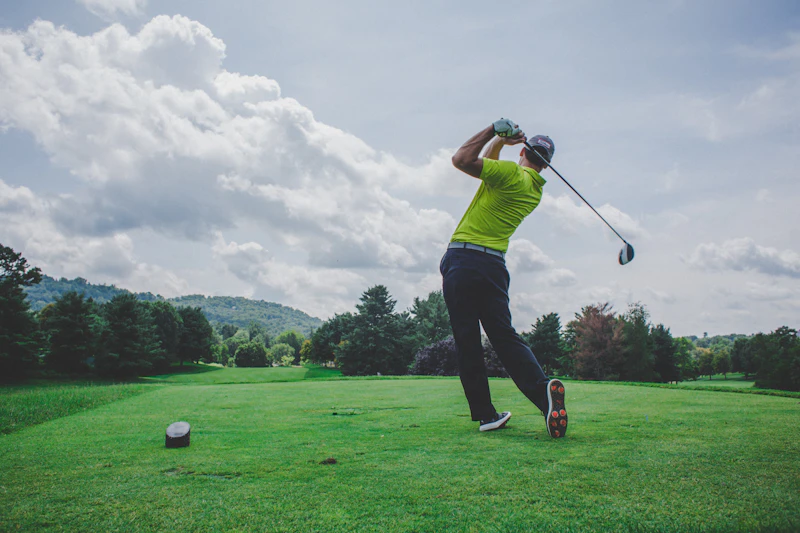
Golf is a sport that demands far more than swing mechanics and putting practice. In Dubai's competitive golf scene — from casual weekend rounds at Emirates Golf Club to championship tournaments at Trump International — success hinges on physical conditioning. Tour professionals know this: every extra 10 kilometres per hour of club head speed comes from stronger core muscles, better flexibility, and superior rotational power. This guide reveals the fitness framework that transforms amateur golfers into consistent performers on Dubai's world-class courses.
1. Why Golf Fitness Matters in Dubai
Golf looks deceptively simple — hitting a stationary ball down a fairway cannot be that physically demanding, right? The science tells a different story. A single golf swing generates forces exceeding three times your body weight, concentrated through a 0.2-second explosive movement. Over 18 holes, golfers repeat this motion 70+ times, often in Dubai's intense heat and humidity, which compounds fatigue and injury risk.
The statistics are compelling: 65% of golfers experience injury annually, most commonly lower back pain. These injuries are not inherent to golf — they result from weak core stability, poor flexibility, and muscular imbalances. Professional golfers invest heavily in fitness because they understand that distance, accuracy, and consistency all improve measurably with proper conditioning.
In Dubai's premium golf environment, where club memberships cost AED 25,000–150,000 annually, your investment in fitness conditioning directly impacts your return on that investment. Better swing mechanics, fewer injuries, and sustained energy through all 18 holes make the difference between an enjoyable round and an exceptional one.
2. Key Fitness Components for Golf
Unlike strength sports like powerlifting or sports like tennis that demand maximal athleticism, golf success requires a specific constellation of fitness qualities. Here are the non-negotiables:
✅ Essential Golf Fitness Components
- Core stability and anti-rotation strength
- Rotational power and explosive hip drive
- Shoulder flexibility and mobility
- Thoracic spine rotation range
- Lower body strength and balance
- Hip flexibility and internal rotation
- Grip strength and forearm endurance
- Cardiovascular fitness for all 18 holes
❌ What Doesn't Help Golf Performance
- Pure bodybuilding hypertrophy (added mass slows swing)
- Single-plane strength (golf is multi-planar)
- Excessive flexibility without control
- High-intensity cardio that causes fatigue
- Isolation exercises without functional transfer
- Training that ignores movement quality
- Programmes that ignore posture and alignment
3. Core Strength and Stability for Golf
The core is not just your abdominal muscles — it is the integrated network of muscles from your ribcage to your knees that stabilises your spine during movement. In golf, a strong core is non-negotiable. Your core transfers force from your lower body (which generates power) through to your upper body (which delivers the blow), creating the kinetic chain that generates club head speed.
Golfers with weak core stability compensate by moving their spine excessively, which causes lateral shifts, loss of posture, and inconsistent contact with the ball. Over time, this poor movement pattern leads to lower back strain and injury.
Key Core Exercises for Golfers
- Pallof Press Variations — anti-rotation work that mimics the resisting forces during your downswing
- Dead Bugs and Bird Dogs — fundamental stability exercises that teach proper core engagement
- Plank Variations (side planks, extended planks) — build endurance to maintain posture all 18 holes
- Landmine Rotations — rotational core strength with real-world transfer to golf swing mechanics
- Turkish Get-Ups — sophisticated full-body stability exercise integrating core, shoulder, and hip stability
- Sled Push and Pull — real-world functional core engagement under load
Core conditioning should be part of every golf fitness session. Rather than isolated core days, integrate core work as part of your warm-up and throughout your main workout. This ensures you develop core stability that transfers directly to your swing, rather than abstract abdominal strength.
4. Rotational Power and Explosive Hip Drive
Club head speed — which directly determines how far you hit the ball — comes from rotational power. This is where golf fitness diverges dramatically from traditional gym strength training. A golfer can deadlift 200 kilograms but still generate weak club head speed if lacking rotational power. Conversely, a lighter golfer with strong rotational conditioning can out-drive heavier competitors.
Rotational power originates in your hips. The best golfers initiate their downswing with explosive hip rotation, which creates torque through the core and ultimately generates club head speed. The "X-factor" in professional golf is the difference in rotation between your hips and shoulders — the greater the separation, the more torque, and the faster the club head speed.
Building Rotational Power
- Medicine Ball Rotational Throws — explosive power development with direct transfer to swing mechanics
- Landmine 180-Degree Rotations — hip-driven rotational power under resistance
- Kettlebell Windmills — loaded rotational work that builds shoulder stability alongside rotational power
- Chop and Lift Movements — diagonal patterns that mirror swing mechanics
- Single-Leg Romanian Deadlifts with Rotation — combines balance, unilateral strength, and rotational demand
- Cable Rotations at Various Heights — functional multi-planar rotation
5. Flexibility and Mobility for Golfers
Flexibility — how far you can stretch a muscle — is important in golf, but mobility — how well you can control a joint through its range of motion — is more critical. A golfer with extreme flexibility but poor motor control is more injury-prone than one with modest flexibility and excellent body awareness.
Golf demands exceptional mobility in several areas: thoracic spine rotation (mid-back), shoulder external rotation, hip internal rotation, and ankle dorsiflexion. Lacking mobility in any of these areas forces compensatory movements elsewhere, reducing efficiency and increasing injury risk.
Critical Mobility Areas for Golfers
Thoracic Spine Rotation: The ability to rotate your mid-back is foundational to golf. Many golfers develop stiffness here from poor posture at desks, limiting their swing turn and forcing compensatory rotation from the lumbar spine (which is not designed for rotation).
Shoulder External Rotation: Golf requires exceptional external rotation in the rear shoulder (your back shoulder during address). Limited external rotation forces compensation through the shoulder joint, increasing impingement risk.
Hip Internal Rotation: The lead hip (front hip) must internally rotate to initiate the downswing. Limited hip mobility forces excessive lumbar spine rotation, again driving lower back injury.
Ankle Mobility: Often overlooked, poor ankle mobility destabilises your lower body platform during the swing, reducing power transfer and increasing injury risk.
- Perform dynamic mobility work before every round and practice session
- Complete static stretching and mobility work post-round when muscles are warm
- Dedicate 10–15 minutes daily to targeted mobility for your specific restrictions
- Use tools like foam rollers and lacrosse balls for myofascial release
- Consider yoga or dedicated mobility classes 1–2 times weekly
6. Balance and Proprioception in Golf
Balance is deceptively important in golf. Standing on one leg (or close to it) while generating explosive rotational force demands exceptional proprioception — your body's sense of where it is in space. Poor balance destabilises your swing platform, forcing compensation through your upper body and reducing consistency.
Interestingly, single-leg exercises that build balance show measurable transfer to swing consistency and distance. Research on amateur golfers found that 6 weeks of balance training improved average drive distance by 8–12 metres — a substantial gain from simple conditioning work.
Balance and Proprioception Exercises
- Single-Leg Stands — start with eyes open, progress to eyes closed
- Single-Leg Squats and Deadlifts — balance under load
- Bosu Ball Training — unstable surface work that challenges proprioception
- Slackline Training — advanced proprioceptive challenge
- Lateral Single-Leg Bounds — dynamic balance with explosive force
- Single-Leg Romanian Deadlifts — balance combined with posterior chain strength
7. Dubai's Best Golf Clubs and Fitness Facilities
Dubai is home to the Middle East's finest golf infrastructure. Whether you are a member seeking on-site fitness or a traveller looking for a world-class experience, here are the premier clubs:
Topgolf Dubai
The revolutionary entertainment golf venue in Downtown Dubai combines hi-tech golf simulation with full-service dining and entertainment. While not a traditional club, Topgolf offers climate-controlled hitting bays, instant swing analysis, and a fantastic social environment. Perfect for year-round practice in Dubai's summer heat.
Trump International Golf Club
Dubai's most exclusive course, situated on a private peninsula with 18 holes designed by Tom Fazio. Championship-calibre conditioning, exceptional amenities, and on-site fitness facilities. Membership includes access to world-class fitness infrastructure and golf coaching specialists. Initiation fees start at AED 100,000+.
Emirates Golf Club
Two championship courses (the Majlis and the Wadi) in one location, making it one of the world's few dual-course clubs. Located in Al Manara, it offers exceptional conditioning, full-service fitness facilities, professional coaching, and a thriving member community. Memberships start around AED 50,000 initiation plus annual fees.
Dubai Creek Golf & Yacht Club
Stunning 18-hole course with views of Dubai Creek, located in Deira. Full-service clubhouse with fitness facilities, professional instruction, and an excellent dining experience. More accessible pricing than Trump International while maintaining premium standards.
Al Badia Golf Club
Championship course in the heart of the desert, approximately 40 minutes from Downtown Dubai. Designed by Greg Norman, it offers a different golfing experience with dramatic desert vistas and challenging terrain. Fitness facilities available for members and guests.
Jumeirah Golf Estates
A dedicated golf community with a championship course designed by Ernie Els, featuring 40 villas and extensive clubhouse amenities. The course hosts professional tournaments and offers world-class instruction and fitness facilities for residents and members.
Most premium golf clubs include fitness facilities or partner with personal trainers who specialise in golf conditioning. When considering club membership, inquire specifically about golf-specific fitness offerings. GetFitDXB connects you with trainers who specialise in golf fitness and know Dubai's golf communities intimately.
8. Complete Golf Fitness Workout Program
The most effective golf fitness protocol combines mobility work, functional strength, rotational power, and proprioceptive training. Here is a weekly structure that delivers results:
Weekly Structure (3 Sessions Per Week)
Session 1: Power and Rotational Strength (Tuesday or Wednesday)
- Dynamic warm-up mobility sequence (5–8 minutes)
- Medicine ball rotational throws (3 sets × 8 reps each direction)
- Landmine rotations (3 sets × 10 reps each direction)
- Single-leg deadlifts (3 sets × 8 reps per leg)
- Pallof press variations (3 sets × 10 reps per side)
- Explosive hip bridges with band resistance (3 sets × 12 reps)
- Cooldown and static stretching (5 minutes)
Session 2: Mobility and Stability (Thursday or Friday)
- Extended dynamic mobility sequence (10–12 minutes)
- Thoracic spine rotations and extensions (3 sets × 8 reps per side)
- Dead bugs with pallof press hold (3 sets × 8 reps)
- Quadruped rocking (3 sets × 10 reps)
- Half-kneeling rotations (3 sets × 10 reps per side)
- Banded shoulder external rotation (3 sets × 15 reps)
- Single-leg balance work on unstable surface (3 sets × 30 seconds per leg)
- Extensive stretching and myofascial release (8 minutes)
Session 3: Integrated Functional Training (Sunday)
- Golf-specific dynamic warm-up (5 minutes)
- Turkish get-ups with light weight (3 sets × 3 reps per side)
- Kettlebell windmills (3 sets × 5 reps per side)
- Chop and lift movements with cable machine (3 sets × 10 reps each movement)
- Single-leg Romanian deadlifts with rotation (3 sets × 8 reps per leg)
- Lateral bounds with balance emphasis (3 sets × 5 bounds per direction)
- Core sled work (3 sets × 20 metres forward and backward)
- Post-round stretching and mobility (7 minutes)
These are foundation workouts. As you build fitness, progression comes through increasing load (heavier weight), volume (more reps or sets), or complexity (more challenging exercises). Never sacrifice movement quality for load or volume. Poor movement patterns ingrain poor habits that transfer to your swing.
9. Nutrition for Golfers
On-course nutrition is often overlooked by amateur golfers, but it directly impacts energy, focus, and performance on the back nine. Dubai's heat compounds hydration demands and energy depletion.
Hydration Strategy
Dehydration degrades swing mechanics, reduces focus, and impairs decision-making on the course. In Dubai's climate, you lose significantly more fluid than in temperate zones. Professional golfers aim to drink 400–600 millilitres of fluid every hour during play, adjusted for heat and humidity.
Water alone is insufficient during extended play — your muscles and brain also need electrolytes and carbohydrates. A practical strategy: carry two bottles (one water, one sports drink with electrolytes and carbs), alternating sips throughout your round.
On-Course Nutrition
Energy depletion is a genuine performance limiter. Your glycogen stores diminish over 18 holes, affecting the latter half of your round when you need focus most. Effective on-course nutrition includes:
- Light carbohydrate snacks: bananas, energy bars, or gel products before you feel tired (preventive approach)
- Easily digestible carbs: avoid heavy or fat-rich foods that digest slowly and divert blood flow from your brain
- Timing: consume snacks at the turn (9-hole mark) and again around hole 15 to maintain energy through the final holes
- Avoid alcohol: even modest alcohol impairs swing mechanics, focus, and decision-making
Off-Course Nutrition for Golf Fitness
General fitness nutrition principles support golf training. Adequate protein intake (1.6–2.0 grams per kilogram body weight daily) supports muscle adaptation from your fitness work. Carbohydrates fuel your training intensity and recovery. Healthy fats support hormone production essential for strength adaptation.
A practical framework: base meals around whole proteins (fish, chicken, lean beef, eggs), abundant vegetables, whole grains, and healthy fats. Time carbohydrates around your training sessions for optimal performance and recovery.
Connect with a Golf-Specialized Trainer in Dubai
GetFitDXB connects you with certified golf fitness specialists who understand Dubai's golf community. Find a trainer who knows your local courses and can customize a programme for your specific needs and goals.
10. Finding a Golf Fitness Trainer in Dubai
Not all personal trainers understand golf. A trainer experienced with traditional strength training or bodybuilding may not appreciate the specific demands of golf fitness. Look for trainers with explicit golf conditioning experience, understanding of swing mechanics, and familiarity with Dubai's golf communities.
What to Look For in a Golf Fitness Trainer
- Golf-specific certification: look for trainers with TPI (Titleist Performance Institute) certification or equivalent golf-specialization training
- Understanding of swing mechanics: they should be able to discuss X-factor, kinetic chain, and how specific exercises translate to swing improvement
- Experience with golfers: ask how many golf clients they have trained and their typical improvements
- Knowledge of local courses: familiarity with Dubai's clubs and understanding of the specific demands of these courses
- Movement assessment capability: they should assess your mobility, movement patterns, and swing mechanics before prescribing a programme
- Flexibility and adaptability: golf fitness programmes must adapt based on your golfing schedule and competitive calendar
Typical Golf Fitness Trainer Rates in Dubai
| Service Type | Cost Per Session | Monthly Package (4 sessions) |
|---|---|---|
| Basic Personal Training | AED 250–350 | AED 1,000–1,400 |
| Golf-Specialized PT | AED 350–500 | AED 1,400–2,000 |
| Group Golf Fitness Classes | AED 150–250 | AED 600–1,000 |
| Movement Assessment + Programme Design | AED 400–600 (one-time) | N/A |
Golf-specialized trainers command a premium over generic personal trainers because of their specialized expertise. This premium is well-justified if the trainer delivers measurable improvements in your game and reduces injury risk.
- What golf-specific certifications or training do you hold?
- How many golfers have you trained? What results did they achieve?
- Can you explain the kinetic chain and how you program to improve it?
- How do you assess movement patterns and identify physical limitations?
- Will you coordinate with my golf instructor for integrated improvement?
- How do you program around my tournament schedule?
- Can you provide references from other golfers?
11. Frequently Asked Questions About Golf Fitness
Q: How quickly will I see improvements in my golf game from fitness training?
Most golfers notice measurable improvements — increased distance, better consistency, reduced fatigue in later holes — within 4–8 weeks of consistent training. These improvements accelerate if you also work on swing mechanics with a golf instructor. Fitness is one variable; proper technique is equally important.
Q: Can golf fitness training reduce my handicap?
Absolutely. A comprehensive study of amateur golfers found that 12 weeks of golf-specific fitness training reduced handicaps by an average of 2–3 strokes. This is substantial — equivalent to improvement that might otherwise take months of practice alone. The mechanism: improved distance, better control, and fewer fatigue-related mistakes in later holes.
Q: What is the most important exercise for golfers?
If forced to choose one, rotational core strength (Pallof press variations or landmine rotations) delivers the most direct transfer to swing mechanics. These movements directly train the anti-rotation forces your core must resist during the downswing. That said, comprehensive programming addressing mobility, stability, and rotational power delivers superior results.
Q: Should I still do traditional strength training if I play golf?
Yes, but with golf-specific modifications. Heavy lower body strength (squats, deadlifts) provides a foundation, but must be complemented by rotational work, mobility, and proprioceptive training. A typical golf fitness programme allocates 40% to mobility and stability, 40% to rotational power and functional strength, and 20% to traditional strength or conditioning.
Q: How often should I train for golf fitness alongside my rounds and practice?
Two to three golf-specific fitness sessions weekly is ideal, allowing adequate recovery while building progressive fitness. Schedule these on non-tournament days and avoid high-intensity training the day before competition. Most golfers find that consistent off-season training (summer months, if you reduce round frequency) builds fitness most effectively.
Q: Can I do golf fitness training during playing season?
Yes, but adjust the intensity and focus. During tournament season, shift from building new fitness to maintaining existing fitness and managing fatigue. Two maintenance sessions weekly (emphasizing mobility and stability over power) is appropriate. Resume building-phase training in the off-season.
Start Your Golf Fitness Journey Today
Whether you are a casual golfer seeking to enjoy your rounds more or a serious competitor targeting lower scores, a certified golf fitness trainer can accelerate your improvement significantly. GetFitDXB connects you with specialists across Dubai.