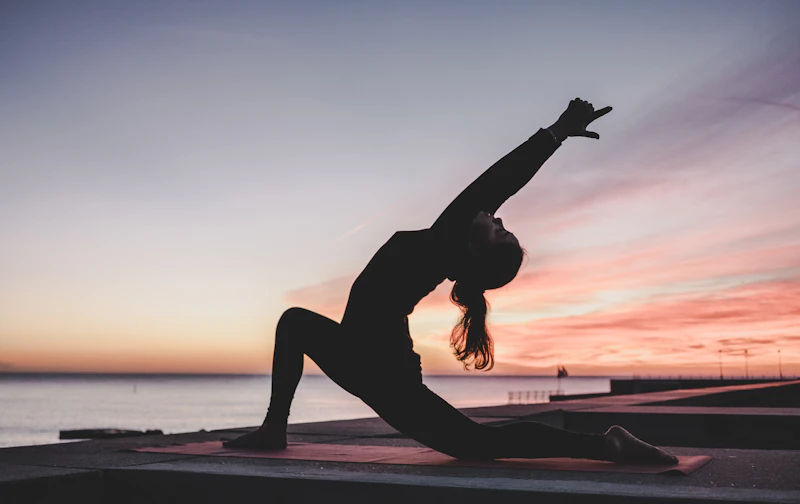
The mind is your most powerful training tool. At a gym in Dubai Marina, a triathlete might be physically capable of running a sub-3-hour marathon but sabotages themselves through perfectionist anxiety. Across town in JBR, a young CrossFit competitor has the strength to win competitions but crumbles under pressure. Meanwhile, a professional working 60-hour weeks struggles to commit to fitness because the psychological cost of "starting over" feels too high. These are not physical problems. They are mental performance challenges — and they are exactly what sports psychology addresses.
1. What is Sports Psychology?
Sports psychology is the science of optimising mental performance in athletic and fitness contexts. It is not therapy for mental illness, though it shares some tools with clinical psychology. Rather, it is the applied science of building psychological skills that help people perform better, overcome obstacles, and achieve their fitness and athletic goals.
Sports psychology covers five core domains:
- Confidence & self-belief: Building unshakeable belief in your ability to perform, even when facing uncertainty or past failures.
- Focus & concentration: Training your attention to stay locked on what matters and block out distractions during critical moments.
- Motivation & commitment: Understanding what drives you and leveraging those motivations to fuel consistent effort over months and years.
- Anxiety & stress management: Teaching your nervous system to stay calm under pressure and transform anxiety into performance fuel.
- Visualisation & mental imagery: Using the power of imagination to rehearse success, accelerate learning, and program your nervous system for optimal performance.
A personal trainer teaches you how to move your body. A sports psychologist teaches you how to move your mind. Both are essential for lasting results.
2. Why Mental Performance Matters for Dubai Athletes & Fitness Enthusiasts
Dubai's fitness culture is one of the world's most intense and competitive. The city attracts ambitious professionals, elite athletes, and people with serious transformation goals. It also creates unique psychological pressures.

Physical Capacity Plateaus Without Mental Skills
Research shows that 85% of variation in athletic performance at elite levels comes from psychological factors — not physical training. A study of Dubai-based triathletes found that those who added sports psychology coaching improved race times by an average of 8–12 minutes, despite identical physical training. The difference was mental.
This applies equally to fitness enthusiasts chasing body transformation goals. You might have the perfect programme, perfect nutrition, and perfect sleep — but if your mind is working against you, you will not see results.
Anxiety, Imposter Syndrome & Dubai's Comparison Culture
Dubai's fitness spaces are visually intense. Everyone is fit, confident, and seemingly performing at their best. Instagram influencers train in the same gyms as beginners. For many people, this breeds a crippling sense of inadequacy. Sports psychology addresses this directly through techniques like cognitive reframing, mindfulness, and exposure therapy.
3. Finding a Sports Psychologist or Mental Performance Coach in Dubai
Dubai's mental health landscape is expanding rapidly, though finding a qualified sports psychologist requires knowing where to look. Here is what you need to know.
Qualifications to Look For
A credible sports psychologist or mental performance coach should have:
- Formal qualification: A degree in sports psychology, psychology, or sports science — typically a master's level qualification.
- Certification: Credentials from recognised bodies like the British Psychological Society (BPS), International Society of Sports Psychology (ISSP), or Association of Applied Sports Psychology (AASP).
- Specialisation in sports & performance: Not all psychologists work with athletes. Look for someone whose background specifically involves sports, fitness, or performance optimisation.
- Lived experience: Many top mental performance coaches are former athletes or fitness professionals themselves. This ground-truth experience is valuable.
What to Expect & Typical Costs
Sports psychologists and mental performance coaches in Dubai typically charge between AED 400 and AED 800 per session (60–90 minutes), depending on:
- Years of experience and track record
- Specialisation (e.g., elite athletes command premium rates)
- Session format (in-person vs. online)
- Package commitments (8–12 session programmes often offer 15–25% discounts)
Initial consultations are often free or reduced-cost, allowing you to assess fit before committing.
Ready to Optimise Your Mental Performance?
Find a certified mental performance coach in Dubai who specialises in your sport or fitness goal. Get a free consultation to explore how sports psychology can accelerate your results.
4. Key Mental Skills for Fitness Success
Sports psychology is practical. Here are the core mental skills you can develop to dramatically improve your fitness results.
Goal-Setting & Goal Clarity
Vague goals like "get fit" or "lose weight" do not engage the nervous system. Specific, measurable, time-bound goals do. A sports psychologist teaches you to set outcome goals (run a 5K in under 25 minutes), performance goals (complete 8 consecutive pull-ups), and process goals (do 10 minutes of focused visualisation daily).
Self-Talk & Internal Dialogue
The voice in your head during a hard workout is not random — it is predictive of your performance. Negative self-talk ("I can't do this, I'm weak, I should quit") literally reduces physical performance through nervous system downregulation. Positive, realistic self-talk ("I am strong, I can do this, one more rep") activates the parasympathetic nervous system and boosts performance. A mental performance coach teaches you to catch and reprogram unhelpful self-talk patterns.
Visualisation & Mental Imagery
Champion athletes do not just train their bodies — they train their nervous systems through vivid mental rehearsal. Before a competition, elite performers spend 5–15 minutes vividly imagining themselves executing perfectly: feeling their breath, sensing their muscles, hearing crowd noise, experiencing success. This primes your nervous system and accelerates learning. Read more: Meditation & Mindfulness Classes in Dubai.
Arousal Regulation & Pressure Management
Arousal (nervous system activation) exists on a spectrum from under-aroused (sluggish) to over-aroused (panicked). Optimal performance happens in the middle — what sports psychologists call the "zone." Different activities require different arousal levels. A mental performance coach teaches you to recognise your current state and rapidly shift it to the optimal zone.
Routine Building & Habit Formation
Elite performers do not improvise in high-pressure moments. They rely on pre-performance routines — consistent sequences of actions that calm the nervous system and prepare the mind. A 30-second breathing routine, a specific warm-up sequence, or a particular song can activate your "performance state" on demand.
5. Overcoming Common Mental Barriers in Dubai Gym Culture

The Comparison Trap
Dubai's fitness aesthetic is aspirational but psychologically dangerous. Instagram, gym mirrors, and open-plan training spaces create constant opportunities for upward social comparison. "That person is stronger/fitter/more dedicated than me" spirals into learned helplessness.
Sports psychology addresses this through a technique called attentional control — training your mind to focus only on your own performance metrics. It also uses cognitive reframing to shift "They are better than me" to "Their journey is different; I am making progress on my own path."
Imposter Syndrome in Elite Fitness Spaces
Many people entering Dubai's world-class gyms and classes experience acute imposter syndrome. "I do not belong here. Everyone else is fitter. I will embarrass myself." This belief literally prevents people from showing up, resulting in the very weakness they feared.
A sports psychologist uses exposure therapy (gradually facing the feared situation) and self-compassion training (treating yourself with the kindness you would show a friend) to dissolve imposter syndrome.
All-or-Nothing Thinking
Many ambitious Dubai professionals approach fitness with perfectionist intensity: "I will go to the gym 6 days a week, eat perfectly, never skip." When life inevitably disrupts this (travel, illness, busy work periods), they mentally catastrophise: "I have failed, my progress is lost, I might as well quit."
This is a cognitive distortion. Sports psychologists teach flexible persistence — maintaining long-term commitment while adapting to life's realities. One missed week does not erase months of progress.
6. Mindfulness & Meditation for Athletes in Dubai
Mindfulness — non-judgmental awareness of the present moment — is one of the most evidence-backed tools in sports psychology. Studies show that even brief daily mindfulness practice improves focus, reduces anxiety, enhances decision-making, and accelerates skill learning.
Dubai has excellent resources for athletes seeking to build a mindfulness practice:
- Mindfulness classes: Meditation & mindfulness classes specifically designed for athletes are increasingly available across Dubai Marina, Downtown, and DIFC.
- Breathwork classes: Breathwork training teaches advanced breathing techniques that directly calm the nervous system — invaluable before competitions or high-pressure moments.
- Meditation apps: Headspace, Insight Timer, and Ten Percent Happier offer sports psychology-focused guided meditations (10–20 minutes daily builds real benefits within 4 weeks).
- Sleep optimisation: Sleep is foundational to mental performance — many mental performance coaches now integrate sleep coaching into their programmes.
7. Sports Psychology for Kids & Teen Athletes in Dubai
Mental skills taught young are foundational for a lifetime of athletic success. Dubai's youth sports scene is exceptionally competitive — schools, clubs, and private trainers all compete for young talent. Mental skills training becomes critical.
Kids benefit from sports psychology for:
- Building confidence in competitive settings
- Managing performance anxiety and pressure
- Developing resilience after setbacks
- Maintaining motivation through training plateaus
- Healthy peer relationships in hyper-competitive environments
Many mental performance coaches in Dubai now offer specialised youth programmes (ages 10–18) using age-appropriate techniques — visualisation games, confidence journaling, goal-setting challenges — that feel engaging rather than clinical.
8. Mental Performance for Amateur Athletes in Dubai
You do not need to be a professional athlete to benefit from sports psychology. Dubai's amateur athlete scene — triathletes, marathon runners, CrossFit competitors, obstacle course racers — often see the biggest improvements from mental coaching because they typically have zero sports psychology exposure.

Amateur athletes report improvements in:
- Race-day performance (often 5–15% improvement in time/reps)
- Consistency in training (fewer skipped sessions due to motivation)
- Enjoyment (the psychological work transforms fitness from obligation to flow)
- Injury resilience (mental skills help athletes respond positively to setbacks)
For runners, cyclists, and endurance athletes specifically, mental performance coaching becomes critical around 4–8 weeks before goal events.
9. Online Mental Performance Coaching Options for Dubai Residents
Not everyone needs or wants in-person sports psychology sessions. Online mental performance coaching has exploded and offers real advantages:
- Access to specialists: You are not limited to coaches based in Dubai. Top sports psychologists from London, New York, and Sydney offer online coaching to Dubai clients.
- Cost: Online sessions are typically 30–40% cheaper than in-person (AED 250–500 vs. AED 400–800).
- Flexibility: Schedule sessions around work, training, and family commitments.
- Comfort: Many people open up more easily in a familiar home environment than a clinical office.
High-quality platforms like BetterHelp, Talkspace, and specialised sports psychology platforms (like the ones offered by certified ISSP-registered coaches) enable secure video coaching. Most offer free 15-minute consultations to assess fit.
10. Building a Pre-Workout Mental Routine
Here is a practical 5-step mental routine you can implement immediately, before your next workout or competition:
- Settle (1 minute): Find quiet space. Close your eyes. Take 5–10 deep belly breaths (4-second inhale, 6-second exhale). This activates your parasympathetic nervous system and grounds you in the present.
- Focus (1–2 minutes): Open your eyes. Silently state your performance goal for this session in clear, present-tense language: "I am focused, strong, and execution my plan today." Repeat 3–5 times.
- Visualise (2–3 minutes): Close your eyes again. Vividly imagine yourself executing perfectly. Feel your body, hear ambient sounds, sense the emotions of success. Make it as real as possible.
- Energise (30 seconds): Open your eyes. Do a power pose — hands on hips or arms raised — for 20–30 seconds. Research shows this literally changes your hormonal profile (increases testosterone, reduces cortisol) and shifts your psychological state.
- Execute (immediate action): Begin your workout. You have primed your nervous system and activated your "zone." Trust the process.
This 5-step routine takes just 5–7 minutes but creates measurable improvements in focus, execution, and results. Do it consistently for 2–3 weeks and it becomes automatic.
11. Frequently Asked Questions
What is the difference between a sports psychologist and a sports coach with psychology knowledge?
A sports psychologist holds formal qualifications in psychology and specialises in mental performance. A sports coach with psychology knowledge may have attended workshops or certification courses but lacks formal training. For serious mental performance work, seek a qualified sports psychologist. For basic mental skills coaching within training, a knowledgeable coach is fine.
How long before I see results from sports psychology coaching?
Many athletes report noticeable improvements in focus and confidence within 2–4 weeks. Deeper psychological shifts (overcoming long-standing anxiety patterns, building true resilience) typically take 8–12 weeks of consistent practice. Think of it like physical training — consistency matters more than intensity.
Can I combine sports psychology with personal training?
Absolutely. Many top trainers in Dubai now integrate basic mental skills coaching into their programmes (goal-setting, motivation, confidence-building). More comprehensive mental performance work is best done with a dedicated sports psychologist, in parallel with physical training.
Is sports psychology covered by health insurance in Dubai?
It depends on your policy. Sports psychology is increasingly recognised as healthcare, and some comprehensive health plans cover it (especially those aligned with AAFB or international insurers). Check with your provider — if not covered, sessions are typically deductible as health expenses.
Transform Your Mental Performance Today
Book a consultation with a certified sports psychologist or mental performance coach in Dubai. Discover how sports psychology can unlock your true potential.