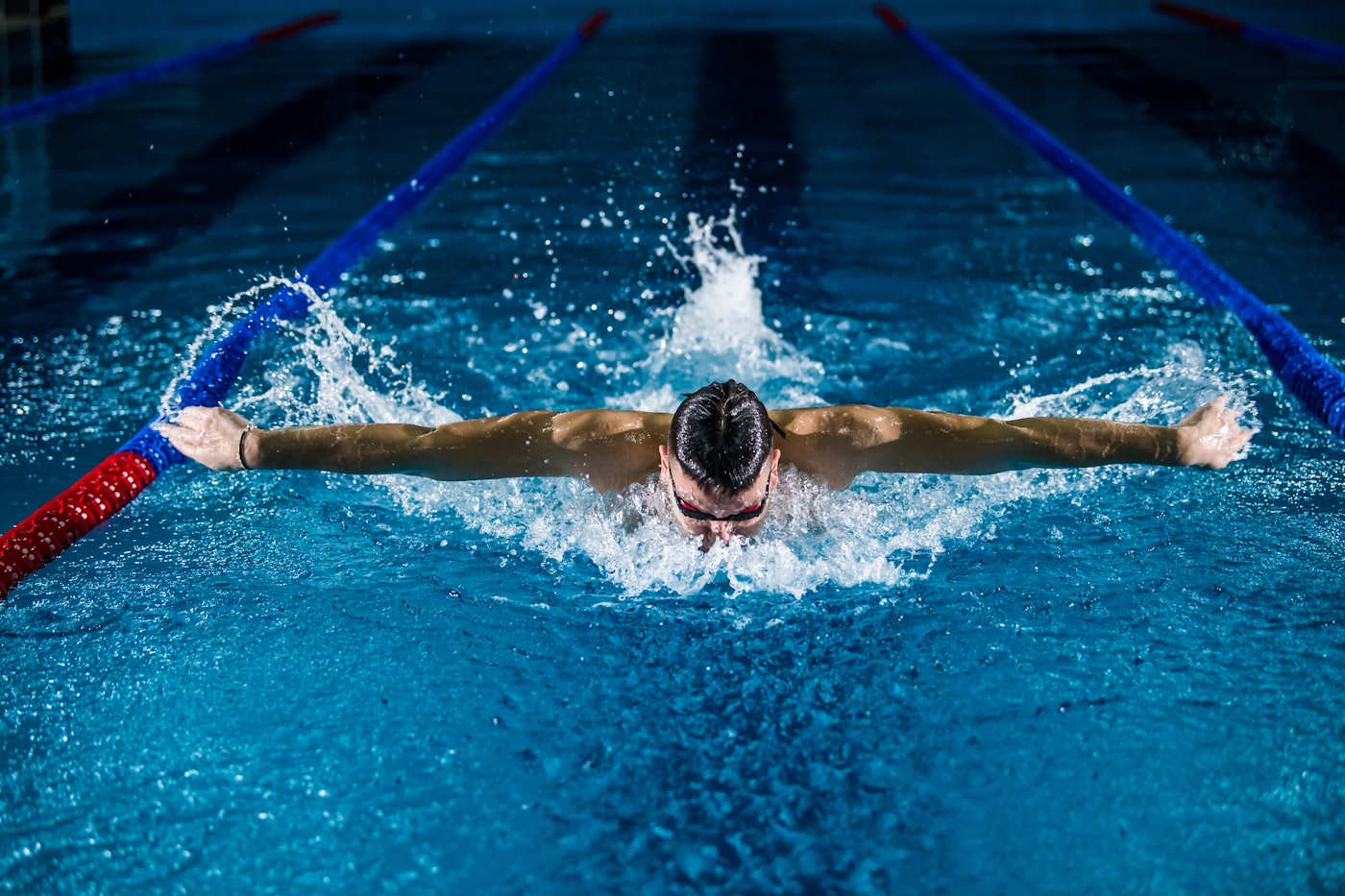
Dubai is a city built around water, from the Persian Gulf coastline to the city's hundreds of pools in hotels, residential compounds, and sports facilities. Yet despite this abundance of swimming infrastructure, the vast majority of Dubai's pool users never receive structured technique coaching. They splash up and down their lanes using self-taught strokes that are exhausting, inefficient, and far slower than they could be with targeted technique work.
This guide provides a comprehensive technical foundation for freestyle swimming in Dubai. Whether you're a complete beginner learning the basics, a fitness swimmer wanting to swim more efficiently, or a triathlete preparing for open-water events, improving your freestyle mechanics will transform your performance and enjoyment in the water.
Why Freestyle Technique Matters More Than Fitness
Swimming is a highly technique-dependent sport, far more so than running or cycling. You can be extremely fit and still swim slowly if your technique is inefficient. Conversely, a swimmer with excellent technique can cover significant distances with surprisingly modest fitness. The physics of water resistance explain why: drag increases with the square of velocity. A swimmer who reduces drag through better streamlining and body position can double their speed while expending less energy than one who simply tries to pull harder.
The implication for Dubai swimmers is clear: investing time in drill-based technique work produces far greater performance returns than simply adding more laps. Many recreational swimmers plateau at their current pace for years despite regular practice because they're ingraining poor movement patterns with every repetition. Quality over quantity is the fundamental principle of effective swim training.
The Four Phases of the Freestyle Stroke
Phase 1: The Entry and Extension
The hand enters the water in line with the shoulder (not crossing the body's centre line), fingertips first, at approximately 45 degrees. After entry, the arm extends forward to full length, this is the "glide" phase where forward momentum is maintained. Many beginners shorten or skip this extension phase, reducing the effective stroke length and increasing stroke count unnecessarily.
The most common entry error is the crossover, entering the hand across the body's centre line. This creates a fishtailing hip movement that massively increases drag. Correcting crossover entry is typically one of the highest-impact technical changes available to intermediate swimmers.
Phase 2: The Catch
The catch is where propulsion begins. After the extension, the hand begins to press backward as the elbow bends and rises toward the surface, this is the "high elbow catch" or "early vertical forearm" position. The forearm and hand together form a large propulsive paddle that pushes water backward.
The high elbow catch is the single most important technical element in advanced freestyle. Most recreational swimmers have a "dropped elbow", the elbow points downward rather than outward, meaning the hand is the only propulsive surface rather than the entire forearm. Correcting this alone produces dramatic speed improvements and reduces shoulder injury risk by changing the joint loading pattern.
Phase 3: The Pull and Push
From the high elbow catch position, the arm drives backward through the water in an S-shaped or straight-back path depending on individual biomechanics and speed. The wrist remains firm and the fingers together, any gap between fingers increases drag and reduces propulsion. The pull phase ends when the hand passes the hip; the push phase accelerates the hand backward toward the thigh, completing the stroke before the hand exits the water thumb-first.
Phase 4: The Recovery
The hand exits thumb-first beside the hip, the elbow rises first (elbow-lead recovery), and the arm swings forward through the air to re-enter. The recovery should be relaxed, any tension in the recovery arm wastes energy and disrupts timing. The "fingertip drag drill" (deliberately dragging the fingertips along the water surface during recovery) teaches the correct high-elbow recovery pattern effectively.
Body Position and Rotation
Good freestyle body position is horizontal, the body should be near-parallel with the water surface, not angled with the legs sinking. Sinking legs dramatically increase drag and are the most common cause of exhausting, slow freestyle in recreational swimmers. Improved body position typically comes from:
- Head position: Looking down at the pool floor (not forward), with the waterline around the crown of the head
- Core engagement: Light abdominal tension maintains the body plank position
- Kick: A compact 6-beat kick from the hip (not the knee) provides upward force and stabilises body rotation
- Relaxation: Tension anywhere causes sinking, the less muscular effort used in freestyle the better the body position, paradoxically
Body rotation is the other essential element of efficient freestyle. The body should rotate 45 to 60 degrees to each side with each stroke cycle, driven by hip rotation rather than arm movement. This rotation achieves several things: it allows deeper catch and pull positions, reduces shoulder impingement risk by taking the arm out of the impingement arc, and engages the large trunk muscles (lats, obliques) rather than relying only on the smaller shoulder muscles.
Find a Swim Coach in Dubai
Work with a certified swimming coach who can video-analyse your stroke and provide targeted technique feedback. Find coaches on GetFitDXB.
Breathing Technique in Freestyle
Breathing is frequently the limiting factor in recreational freestyle performance. The most important breathing principles:
Rotation-Linked Breathing
The breath is taken by rotating the head in line with the body's rotation, not by lifting the head separately. One goggle should remain in the water during the breath; the mouth should be in the "bow wave trough" (the depression in the water surface created by forward motion) rather than above it. Lifting the head separately to breathe disrupts body position, causes the legs to sink, and adds significant drag.
Bilateral Breathing
Breathing every three strokes (alternating sides) or every five strokes builds symmetrical body rotation and prevents the muscular imbalances that develop from always breathing to the same side. Most competitive swimmers learn bilateral breathing early; recreational swimmers who habitually breathe every two strokes to one side often have noticeable asymmetries in their stroke and body.
Exhaling Underwater
A critical but often overlooked element: exhale fully and continuously through your nose and mouth during the underwater phase so that your lungs are empty when you rotate to breathe. Holding your breath between strokes means you arrive at the breath needing to exhale and inhale in the brief window available, forcing rushed, inefficient breathing. Continuous exhalation underwater is one of the biggest breathing efficiency improvements available to intermediate swimmers.
Essential Freestyle Drills for Dubai Swimmers
Catch-Up Drill
One arm extends fully forward while the other completes its stroke and "catches up" before the first arm pulls. Builds stroke timing and extension awareness.
Fixes: Stroke timing, extension
Fingertip Drag
During recovery, drag fingertips along the water surface. Forces high-elbow recovery position and trains the correct arm path through the air.
Fixes: Recovery path, elbow position
Side Kick
Kick on your side with the lower arm extended, upper hand on thigh. Develops body rotation, balance, and the correct horizontal body line.
Fixes: Body position, rotation
Fist Drill
Swim full freestyle with closed fists. Removes hand from the catch, forcing you to engage the forearm as a propulsive surface. Dramatically improves catch quality.
Fixes: High-elbow catch
Single-Arm Freestyle
Swim using only one arm per length (other arm extended forward). Allows full attention to each arm's individual catch and pull mechanics without the distraction of coordination.
Fixes: Catch, pull mechanics
3-3-3 Breathing Drill
Take 3 strokes, breathe right; 3 strokes, breathe left; 3 strokes, no breath. Builds bilateral breathing and CO2 tolerance.
Fixes: Breathing, bilateral symmetry
Flip Turns: How to Master the Tumble Turn
The tumble turn (flip turn) is one of the most satisfying skills to develop as a freestyle swimmer. A well-executed flip turn maintains momentum through the wall and adds significant speed to every lap. The mechanics:
- Approach: Aim for the flags (5m from the wall) and take two strokes to the wall. Most swimmers touch the wall too far away initially, learn to judge the distance by feel, not by looking.
- Tuck: Complete a forward somersault, tucking the chin to the chest and pulling the knees toward the chest. The body should rotate quickly, a slow, extended somersault loses all momentum.
- Feet on the wall: Land both feet on the wall shoulder-width apart, toes pointing slightly upward (not straight up or straight sideways initially).
- Push: Push off with maximum leg extension into a streamlined position, arms extended, head tucked between biceps, body arrow-straight.
- Streamline and dolphin kick: Maintain the tight streamline until your speed drops below swimming speed, then initiate your stroke. Adding 2 to 4 dolphin kicks during the underwater phase after the push-off is one of the biggest efficiency gains available to intermediate swimmers.
Structure your sessions using heart-rate or perceived effort zones for maximum development:
- Zone 1 (Easy/Recovery): Very comfortable, conversational, warm-up, cool-down, drill work
- Zone 2 (Aerobic Base): Comfortable effort, slight breathlessness, foundational endurance development
- Zone 3 (Threshold): Hard but sustainable for 20 to 30 minutes, race-pace development
- Zone 4 (VO2 Max): Very hard, 2 to 8 minutes sustained, high-intensity intervals for speed development
- Zone 5 (Sprint): Maximum effort, 10 to 30 seconds, pure speed, start speed, turn speed
Sample Freestyle Training Programme
| Session Type | Example Set | Focus |
|---|---|---|
| Technique Session | 400m warm-up, 10×50m drill sets (catch-up, fist, side kick), 400m continuous applying drills | Stroke mechanics |
| Aerobic Base | 200m warm-up, 8×100m on 2:00 (Zone 2), 200m cool-down | Endurance foundation |
| Threshold | 400m warm-up, 4×200m on 3:30 (threshold effort), 200m easy | Lactate threshold |
| Speed/Intervals | 300m warm-up, 12×25m sprint on 1:00, 6×50m sub-threshold on 1:30, 200m cool-down | Speed development |
| Endurance Long | 400m warm-up, 1×1500m or 3×500m (Zone 2 to 3), 200m cool-down | Distance capacity |
Swimming Equipment for Technique Development
Several tools accelerate freestyle technique development when used appropriately:
- Pull buoy: Floats the hips/legs while isolating arm mechanics. Excellent for catch and pull development, but don't over-rely on it as a crutch since it masks poor kick and body position.
- Fins: Increase kick propulsion and help maintain body position while learning technique. Short fins are better for freestyle than long fins. Invaluable for breathing technique work.
- Kickboard: Isolates the kick for conditioning and technical work. Best used in moderation as prolonged kickboard use can strain the lower back.
- Paddles: Increase the resistance of each stroke pull, building strength and catch awareness. Should only be used by swimmers who already have good technique, paddles ingrain whatever pattern they magnify.
- Snorkel (front-mounted): Eliminates the breathing rotation, allowing complete focus on body position and catch mechanics. Among the most useful technique training tools for intermediate swimmers.
- Underwater camera: Video feedback is transformative for technique development, seeing your actual stroke versus your mental model of it is frequently revelatory. Many Dubai swim coaches offer video analysis sessions.
Book a Swim Technique Session
Get your stroke video-analysed by a certified swim coach in Dubai and receive a personalised drill programme.
Swimming in Dubai's Pools and Open Water
Dubai's swimming infrastructure is world-class. Olympic-standard 50m pools are available at major sports clubs and facilities. Many hotel pools are 25m with lane ropes available during morning swim sessions. Residential compound pools vary significantly in quality, the best have sufficient length (minimum 25m) and depth for competitive swimming.
For open-water swimming, Dubai's coastline offers beautiful sea swimming conditions from October through April. The water temperature remains comfortable (24 to 30°C year-round) and several established open-water swim routes and community groups exist. The open-water swimming guide for Dubai covers locations, conditions, and safety considerations in detail.
Triathletes preparing for UAE events use Dubai's pools for structured swim training before transitioning to sea swimming closer to race season. The combination of pool technique work and open-water practice produces the most complete swim development. See also: Triathlon Training in Dubai.
Related reading: Swimming Lessons & Pools Dubai, Swimming for Weight Loss, Swimming vs Running Comparison, Aqua Fitness Classes Dubai, and Best Swimming Coaches in Dubai. Find a certified swim coach through GetFitDXB's swimming category.
🏊 Quick Links
🛠️ Essential Gear
- 📌 Goggles, low-profile, anti-fog
- 📌 Pull buoy, arm drill isolation
- 📌 Short fins, body position
- 📌 Front snorkel, technique focus
- 📌 Paddles, strength (advanced only)
📚 Related Articles
- Swimming Lessons Dubai
- Swimming vs Running
- Open Water Swimming
- Swimming for Weight Loss
- Triathlon Training
🏆 Book a Session
Get your freestyle technique analysed by a certified coach in Dubai.