
The bench press is one of the most fundamental strength-building exercises in existence. Whether you're a beginner pressing an empty bar or an advanced lifter moving three plates per side, mastering the flat barbell bench press is essential. This guide breaks down perfect form, common mistakes, all major variations, and programming strategies to help you build a stronger, more impressive chest while staying injury-free.
Contents
Why the Bench Press is a Fundamental Strength Exercise
The bench press ranks alongside the squat and deadlift as one of the "big three" compound movements in strength training. Here's why it matters.
Builds Serious Chest Mass
The flat barbell bench press is unmatched for developing upper, middle, and lower chest musculature. Progressive overload on this lift creates visible, impressive chest development within 8–12 weeks of consistent training.
Develops Pressing Strength
Bench press strength transfers to functional pushing movements (door, fence, body weight). It trains the chest, anterior deltoids, triceps, and stabilisers, creating a powerful upper body pressing foundation.
Measurable Progress
The bench press is infinitely loadable: you can increase weight 1–2.5kg increments and objectively track progress. This feedback loop drives motivation and consistency.
Suitable for All Levels
Beginners start with the empty bar; advanced lifters move 140kg+ per side. Every training level finds purpose and progression in this movement.
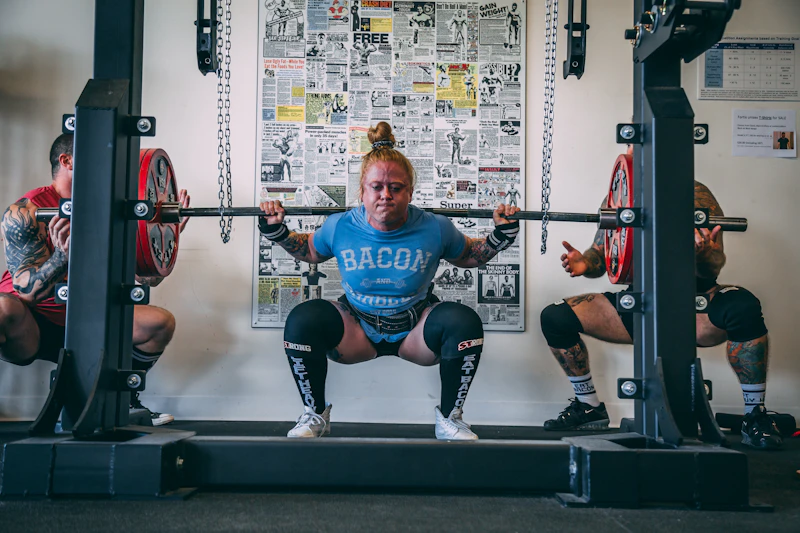
Flat Bench Press: Step-by-Step Form Guide
Proper form is the foundation. Master these steps, and your bench press becomes safe, effective, and progressively stronger.
The Setup (Most Critical)
- Lie flat on the bench: Your upper back (below shoulders) should contact the bench. Head is neutral, back of head also on bench. Feet are flat on the floor or foot platform, knees at roughly 90 degrees.
- Retract your scapulae: Pull your shoulder blades back and down toward your spine, creating a slight arch in your upper back. This is the most important single element — it creates a stable base and transfers force efficiently.
- Position your grip: Grip the bar slightly wider than shoulder width, roughly 1.5x shoulder width. The grip should feel natural and powerful — not excessively wide (injury risk) or too close (wrist strain).
- Wrist position: Keep wrists neutral (straight), not bent back or forward. The bar should sit in your palm, not high on your fingers.
The Descent
- Unrack with control: Take the bar off the rack and position it over your chest at arm's length, elbows slightly bent.
- Lower with control: Breathe in and lower the bar in a 2–3 second descent. The bar path is not straight down — it travels in a slight arc toward your lower chest (nipple level).
- Elbow angle: Keep elbows at 45–60 degrees relative to your body (not flared perpendicular to your sides). This protects your shoulders and maximises chest engagement.
- Chest touch: Lower the bar until it lightly touches your chest at approximately nipple level. This ensures full range of motion and chest activation. Do not bounce the bar.
The Drive (Ascent)
- Explosive drive: Press the bar off your chest powerfully, exhaling. Drive through your feet (leg drive helps stabilise) and press the bar up.
- Bar path: The bar travels in a slight arc — upward and slightly back toward the rack position.
- Lockout: Press until your elbows are fully extended (lockout), bar directly above your shoulders.
Before unracking, practice retracting: pull your shoulder blades down and back, creating a slight arch. Maintain this position throughout the set. Losing retraction mid-set reduces stability and wastes strength.
Common Bench Press Mistakes and How to Fix Them
These errors plague even experienced lifters. Identify and eliminate them to unlock faster progress.
Mistake 1: Bouncing the Bar Off the Chest
The problem: Bouncing uses momentum (not muscle force) to initiate the press, reducing effective reps and cheating range of motion. It also stresses chest and shoulder joints.
The fix: Pause 1–2 seconds at the bottom with the bar touching your chest. This eliminates bounce, forces your muscles to generate force, and increases time under tension (TUT).
Mistake 2: Elbows Flared 90 Degrees or Beyond
The problem: Excessively flared elbows (perpendicular to your body) place extreme stress on your anterior shoulders, increasing injury risk. This position also inefficiently transfers force.
The fix: Keep elbows at 45–60 degrees. Your forearms should be at a slight angle, not perpendicular. This protects shoulders while maximising chest engagement.
Mistake 3: Losing Scapular Retraction
The problem: If your shoulder blades come forward during the lift, you lose stability and create shoulder impingement risk. This often happens under heavy load.
The fix: Cue: "Pack your shoulders" at setup. Maintain that packed position throughout the rep. Take smaller jumps in weight if you're losing position under load.
Mistake 4: Unstable Arch
The problem: An inconsistent arch (changing mid-set) reduces force transmission and stability. You'll feel less powerful and lift inconsistently.
The fix: Create a slight, consistent arch. Your upper back should be in contact with the bench throughout. Never exaggerate the arch (extreme lower back hyperextension risks lumbar injury).
Mistake 5: Feet Off the Floor or Unstable Base
The problem: Dangling feet reduce leg drive and whole-body stability. You'll feel weaker and more prone to imbalance.
The fix: Plant feet firmly on the ground (or foot platform if elevated). Drive your feet into the ground during the press — this generates leg drive and stabilises your torso.

Bench Press Variations: Incline, Decline, Dumbbell, Close-Grip, Paused
Variations serve different goals: building weak points, increasing volume, or shifting emphasis.
Incline Barbell Bench Press (30–45 degrees)
Purpose: Emphasises upper chest and front deltoids. Essential for comprehensive chest development and shoulder strength.
Form notes: Similar to flat bench, but the angle shifts emphasis. Expect to lift ~85–90% of your flat bench max due to the increased angle. Grip slightly wider than flat bench.
Decline Barbell Bench Press (25–35 degrees decline)
Purpose: Emphasises lower chest. Good for addressing lower chest lag. However, provides less shoulder engagement than flat or incline.
Form notes: Very similar to flat bench. You'll lift slightly more weight due to increased leverage. Note: leg drive is reduced on decline, so rely more on upper body stability.
Dumbbell Bench Press (Flat, Incline, or Decline)
Purpose: Greater range of motion, increased scapular mobility, and individual limb balance. Excellent for hypertrophy.
Form notes: Dumbbells allow deeper chest stretch and greater pressing angle. Expect to use ~80% of your barbell weight. This variation is more taxing on stabiliser muscles.
Close-Grip Barbell Bench Press (hands 6–12 inches apart)
Purpose: Emphasises triceps and inner chest. Useful for triceps weak points and joint-friendly pressing (less shoulder stress).
Form notes: Narrower grip requires greater triceps contribution. Chest involvement decreases; shoulder stress may decrease (beneficial for some). Expect ~85–90% of flat bench weight.
Paused Bench Press (1–3 second pause at chest)
Purpose: Increases time under tension (TUT), eliminates momentum, and builds explosive power off the chest. Excellent for strength development.
Form notes: Lower weight 10–15% and pause 1–3 seconds at the bottom. This removes stretch-reflex assistance, requiring pure strength to initiate the press.
Competition Bench Press
Purpose: If competing in powerlifting, competition bench follows specific rules: wider grip, potential for larger arch, specific pause technique. Form differs slightly from gym training.
Get Expert Chest Training Coaching
A specialist strength coach can assess your bench press form, identify weak points, and create a personalized progression plan. In Dubai, top trainers coach bench press technique and periodized programming.
Programming the Bench Press: Sets, Reps, and Frequency by Level
How you structure bench press training determines your results. Here's the breakdown by goal.
Strength Focus (Beginner)
| Variable | Value |
|---|---|
| Sets | 3–4 sets |
| Reps | 6–8 reps |
| Load | 70–80% 1RM |
| Frequency | 2x per week |
| Rest between sets | 2–3 minutes |
| Example weight | 80kg for 6–8 reps |
Hypertrophy Focus (Intermediate)
| Variable | Value |
|---|---|
| Sets | 4–5 sets |
| Reps | 8–12 reps |
| Load | 60–75% 1RM |
| Frequency | 2x per week (flat + incline) |
| Rest between sets | 60–90 seconds |
| Example weight | 100kg for 8–10 reps |
Advanced (Competition/Powerlifting)
| Variable | Value |
|---|---|
| Sets | 5–8+ sets |
| Reps | 1–6 reps (varies by phase) |
| Load | 80–95%+ 1RM |
| Frequency | 2–3x per week (competition programme) |
| Rest between sets | 3–5 minutes |
| Example weight | 150kg for 3–5 reps |
Chest Hypertrophy vs Strength: Choosing the Right Bench Programme
Your goal determines your programming. Here's how to choose.
Goal: Build Bigger Chest (Hypertrophy)
Rep range: 8–12 reps. Volume: 12–20 sets per week (all chest exercises combined). Tempo: 2–3 seconds down, 1 second pause, 1 second up. Frequency: 2–3 times weekly, hitting chest from multiple angles (flat, incline, decline, dumbbell). Key principle: Higher rep range and volume create muscle pump and metabolic stress, driving hypertrophy.
Goal: Build Maximum Strength (1RM)
Rep range: 3–6 reps. Volume: 8–12 sets per week. Load: 80–90%+ 1RM. Tempo: 1–2 seconds down, controlled, explosive up. Frequency: 2–3 times weekly, with 48–72 hours between heavy sessions. Key principle: Heavy loads recruit maximum muscle fibres and nervous system adaptations, building 1RM.
Hybrid Approach (Strength + Size)
Monday: Heavy strength (4–6 reps, 80–85% 1RM). Wednesday: Moderate intensity (6–8 reps, 75–80% 1RM). Friday: Hypertrophy isolation (8–12 reps, 60–70% 1RM) plus dumbbell press. This balances strength and growth.
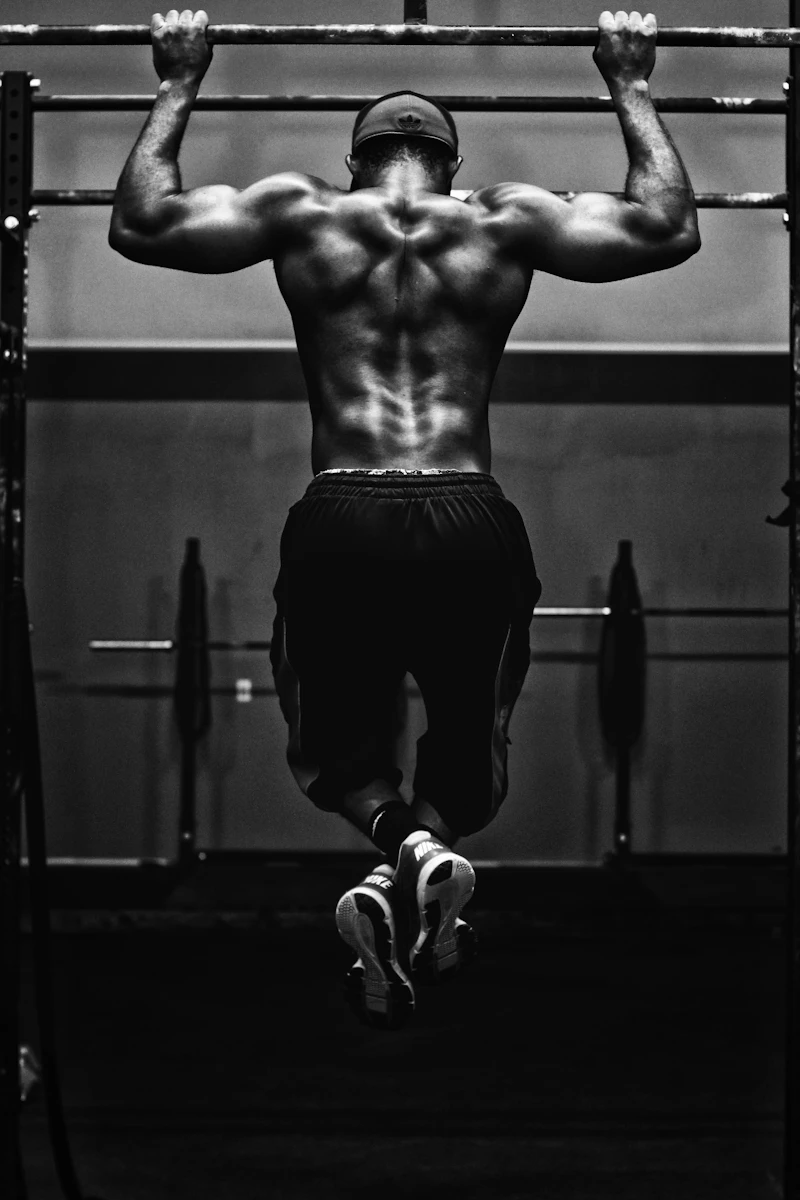
Bench Press Accessories for Shoulder Safety
Your shoulders take significant stress in bench training. Smart accessory work prevents injury and improves performance.
Essential Accessories (Do These)
- Dumbbell rows: Balance the pressing stimulus with horizontal pulling. 3 sets x 8–10 reps, 2x per week.
- Pull-ups or lat pulldowns: Vertical pulling to balance vertical pressing. 3 sets x 6–10 reps, 2x per week.
- Reverse pec deck (rear delt flyes): Strengthens rear deltoids and prevents shoulder imbalance. 3 sets x 10–15 reps.
- Face pulls: Shoulder health and rotator cuff strength. 3 sets x 12–15 reps.
- Scapular work: Band pull-aparts (3 x 15), plate raises (3 x 10), prone raises (3 x 10).
Equipment for Safety & Performance
- Wrist wraps: Support wrist stability. Cost in Dubai: AED 50–150. Recommended for heavy pressing.
- Lifting belt: Increases intra-abdominal pressure, stabilising your torso. AED 100–300.
- Spotter: Essential for heavy singles or near-maximal attempts. Most Dubai gyms have spotters available or you can train with a partner.
Spotter Etiquette (Critical for Safety)
- Ask a spotter before heavy attempts. Most lifters appreciate the ask.
- Communicate: "I'm going for a heavy single, can you spot me light?" A light touch on the bar is typically all that's needed.
- Return the favour. Spotting builds gym culture and reciprocity.
Improving Your Bench Press: Accessory Exercises and Tips
These exercises target specific bench press weak points and accelerate progress.
If Your Sticking Point is Off the Chest (Weak Bottom Position)
- Paused bench press: 1–3 second pause eliminates stretch reflex. 3–4 sets x 3–5 reps.
- Dumbbell bench press: Greater range of motion builds bottom-position strength. 4 sets x 6–8 reps.
- Board press: Reduces range of motion to train lockout-adjacent pressing. Advanced tool.
If Your Sticking Point is the Lockout (Weak Top Position)
- Close-grip bench press: Emphasises triceps. 3–4 sets x 5–8 reps.
- Skull crushers: Tricep isolation. 3 sets x 8–10 reps.
- Pin press (if available): Presses from a reduced range, forcing you to press from above sticking point.
General Bench Press Tips
- Warm up properly: 2 minutes light cardio, arm circles, shoulder mobility, then gradual weight increases. A proper 10–15 minute warm-up prevents injury.
- Track your sessions: Log reps, weight, and feel. Progressive overload (even +1 rep or +1kg) drives long-term gains.
- Don't neglect unilateral work: Single-arm dumbbell presses identify and address strength imbalances.
- Deload every 4–6 weeks: Reduce volume 40–50%, maintain intensity. This allows recovery and prevents burnout.
- Recovery matters: Sleep, nutrition, and rest days are as important as the lift. Aim for 7–9 hours nightly and adequate protein (1.6–2.2g/kg body weight).

Book a Strength Programme Assessment
A certified strength coach will assess your bench form, identify weak points, and build a personalised periodized programme to maximise your gains safely.
The Bottom Line
The bench press is a cornerstone lift. Master the form, select the right variations for your goal, and programme intelligently. Whether you're pressing 20kg for form or 200kg for a personal record, the principles remain: consistency, progressive overload, and smart accessory work unlock exponential progress. Start where you are, execute with integrity, and watch your bench press climb.