The deadlift is arguably the most functional exercise in the gym. It trains your posterior chain, strengthens your core, boosts your metabolism, and builds real, functional strength that carries over to daily life. Whether you're recovering a dropped item, helping a friend move house, or simply wanting to build a more resilient physique, the deadlift is non-negotiable. This complete guide covers form, common mistakes, all major variations, programming for every level, and how to find expert coaching in Dubai.
1. Why the Deadlift is the King of All Exercises
The deadlift activates more muscle groups simultaneously than almost any other exercise. Your posterior chain — glutes, hamstrings, lower back, and upper back — works in concert with your quads, core stabilizers, and grip. This full-body engagement burns massive calories and triggers a powerful hormonal response, making it ideal for building strength and muscle.
Unlike the squat, which is a pushing movement, the deadlift is a pulling movement. It trains the posterior chain through hip extension and spinal extension, patterns that many modern workers need — we spend too much time sitting hunched forward. A strong deadlift corrects postural imbalances and reduces injury risk in everyday movement.
The psychological benefit is equally profound. Pulling heavy weight off the ground creates a sense of accomplishment and builds confidence. Many lifters who struggle with motivation report that deadlifts become their favorite lift because they see dramatic strength gains quickly.
2. Conventional Deadlift: Step-by-Step Form Guide
The Setup: The Foundation of Everything
Before you even touch the bar, positioning is critical. Stand with your feet hip-width apart (roughly 7–9 inches between your ankles), with your toes pointed slightly outward at 5–10 degrees. The bar should be positioned directly over the middle of your foot — this is called "mid-foot" positioning. When viewed from the side, the bar should be sitting over the arch of your foot, not over your toes.
Your shins should touch or nearly touch the bar. If your shins are too far away, you'll shift your weight forward onto your toes. Bend down and grip the bar with a slight bend in your knees, keeping your hips as high as possible while your shoulders remain slightly in front of the bar.
The Grip: Two Options with Different Purposes
The conventional overhand grip (both palms facing your body) is symmetrical and allows maximum grip strength. However, as weights increase, your grip becomes a limiting factor. The mixed grip (one palm facing you, one facing away) allows you to hold heavier weight and is standard among powerlifters. Most recreational lifters use straps once weight exceeds 80% of their max to prioritize posterior chain development.
Your grip width should be just outside shoulder-width. Your arms should be straight and vertical — imagine your elbows are "long" and pointing backward, not forward.
The Pull: Driving Through Your Legs
Take a deep breath into your belly, not your chest, creating intra-abdominal pressure. Brace your core as if someone is about to punch your stomach. Now drive your legs — specifically your knees — forward and down. This is the critical mistake most beginners make: they try to deadlift with their back first. Instead, extend your hips and knees simultaneously in the first pull, keeping the bar close to your body.
Your shoulders should remain over or slightly in front of the bar until the bar passes your knees. Once the bar passes knee height, transition into hip extension, driving your hips forward powerfully and finishing tall with locked knees and hips.
The Lockout: Finishing Strong
A proper lockout means your hips and knees are fully extended, your shoulders are back, and you're standing upright. You should not hyperextend your lower back — this is a common form breakdown and increases injury risk. Simply stand tall and strong.
3. Common Deadlift Mistakes (and How to Fix Them)
Starting with hips too high: If your starting position has your hips too high, you'll convert the deadlift into a stiff-legged pull, losing glute and quad activation. Your hips should be as high as possible while still keeping your shoulders over the bar.
Rounding your lower back: The most dangerous error. A rounded lower back under load creates dangerous shear forces and dramatically increases injury risk. If you're rounding, the weight is too heavy. Drop the load, practice with lighter weight, and strengthen your posterior chain with Romanian deadlifts and good-mornings.
Bar drift: Some lifters let the bar drift away from their body during the pull. This increases the load on your lower back and shifts the work away from your legs. Keep the bar as close as possible — imagine dragging it up your shins.
Incomplete lockout: Finishing with hips still slightly bent is leaving gains on the table. Drive your hips forward fully. A proper lockout is part of the rep.
Looking down: Keep your neck neutral. Your gaze should follow your chest. Looking down rounds your upper back; looking up excessively hyperextends your neck.
Find a Strength Coach in Dubai
Perfect form is learned through feedback. Dubai's top strength coaches can assess your deadlift, identify technical issues, and programme you for rapid progress.
4. Deadlift Variations: Sumo, Romanian, Stiff-Leg, Trap Bar
Sumo Deadlift
The sumo deadlift uses a wider stance (foot position well outside shoulder-width) with the toes pointed out significantly. This variation shortens the range of motion, allowing you to lift heavier weight. It emphasizes the glutes and inner thighs more than conventional, while reducing lower back stress. Sumo is excellent for lifters with longer femurs or for those recovering from lower back issues.
Romanian Deadlift (RDL)
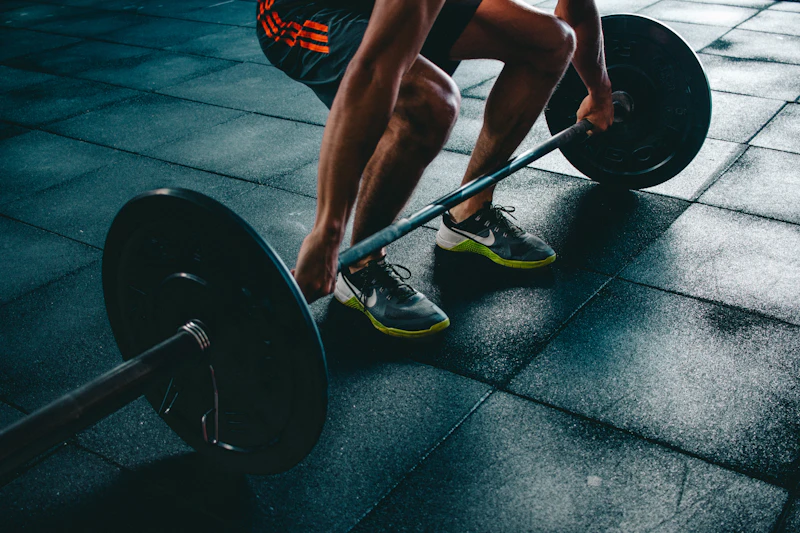
The RDL is a posterior chain-focused variation performed with minimal knee bend. Start with weight in your hands at hip level, keep a slight knee bend, and hinge forward at the hips, allowing your hamstrings and glutes to stretch. Your lower back should stay neutral. This variation builds serious hamstring and glute strength and is exceptional for improving lockout strength in conventional deadlifts.
Stiff-Leg Deadlift
Similar to the RDL but with even less knee bend. This variation places maximal demand on the posterior chain and is ideal for accessory work. Many lifters use this as a deload exercise or as a high-volume supplemental lift.
Trap Bar Deadlift
The trap bar (also called a hex bar) allows you to stand inside the bar with your hands gripping handles on the sides. This reduces lower back demand, emphasizes the quads more, and is often considered the most shoulder-friendly deadlift variation. Many elite coaches recommend this for beginners and for anyone with lower back issues.
5. Deadlift Programming for All Levels
Programming depends on your goals and experience. Here's a breakdown for common training blocks:
| Level | Sets × Reps | Frequency | Load (%1RM) |
|---|---|---|---|
| Beginner (0–6 months) | 3–4 × 5–6 | 1–2× per week | 65–75% |
| Intermediate (6–24 months) | 4–5 × 3–5 | 2–3× per week | 75–85% |
| Advanced (24+ months) | 5–6 × 2–3 | 3–4× per week | 85–95% |
Many Dubai strength gyms (powerlifting facilities with platforms, bumper plates, and chalk) offer structured coaching. A typical programme includes a main lift day (heavy deadlift), a secondary day (deadlift variation like RDL or trap bar), and accessory work. This structure is ideal for making consistent progress.
A 1-on-1 strength coaching session in Dubai typically costs AED 250–450, and powerlifting gym memberships range from AED 300–500 per month, though many facilities offer package deals for serious lifters.
6. Deadlift Accessories and Gear in Dubai
The Lifting Belt
A lifting belt supports intra-abdominal pressure and provides external stability to your core. Quality powerlifting belts in Dubai range from AED 150–400 depending on brand and craftsmanship. Beginners typically don't need one until they reach intermediate strength, but they're safe to use anytime if properly fitted.
Lifting Straps
Straps allow your grip to stop limiting your deadlift. Once you're lifting heavy (above 80% of your max), straps become invaluable. Good straps cost AED 50–150. Many competitive lifters use both a belt and straps for heavy training.
Deadlift Shoes
Standard lifting shoes (with a slightly elevated heel) improve your starting position and boot comfort. Deadlift-specific shoes are less critical than for squatting, but they're helpful. Expect to pay AED 350–700 for quality Olympic lifting shoes that suit deadlifting.
Knee Sleeves
Sleeves provide compression and warmth, reducing patellar stress. Quality knee sleeves run AED 100–250. While optional, they're popular for high-volume training.
Book a Deadlift Technique Session in Dubai
A single 1-hour session with a certified strength coach can dramatically improve your form and prevent injuries. Most Dubai trainers offer tailored technique assessments.
7. How to Progress Your Deadlift: Tips from Dubai's Top Coaches
Prioritise form above load. Adding weight with poor form builds bad habits. Perfect your technique first; strength follows naturally.
Use periodisation. Structure your training into phases: a strength phase (heavy, low reps), a hypertrophy phase (moderate weight, higher reps), and a deload phase (reduced volume to recover). This approach maximises gains and prevents plateaus.
Track your numbers. Keep a training log. Recording sets, reps, and weight helps you identify patterns, plateaus, and weak points. Many Dubai lifters use apps like Strong or simply a spreadsheet.
Strengthen your weak points. If you stall on the deadlift, identify where: Is it off the floor? At the knees? At lockout? Each weakness has a specific accessory. Stalls off the floor respond to deficit deadlifts and speed work; stalls at lockout respond to heavy RDLs and good-mornings.
Recovery is non-negotiable. Deadlifting taxes your central nervous system heavily. Ensure adequate sleep (7–9 hours), protein intake (1.6–2.2g per kg bodyweight), and manage stress. Overtraining kills progress.
8. Where to Learn the Deadlift Properly in Dubai
Dubai has several world-class strength training facilities. Browse certified strength coaches specialising in powerlifting and Olympic lifting. Many offer technique assessments, semi-private coaching, and group strength sessions.
GetFitDXB connects you directly with Dubai's top strength professionals. Whether you want a one-off technique session (typically AED 250–450) or ongoing programming, you'll find coaches across all Dubai areas: Marina, Downtown, Jumeirah, Business Bay, JLT, and beyond.
If you're serious about deadlifting, join a strength training community or powerlifting club. Surrounding yourself with people who prioritise form and progression accelerates your growth dramatically.
Find personal trainers in Dubai who specialize in strength training, and start your deadlift journey today. With proper coaching, consistent programming, and dedication, you'll surprise yourself with how much you can lift — and how strong you'll become.