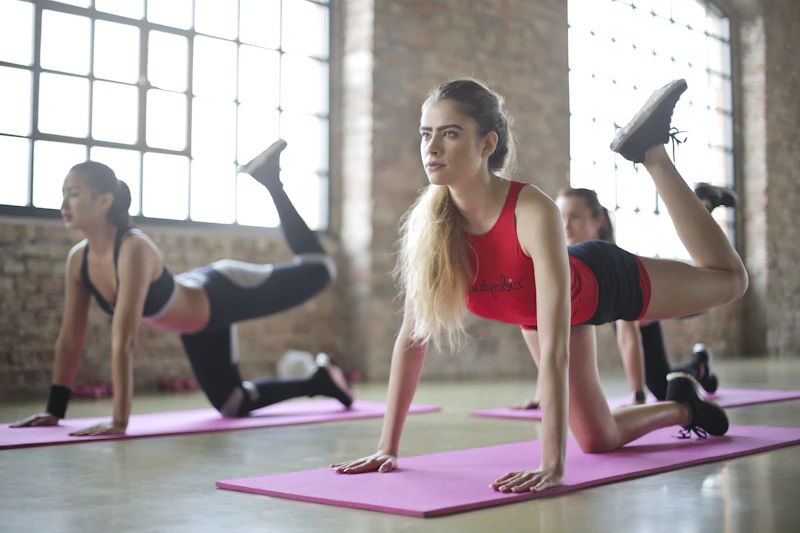
Strength training for women has transformed from a niche pursuit into mainstream fitness, and Dubai's women are leading this revolution. Whether you want to build muscle, lose fat, prevent osteoporosis, or simply feel stronger in daily life, strength training is the most evidence-based solution available. This complete beginner's guide debunks myths, provides a ready-to-use training programme, and shows you exactly where to find female trainers and supportive gym communities across Dubai.
Debunking Women's Strength Training Myths
The biggest barrier to women starting strength training isn't lack of motivation—it's misinformation. For decades, outdated fitness myths have discouraged women from touching weights. Let's demolish the most persistent ones:
Myth #1: "Lifting Weights Will Make Me Bulky"
This is the #1 reason women avoid the weight room, and it's completely false. Building significant muscle mass requires a perfect storm of factors: high testosterone (women have 10-20 times less than men), enormous training volume (50+ sets per muscle group weekly), consistent caloric surplus (eating 300-500 extra calories daily), and years of dedicated training. Female bodybuilders—who actively pursue maximum muscle growth—often use performance-enhancing substances to achieve visible bulk. Regular strength training creates lean muscle definition and improved body composition, not bulk.
In reality, adding muscle makes you look leaner and more toned, not larger overall. Muscle takes up less space than fat at the same weight, meaning added muscle combined with fat loss makes you smaller while looking more defined.
Myth #2: "Cardio is Better for Fat Loss"
While cardio is excellent for cardiovascular health and can contribute to fat loss, strength training is superior for sustainable weight management. Strength training increases your resting metabolic rate—meaning you burn more calories 24/7, even while sleeping. A pound of muscle burns 6-10 calories daily at rest, whereas a pound of fat burns only 2-3 calories. Over a year, adding five pounds of muscle burns an extra 10,000+ calories at rest.
Additionally, the post-exercise oxygen consumption (EPOC) effect—the elevated calorie burn after strength training—lasts significantly longer than after cardio. You'll continue burning calories for hours after leaving the gym. For sustainable fat loss, the research is clear: strength training + moderate cardio + proper nutrition beats cardio-only approaches.

Myth #3: "You Need Expensive Equipment to Start"
False. You can build genuine strength with bodyweight alone. Bodyweight squats, push-ups, planks, and lunges create legitimate strength adaptations. Add adjustable dumbbells (available at every Dubai gym) and you can execute every essential strength movement. You don't need kettlebells, barbells, or machines to see results—though we'll discuss why accessing them accelerates progress.
Myth #4: "Lifting Is Unfeminine"
This outdated perspective reflects bias, not biology. Strength is inherently human. Women have been building strength for millennia—farming, childcare, construction, nursing—all require significant strength. Modern strength training simply formalizes and systematizes strength development. The fastest-growing fitness demographic in Dubai is women in their 30s-50s discovering strength training for the first time.
Why Women in Dubai Are Embracing the Weight Room
Dubai's unique health landscape makes strength training particularly relevant for women. Here's why:
Combating Sedentary Office Culture
Dubai's professional environment is office-heavy and air-conditioned year-round, reducing incidental physical activity. Women spending 8-10 hours daily in air-conditioned offices lose muscle mass rapidly without deliberate training. Strength training 2-3x weekly counteracts this sedentary lifestyle and maintains metabolic health critical in Dubai's diabetes-prone population.
Building Bone Density
Osteoporosis affects 1 in 3 women over 50 globally, with prevalence even higher in the Gulf region due to vitamin D deficiency (from sun avoidance) and sedentary lifestyles. Strength training is the single best intervention for building and maintaining bone density across the lifespan. Women beginning strength training in their 30s-40s can prevent osteoporosis entirely, while older women can reverse early bone loss through progressive resistance training.
Mental Health and Confidence Building
Dubai's competitive professional culture and high social expectations create unique stress for women. Strength training provides measurable progress (lifting more weight, performing more reps), which builds genuine confidence extending beyond the gym. Research consistently shows strength training reduces anxiety and depression while improving self-efficacy and body image.
Prevention of Lifestyle Diseases
The UAE has among the world's highest diabetes prevalence. Strength training improves insulin sensitivity, blood sugar control, and metabolic health more effectively than cardio alone. For women with PCOS (polycystic ovary syndrome)—increasingly common in the Gulf—strength training is specifically recommended by endocrinologists for improving hormone balance and metabolic outcomes.
Strength training builds a healthier relationship with your body, reduces reliance on extreme dieting, and creates sustainable fitness habits. Instead of restricting calories, you're building metabolic capacity—a far more sustainable approach for long-term health.
How to Get Started: A Step-by-Step Plan
Step 1: Choose Your Training Environment (Weeks 1-2)
Select a gym that makes you feel comfortable. This could be a women's-only facility, a co-ed gym with strong female community, or a ladies' section within a larger facility. Dubai's best gyms for women range from affordable chains (GymNation) to premium studios (Orangetheory, F45). Many Dubai women prefer training during less-busy times (6-8 AM, 2-4 PM) or joining women's-specific classes initially.
Step 2: Establish Movement Baseline (Week 2-3)
Before loading weight, master movement patterns with bodyweight only. Focus on: air squats (bodyweight squat), push-ups (from knees or wall), planks, glute bridges, and lunges. This establishes neural pathways and identifies movement limitations. Spend 1-2 weeks on bodyweight practice—this investment prevents injury and accelerates subsequent progress.
Step 3: Get Professional Form Coaching (Week 3-4)
Invest in 4-6 sessions with a certified female personal trainer. Non-negotiables to teach: barbell back squat, deadlift, barbell bench press, barbell rows, and overhead press. Form quality is essential at this stage—bad habits formed as a beginner are stubborn to fix later. GetFitDXB's female trainer directory includes specialists across all Dubai areas with women's strength training expertise.
Step 4: Start Light, Progress Gradually (Week 4 onward)
Begin with weights you can control perfectly for all prescribed reps. This sounds easy but requires humility—most beginners lift too heavy initially. Use the "Reps in Reserve" (RIR) concept: on your final set, you should feel able to do 2-3 more reps. This ensures sustainable progress and injury prevention.
Find a Female Personal Trainer in Dubai
Get personalized form coaching and programming from verified female trainers across Dubai. Invest in 4-6 sessions to establish a solid foundation.
A 3-Day Beginner Strength Programme
This evidence-based programme targets all major muscle groups 2x per week (sufficient for beginners) and requires only dumbbells or barbells. Complete 3 days per week with at least one rest day between sessions. Each session takes 35-45 minutes.
Day 1: Lower Body Focus (Monday)
- Barbell Back Squat or Dumbbell Goblet Squat: 4 sets x 6-8 reps. Rest 2-3 min between sets. Focus on depth and control, not speed.
- Romanian Deadlift (RDL): 3 sets x 8-10 reps. Targets posterior chain; essential for glute and hamstring development.
- Walking Lunges (dumbbells or bodyweight): 3 sets x 12 reps per leg. Unilateral work builds stability.
- Leg Extensions or Sissy Squats: 2 sets x 12-15 reps. Quadriceps isolation for joint health.
- Plank Hold: 2 sets x 30-45 seconds. Core stability essential.
Day 2: Upper Body Push (Wednesday)
- Dumbbell Bench Press or Barbell Bench Press: 4 sets x 6-8 reps. Rest 2-3 min. The fundamental pressing movement.
- Incline Dumbbell Press: 3 sets x 8-10 reps. Targets upper chest and front shoulders.
- Shoulder Press (dumbbell or barbell): 3 sets x 8-10 reps. Builds shoulder strength and stability.
- Tricep Dips (assisted machine or bench dips): 3 sets x 8-12 reps. Arm and chest development.
- Lateral Raises: 2 sets x 12-15 reps. Shoulder aesthetics and health.
Day 3: Upper Body Pull + Posterior Chain (Friday)
- Barbell Rows or Dumbbell Rows: 4 sets x 6-8 reps. The essential pulling pattern for back strength and posture.
- Lat Pulldowns or Assisted Pull-ups: 3 sets x 8-10 reps. Builds upper back width.
- Barbell Deadlift: 3 sets x 5-6 reps. The king of strength movements; done fresh once weekly.
- Face Pulls: 3 sets x 15 reps. Rotator cuff health and shoulder stability.
- Barbell Curl or Dumbbell Curl: 2 sets x 10-12 reps. Arm aesthetics.
Progressive Overload Strategy
Progress by adding weight or reps weekly: Week 1-2 (establish baseline), Week 3-4 (add 2-5 lbs to lifts), Week 5-6 (add another 2-5 lbs), Week 7-8 (deload—lighter weight, focus on form). After 8 weeks, you'll have significantly more strength. Repeat the cycle with increased starting weights.

Nutrition for Women's Strength Training in Dubai
Training stimulus creates the signal for muscle growth, but nutrition provides the building blocks. Without proper nutrition, you'll remain skinny-fat even with excellent training.
Protein Requirements
Women doing strength training require 1.6-2.0 grams of protein per kilogram of bodyweight daily. For a 60 kg (132 lb) woman, this means 96-120g protein daily. This sounds high but is achievable: chicken breast (31g per 100g), eggs (6g per egg), yogurt (10g per 100g), fish (25g per 100g), legumes (15g per cup cooked).
Distribute protein across meals: 25-40g per meal, 4-5 meals daily. This optimal distribution triggers muscle protein synthesis each eating occasion. Dubai's healthy restaurant scene makes this easier than ever: protein bowls at Zaroob, grilled fish at Seafire, Greek yogurt at Organic Matters.
Caloric Intake Strategy
Your goal determines caloric targets:
- Fat loss while building muscle: Eat 200-300 calories below maintenance. This creates a deficit driving fat loss while muscle-building training preserves/builds muscle.
- Body recomposition (beginner advantage): Eat at maintenance calories. Beginners with adequate protein can simultaneously lose fat and gain muscle—a unique advantage unavailable to advanced lifters.
- Strength gain focused: Eat 200-500 calories above maintenance. Extra calories fuel performance and recovery for maximal strength gains.
Dubai-Specific Nutrition Considerations
The UAE's high cost of living makes budget nutrition challenging. Affordable Dubai protein sources: eggs (cheapest per gram), lentils (AED 8-12 per kg), canned fish (Dubai Supermarkets), Greek yogurt (Waitrose/Carrefour). Premium healthy restaurants serve strong community but cost more; meal-prepping at home from budget ingredients is most sustainable.
Dubai's heat requires 3-4 liters daily water minimum for sedentary people, and 4-6 liters for training individuals. Electrolyte loss in sweat requires occasional electrolyte beverages or coconut water, particularly post-workout.
Download Your Free Fitness Guide
Get a complete nutrition and training resource designed for Dubai women starting strength training—including meal ideas, shopping lists, and training templates.
Best Gyms for Women's Strength Training in Dubai
Not all gyms equally support women's strength training. Here's where to train in Dubai:
| Gym | Cost (AED/month) | Women's Focus | Equipment & Vibe |
|---|---|---|---|
| GymNation | 99–149 | Strong female community | Complete barbells, dumbbells, machines. Great entry-level vibe. Multiple branches. |
| Fitness First | 350–500 | Ladies-only sections | Premium equipment, personal training, group classes. Most branches have women's areas. Best for serious training. |
| NAS Sports Complex | 400–600 | Elite female athletes | Olympic platforms, powerlifting racks, extensive free weights. Professional athletes train here. Serious strength environment. |
| F45 Training | 600–800 | Women-focused classes | Functional training focus. 45-minute group classes. Good for consistency and community, less free-weight focused. |
| Orangetheory Fitness | 600–850 | Mixed, strong class community | Heart-rate monitored classes, emphasis on cardio + strength fusion. Great for those enjoying group training environment. |
| Dubai Ladies Gym (various locations) | 200–350 | Women-only facility | Women-only environment, diverse ages. Growing strength training focus. Most comfortable for many beginners. |
Gym Selection Recommendation for Beginners
Best for budget-conscious: GymNation offers excellent value with strong female community and complete equipment. Best for serious strength training: Fitness First premium tier or NAS Sports Complex provide professional environments and equipment. Best for supportive community: Ladies-only gyms eliminate intimidation and often feature community-driven energy.
Most importantly: choose where you'll actually go consistently. A slightly-less-perfect gym you'll visit 3x weekly beats a premium facility you use 1x monthly.
Finding a Female Personal Trainer in Dubai
Many women prefer training with female trainers. This isn't weakness—it's practical. Female trainers often better understand women's specific concerns (hormonal cycles, pelvic floor health, body image sensitivity) and can serve as relatable role models.
What to Look For in a Female Trainer
- Relevant Certification: NASM, ACE, ISSA, IFBB, or similar recognized credential. Confirm with the issuing organization if uncertain.
- Specialization in strength training: Not all trainers emphasize strength. Ask about their specialization—strength training, hypertrophy, powerlifting, or athleticism should be core focus.
- Client testimonials: Verified reviews from female clients building genuine strength matter. Avoid trainers whose primary focus is weight loss through calorie restriction.
- Communication style: You'll spend significant time together. Ensure you enjoy interacting with them and feel heard.
- Program design ability: They should customize programming to you, not hand you a generic "female" program.
Getting Maximum Value from Training Sessions
Invest in 4-6 sessions focusing specifically on form coaching for compound lifts (squat, deadlift, bench press, rows). After these sessions, you can execute the beginner programme above independently. Many Dubai-based female trainers offer "form coaching packages" cheaper than ongoing training, specifically designed for this purpose.
Building Community
Join women's strength training groups in Dubai. Facebook groups, Instagram communities, and gym-based women's strength clubs provide accountability, motivation, and friendship. Training alone is sustainable; training with supportive women accelerates habit formation and enjoyment.
How to Track Your Progress
Progress in strength training extends beyond the scale. Track multiple metrics:
1. Strength Progression (Primary Metric)
Log every workout: date, exercise, weight used, reps completed, how many reps remained in reserve. Apps like Strong, JEFIT, or simple spreadsheets work. Progress is non-linear (some weeks you'll plateau), but over 8-12 weeks, you should add 5-20% to weights or reps. This is genuine progress indicating muscle and strength building.
2. Body Measurements
Take measurements (chest, waist, hips, thigh, arm, shoulder) monthly. The scale might stay constant while measurements improve—you're losing fat and gaining muscle. This is success, even if the scale says the same. Measure in consistent conditions (morning, same day weekly).
3. Progress Photos
Take front, side, and back photos monthly in consistent lighting and clothing. Your eye is poor judge of small changes, but photos reveal progress clearly. Many women are shocked comparing Month 1 to Month 4 photos—changes are real but gradual.
4. How Your Clothes Fit
This is often the first sign of progress women notice. Jeans fitting differently, bras fitting better, shirts showing more shoulder definition—these indicate real body composition change.
Realistic Timeline to Results
- Week 1-2: Confidence boost, established habit, muscle soreness
- Week 3-4: Initial strength gains (neural adaptation, not yet muscle growth)
- Week 4-6: First visible muscle definition
- Week 6-8: Clothes fitting differently, visible arm/shoulder definition
- Week 8-12: Substantial visible changes in body composition
- Week 12-16: Significant transformation if nutrition consistent

Frequently Asked Questions
Will strength training make me bulky?
No. Women have 10-20 times less testosterone than men, making significant bulk virtually impossible without deliberate muscle-building nutrition and extremely high training volumes. Strength training builds lean muscle definition and improves body composition. Female bodybuilders train for decades with specialized nutrition and often use performance-enhancing substances to achieve visible muscle size—regular strength training creates strength and tone, not bulk.
How long before I see visible results?
You'll notice strength improvements within 2-3 weeks of consistent training. Visible muscle definition and body composition changes typically appear within 6-8 weeks when combined with proper nutrition and sleep. Initial confidence and energy improvements happen within days. Full transformation takes 12-16 weeks of consistent training and proper nutrition habits.
What's the best time to lift weights during my menstrual cycle?
Research shows hormonal fluctuations during the menstrual cycle have minimal impact on strength training effectiveness. The follicular phase (first half of cycle) may provide slightly better endurance capacity, while the luteal phase (second half) may improve max strength slightly. However, consistency matters far more than timing. Train when you feel best and can maintain commitment throughout your cycle. Avoid skipping training due to cycle timing.
Do I need a personal trainer to get started?
A trainer isn't required, but highly recommended for beginners. A trainer teaches proper form, prevents injury, and accelerates results. Invest in 4-6 sessions with a trainer to establish proper movement patterns and form. Many women find female trainers more relatable and better understand their goals and concerns. You can find certified female trainers across Dubai through GetFitDXB's directory.
How do hormones affect strength training results?
Women's hormones (estrogen and progesterone) don't prevent muscle growth but may slightly affect recovery and injury risk. Proper sleep (7-9 hours) becomes extra important during the luteal phase. Bone density benefits from strength training are amplified in women due to estrogen's role in bone health. Women on hormonal contraception should expect minimal variation in training response across the month.


