Bigger arms are one of the most popular fitness goals in Dubai. Whether you want sleeve-stretching biceps, powerful horseshoe triceps, or simply well-defined forearms, this comprehensive guide will show you exactly how to build them. You'll learn proper exercise selection, programming strategy, progressive overload techniques, how to navigate Dubai's extreme climate, and which gyms have the best equipment for arm training. By the end, you'll have a complete, science-backed system for arm development.
1. Why Arm Training Matters (Beyond Aesthetics)
Most people train arms for the obvious reason, they want bigger, more defined arms. But arm training offers benefits far beyond appearance, and understanding this will deepen your commitment to consistent training.
Arm Training Builds Real Strength
Your biceps and triceps are heavily involved in pulling and pushing movements that translate directly to everyday life and athletic performance. Strong arms help you carry heavy shopping bags, pick up children, pull yourself up, and perform better in sports like tennis, climbing, throwing, and swimming. In competitive CrossFit and Olympic lifting, arm strength is non-negotiable.
Arms Represent Visible Progress
Your arms are difficult to hide. Unlike your back or chest, everyone sees your arms, especially in Dubai where lighter clothing is necessary year-round. Training arms consistently delivers visible results within 8 to 12 weeks, which provides powerful motivation to maintain your fitness routine and nutrition discipline.
Arm Training Accelerates Overall Body Development
Arm exercises complement chest and back training. Curls strengthen the biceps and brachialis, improving your pull-ups and rows. Tricep work enhances your bench press and overhead pressing power. By building comprehensive arm strength, you'll see improvements across your entire upper body development.
2. Understanding Biceps Anatomy & Function
To train effectively, you need to understand the structure you are training. The "biceps" are actually a muscle group, not a single muscle, and training each component optimally requires variation.
The Three Biceps Muscles
- Biceps brachii, The iconic "peaked" bicep. This is two-headed muscle (hence "bi") with a short head and long head. The long head creates the peak you see when you flex, while the short head builds the inner bicep mass.
- Brachialis, Sits beneath the biceps. While less visible, it's thicker and stronger than the biceps itself. When developed, the brachialis pushes the biceps up, creating the appearance of larger arms. This is why many advanced lifters train the brachialis specifically.
- Brachioradialis, Located on the outer forearm near the elbow. This muscle contributes to forearm thickness and is heavily involved in hammer curl movements.
How Biceps Function
The biceps primary function is elbow flexion (bringing your hand toward your shoulder). However, the biceps also plays a role in shoulder flexion (raising your arm forward) and forearm supination (rotating your palm upward). Effective bicep training incorporates movements that stress all these functions, not just curls.
Many beginners focus exclusively on barbell curls and dumbbell curls. But the brachialis, the muscle beneath the biceps, contributes significantly to overall arm size. Hammer curls, cross-body curls, and resistance band curls specifically target the brachialis. Include these in your programming.
3. Understanding Triceps Anatomy & Function
Here's a fact that changes how many people train: the triceps comprise approximately 67% of your upper arm mass, while the biceps make up only 33%. If your goal is bigger arms, your training volume should heavily favour triceps work, yet many people dedicate equal time to both.
The Three Triceps Heads
- Lateral head, The outer triceps muscle. Develops the "horseshoe" shape visible from the side. Most prominently built by pressing movements and pushdowns.
- Long head, The largest of the three heads. Spans from the shoulder blade down past the elbow. Best stimulated by overhead pressing and dips where the arm travels behind the body.
- Medial head, The innermost head. Often underdeveloped in beginners because it's best targeted by heavy, close-grip pressing movements and specific isolation work.
How Triceps Function
The primary function of the triceps is elbow extension (straightening your arm). However, the long head also assists with shoulder extension and adduction, which is why overhead movements and dips are particularly effective for triceps development. Unlike biceps, which are primarily isolation muscles, triceps are heavily involved in all pressing movements, bench press, overhead press, and push-ups.
If you want arm size, triceps training should comprise 60 to 70% of your arm training volume. This might mean 3 to 4 triceps exercises per session versus 1 to 2 biceps exercises. Many beginners get this ratio backwards.
4. The Best Arm Exercises for Size & Strength
Not all exercises are created equal. Some exercises are foundational compound movements, while others are isolation exercises best used for supplementary work. Here are the most effective exercises for each muscle group, roughly ranked by effectiveness for size development.
Biceps Exercises, Ranked by Effectiveness
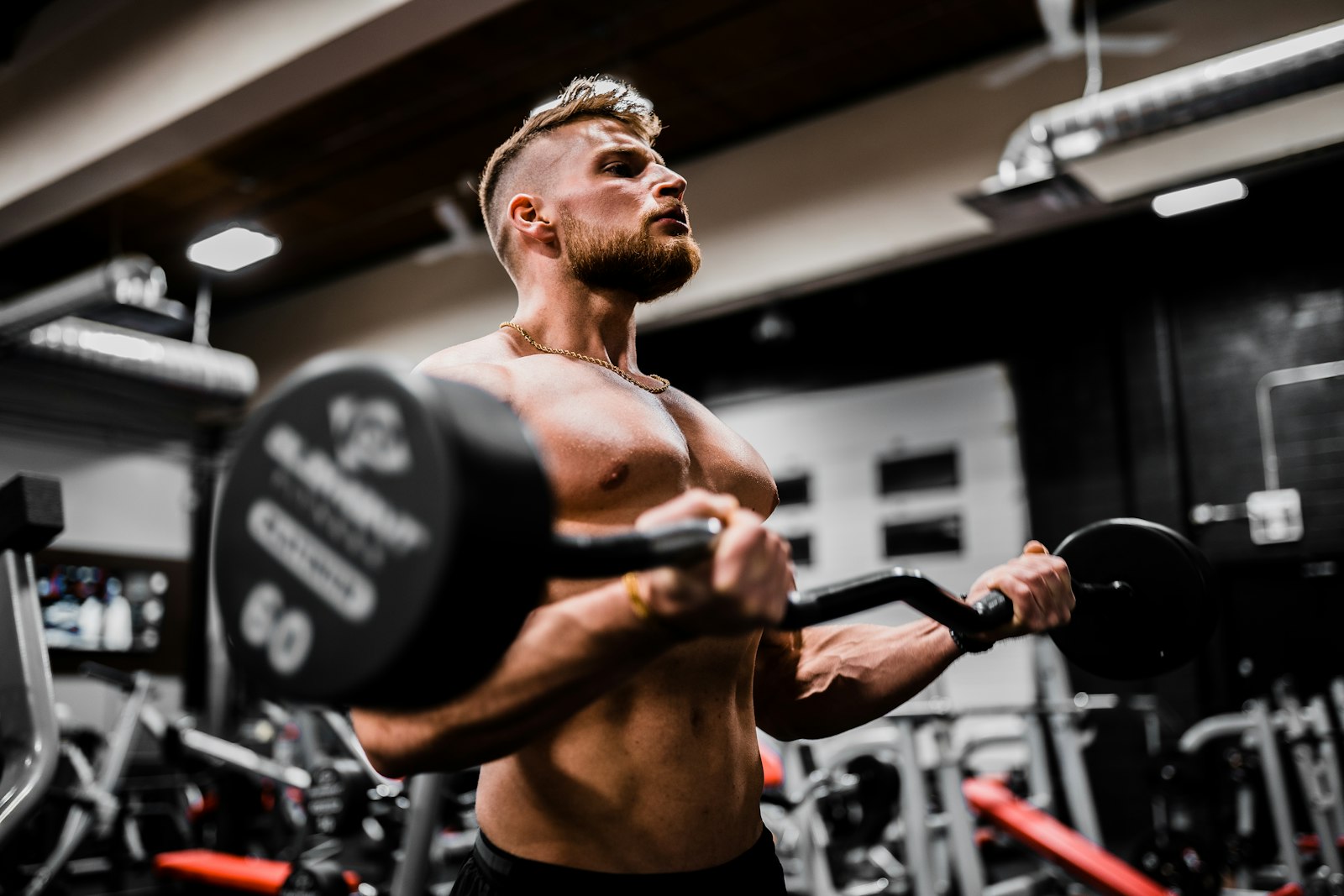
Barbell Curl, The king of bicep movements. Allows the heaviest loading, which drives strength and hypertrophy. Perform 4 to 8 reps for strength or 8 to 12 reps for hypertrophy. Common mistake: using momentum instead of pure arm strength. Keep your elbows locked at your sides throughout the movement.
Dumbbell Curl, Superior to barbell curls for some trainees because dumbbells allow greater range of motion and reduce mechanical advantage, forcing your biceps to work harder. Perform 8 to 12 reps, allowing a brief pause at the top of each rep for maximum contraction.
Hammer Curl, The neutral grip (thumbs forward) heavily targets the brachialis and brachioradialis. Your arms appear bigger when the brachialis is developed because it pushes the biceps up. Include 3 sets of 10 to 15 reps per session.
Preacher Curl, The bench eliminates momentum entirely, forcing pure bicep contraction. Particularly good for feeling the muscle work and building mind-muscle connection. Perform 3 sets of 8 to 12 reps.
Cable Curl, Provides constant tension throughout the range of motion, unlike free weights where tension decreases at the top. Use 3 sets of 12 to 15 reps for pump and hypertrophy.
Triceps Exercises, Ranked by Effectiveness
Close-Grip Bench Press, Hands positioned 6 to 8 inches apart. This compound movement allows heavy loading and involves the lateral and medial triceps heads significantly. Perform 4 to 8 reps for strength or 6 to 10 reps for hypertrophy.
Dips (Bench or Parallel Bar), An exceptional triceps builder, especially for the long head. Narrow your grip and lean slightly forward to emphasise triceps over chest. If bodyweight is too challenging, use an assisted machine. Perform 6 to 12 reps for 3 to 4 sets.
Triceps Pushdown (Rope or Bar), Isolation movement targeting the lateral head. Perform high reps (12 to 20) with a constant squeeze at the bottom. This is the most accessible triceps exercise for beginners.
Skull Crushers (EZ-Bar or Dumbbell), The bar travels behind the head, placing tremendous tension on the triceps. Highly effective but requires perfect form and controlled eccentric (lowering) phase. Perform 3 sets of 8 to 12 reps.
Overhead Press, A compound movement where triceps are heavily involved, particularly the long head. Pressing overhead places the triceps in a stretched position, which is optimal for growth. Perform 6 to 10 reps for strength development.
📋 Free Download: Complete Arm Workout Programming Template
Get a science-backed 8-week arm training programme designed specifically for Dubai gyms. Includes exercise variations, progressive overload strategies, and heat adaptation protocols.
5. Arm Workout Programming & Frequency
How you structure your arm training matters as much as which exercises you choose. The most common mistake is training arms too frequently with high volume, leading to overtraining and tendon irritation.
Optimal Training Frequency
Train arms 2 to 3 times per week for maximum growth. This frequency allows adequate volume (high enough to drive hypertrophy) while permitting sufficient recovery (48+ hours between dedicated arm sessions). If you train arms on Monday, your next dedicated arm session should be Thursday at the earliest.
More frequent training (4 to 5 times per week) isn't necessarily better, it's often counterproductive because cumulative fatigue prevents quality work. Your arms also recover more slowly than larger muscle groups because they are smaller and have less metabolic capacity.
Sample Arm Workout A (Strength Focus)
- Barbell Curl: 4 sets x 5 to 6 reps (heavy weight)
- Skull Crushers: 4 sets x 6 to 8 reps (heavy)
- Hammer Curl: 3 sets x 10 to 12 reps
- Triceps Dips: 3 sets x 8 to 10 reps
Sample Arm Workout B (Hypertrophy Focus)
- Dumbbell Curl: 4 sets x 10 to 12 reps
- Close-Grip Bench: 4 sets x 8 to 10 reps
- Preacher Curl: 3 sets x 10 to 12 reps
- Cable Pushdown (Rope): 3 sets x 12 to 15 reps
- Hammer Curl: 3 sets x 12 to 15 reps
Progressive Overload: The Key to Continued Growth
Progressive overload, gradually increasing the challenge to your muscles, is essential for continued growth. You cannot do the same weight, reps, and exercises forever and expect new results.
Week 1 to 2: Barbell Curl, 8 sets x 5 reps @ 50kg. Week 3 to 4: Barbell Curl, 8 sets x 5 reps @ 52kg (increased weight). Week 5 to 6: Barbell Curl, 8 sets x 6 reps @ 50kg (increased reps). This cycle ensures continuous progress without burning out.
Many lifters make this mistake: training arms 4 to 5 times per week with 15 to 20 sets per session. This creates excessive fatigue, compromises recovery, and often leads to tendinitis (particularly at the elbow). More volume doesn't always equal more growth. Quality and recovery matter.
6. The 5 Biggest Arm Training Mistakes
1. Using Too Much Weight (Ego Lifting)
This is the most common mistake. Many people load a barbell far heavier than they can curl with perfect form, then use momentum, back arching, and hip drive to move the weight. Your biceps aren't actually doing much work, the movement becomes a full-body exercise instead of an isolated arm builder. Use weights that allow 2 to 3 quality reps in reserve at the end of each set.
2. Neglecting Forearms
The forearms are often overlooked, yet they contribute significantly to overall arm aesthetics. Include wrist curls, reverse curls, and farmer carries (farmer walks) to develop forearm mass. Even 2 sets of 15 reps 1 to 2 times per week makes a significant difference.
3. Only Training Biceps
This is programme design error. Remember: triceps are 67% of arm mass. If you spend 70% of your arm training time on biceps, you're neglecting the larger growth opportunity. Reverse this ratio. Spend 60 to 70% of your volume on triceps and 30 to 40% on biceps.
4. Ignoring Full Range of Motion
Partial reps feel easier but deliver inferior results. Perform every rep with full, controlled range of motion. For curls, fully straighten your arm at the bottom (slight elbow bend is fine to protect the joint). For pushdowns and extensions, achieve full lockout at the bottom. Partial reps should only be used strategically at the end of a set when you've reached failure with full ROM.
5. Insufficient Recovery & Nutrition
Arms won't grow without adequate protein intake and sleep. You need 1.6 to 2.2g of protein per kg of body weight daily. If you weigh 80kg, that's 128 to 176g daily, split across 4 to 5 meals. Additionally, arms need 48+ hours of recovery between dedicated sessions. If you're doing heavy arm work on Monday, Wednesday, and Friday, you're not recovering properly.
7. Best Dubai Gyms for Arm Training
Dubai has world-class gym infrastructure. Here are the best facilities for serious arm development:
Premium Full-Service Gyms
- Fitness First (Dubai Marina), Multiple locations across Dubai with excellent free weight areas. Cable machines, dumbbells up to 100kg, multiple squat racks, and dedicated isolation machine areas.. Good option for arm training.
- GymNation, Several locations with solid equipment. for basic membership. More budget-friendly but still suitable for comprehensive arm training.
- NAS (National Academy of Sports), Premium facilities with state-of-the-art equipment.. Excellent for serious lifters.
Specialist Strength Facilities
- Strength training boxes in Al Quoz, Dedicated powerlifting and strength facilities with premium barbells, dumbbells, and specialty equipment. Best for heavy compound lifting.
- CrossFit boxes across Dubai, Excellent for functional arm training and community-driven workouts, though less ideal for pure isolation work.
8. Nutrition & Recovery in Dubai's Heat
Dubai's climate presents specific challenges for arm (and overall) training. Summer temperatures regularly exceed 45°C, and even in winter, the heat is significantly higher than most climates. This affects recovery, nutrition needs, and training strategy.
Hydration Requirements
Dubai's heat dramatically increases fluid loss through sweating. During arm training, especially in non-air-conditioned outdoor settings, you may lose 1 to 1.5 litres of sweat per hour. Drink 500 to 750ml every 15 to 20 minutes during training. Include electrolytes (sodium, potassium) to maintain fluid balance and prevent cramps. Simple sports drinks or coconut water work well.
Protein Intake & Timing
Consume 1.6 to 2.2g protein per kg of body weight daily, distributed across 4 to 5 meals. Timing around training matters: consume 20 to 30g of protein 1 to 2 hours before training and another 20 to 40g within 2 hours after. This supports muscle protein synthesis. Popular protein sources in Dubai include chicken, fish, eggs, Greek yogurt, cottage cheese, and whey protein powder.
Training in Dubai's Heat
During June September, train arms indoors in air-conditioned facilities. The thermal stress of outdoor training in 45°C+ heat depletes muscle glycogen faster and increases cortisol (a catabolic hormone), inhibiting muscle growth. Some advanced trainees do early-morning outdoor training (5 to 7am) before peak heat.
In cooler months (October April), outdoor training is excellent. The moderate temperature and fresh air reduce systemic fatigue compared to hot gym environments.
Get Professional Arm Training Coaching in Dubai
9. Frequently Asked Questions About Arm Training
How long before I see bicep and tricep growth?
You'll begin experiencing arm strength gains within 2 to 3 weeks. Visible muscle growth typically appears within 6 to 10 weeks, assuming consistent training (2 to 3 sessions/week), proper nutrition (adequate protein), and sufficient sleep (7 to 9 hours/night). Significant size changes usually require 8 to 12 weeks of consistent effort.
Can I train arms every day?
No. Daily arm training is overtraining. Your arms need 48+ hours of recovery between dedicated sessions. Training arms 2 to 3 times per week is optimal. More frequency leads to diminishing returns and increased injury risk due to cumulative joint stress.
Should I train arms on the same day as back and chest?
You can, but it's not ideal. Training back (pulling) and arms on the same day means your arms are already fatigued when you perform dedicated arm exercises. Most coaches recommend arm-dedicated sessions separate from compound back/chest work. Alternatively, train light arm accessories after back/chest rather than heavy isolation work.
What's the best exercise for bicep peak?
The long head of the biceps creates the "peak" you see when flexing. Incline dumbbell curls and standing dumbbell curls emphasise the long head more than barbell curls. Additionally, the brachialis contributes to apparent peak height, so hammer curls are valuable for overall peak development.
Is soreness (DOMS) a sign I trained effectively?
Not necessarily. Delayed-onset muscle soreness (DOMS) is caused by mechanical damage, but it's not the only driver of growth. You can build muscle without significant soreness. That said, moderate soreness 24 to 48 hours after training often indicates good volume and intensity. Excessive soreness suggests you increased volume too quickly.
- Biceps comprise 33% of arm mass; triceps comprise 67%. Train accordingly (triceps should be 60 to 70% of volume).
- Train arms 2 to 3 times per week with 48+ hours between sessions for optimal recovery and growth.
- Focus on barbell curls, dumbbell curls, close-grip bench, dips, and cable exercises as primary movements.
- Progressive overload by increasing weight or reps every 1 to 2 weeks. Small increases (0.5 to 2kg) are sufficient.
- Consume 1.6 to 2.2g protein per kg body weight daily. Stay aggressively hydrated in Dubai (500 to 750ml every 15 to 20 min during training).
- Train indoors (air-conditioned) during June September. Outdoor training is excellent October April.
- Avoid ego lifting, use weights that allow 2 to 3 reps in reserve. Perfect form beats heavy weight every time.
- Expect visible size growth within 6 to 10 weeks with consistent training, nutrition, and sleep.
Ready to Build Bigger Arms?
Connect with certified strength coaches across Dubai. Personalised arm programming, technique coaching, and nutrition guidance. Find your perfect fit today.
Find a Strength Coach → Get a Trainer Recommendation →
✓ Free to browse · ✓ Personal training · ✓ Certified professionals only