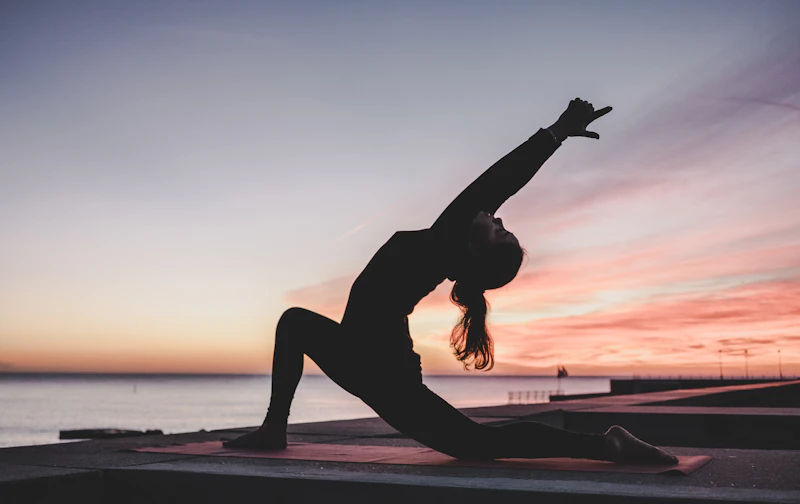
You've spent the last eight hours sitting in a climate-controlled office tower in DIFC, Business Bay, or Media City. Your back aches. Your hips feel locked. By evening, your lower back is screaming. This is the reality for hundreds of thousands of Dubai's office workers—and the culprit is almost always tight hip flexors. This comprehensive guide reveals what tight hip flexors are, why Dubai's unique office culture makes them worse, and the 12 best exercises to fix them once and for all.
1. Why Dubai's Desk Workers Suffer Tight Hip Flexors
Dubai's office worker faces a perfect storm of factors that create and perpetuate tight hip flexors:
Extreme Heat and Air Conditioning
Dubai summers regularly exceed 50°C (122°F). Most office workers spend their mornings in air-conditioned cars (often 30-60 minute commutes), then transition to air-conditioned offices, then back to air-conditioned cars. Unlike workers in cooler climates who might walk, cycle, or take public transport, Dubai's heat forces almost everyone into cars. The constant sitting in vehicles is one of the biggest hip flexor culprits.
Long Commutes and Car Culture
Dubai's sprawl means many workers commute from areas like Arabian Ranches, Dubai Hills, or JVC to offices in Downtown, DIFC, or Marina. A 45-60 minute commute in rush hour traffic means sitting in a car seat that keeps your hips flexed at 90 degrees—exactly the position that tightens hip flexors.
Office Culture and 8+ Hour Desk Days
High-pressure corporate environments in Dubai's business districts mean long, stationary workdays. Many office workers sit for 8-10 hours straight with minimal movement breaks. The intense heat makes people reluctant to leave air-conditioned offices for outdoor movement.
Studies show that humans were never designed to sit for more than 30 minutes consecutively. Yet Dubai's office workers average 8+ hours of sitting daily. This chronic shortening of the hip flexors creates cascading postural problems that take weeks or months to reverse.
2. Understanding Hip Flexor Anatomy
Before you can fix tight hip flexors, you need to understand exactly what they are. The "hip flexors" aren't a single muscle—they're a group of muscles responsible for bringing your knee up toward your chest. The main players are:
The Iliopsoas (Psoas & Iliacus)
The iliopsoas is actually two muscles that work together. The psoas major originates from your lumbar spine (lower back) and connects to your hip. The iliacus originates from your pelvis. Together, they form the most powerful hip flexor in your body. When tight, the psoas pulls directly on your lower spine, which is why tight hip flexors cause back pain.
The Rectus Femoris
This is the straight muscle down the middle of your thigh. Unlike the other hip flexors, it also crosses the knee, so tightness here affects both your hip and knee mobility.
Sartorius, Tensor Fasciae Latae & Others
Several smaller muscles also contribute to hip flexion. These are less commonly problematic but can contribute to overall hip stiffness.
The psoas muscle is directly connected to your nervous system and is one of the few muscles that responds to emotional stress and fear. When you're anxious, your psoas contracts. Dubai's high-pressure work culture means your psoas may stay chronically tight even when you're not sitting. Breathing exercises and mindfulness can help as much as physical stretching.
3. Signs You Have Tight Hip Flexors
How do you know if your hip flexors are the problem? Watch for these telltale signs:
- Lower back pain that worsens after sitting—especially when sitting upright in office chairs
- Anterior pelvic tilt (your pelvis tilts forward, creating an exaggerated arch in your lower back)
- Limited hip extension—you can't straighten your leg behind you fully
- Knee pain when climbing stairs or walking downhill
- Tight quads that feel perpetually sore and stiff
- Difficulty lying on your back with your lower back flat against the floor
- Posture changes—your head moves forward, your shoulders round
- Glute activation problems—your glutes feel weak even though you work out
- Hip discomfort in the front of your hip joint after sitting
4. The Desk Worker's Hip Flexor Problem: 8+ Hours of Sitting Explained
Here's what happens to your hip flexors during a typical Dubai office day:
8:00 AM - Commute begins: You sit in your car for 45-60 minutes. Your hip flexors are held in a shortened, 90-degree position. They begin to fatigue.
9:00 AM - Office arrives: You transition from car to office chair. Your hip flexors remain flexed at roughly the same angle. Your body senses no need to lengthen these muscles.
1:00 PM - Lunch break: Many Dubai office workers eat lunch at their desks or grab takeaway and return to sitting. Hip flexors remain shortened.
5:30 PM - End of day: After 8+ hours of sitting, your hip flexors have spent the entire day in a contracted state. They've become neurologically accustomed to this shortened position.
6:15 PM - Commute home: Another 45-60 minutes sitting in traffic. Your hip flexors remain flexed.
By the time you get home, your hip flexors have been shortened for 9-10 hours. After months or years of this pattern, your muscles "forget" how to fully lengthen. Your nervous system reprograms your posture around this new, shorter range of motion. Result: chronic tightness, anterior pelvic tilt, and back pain.
Tight hip flexors cause discomfort, stiffness, and restricted movement. True pain—sharp, shooting, or stabbing sensations—may indicate a more serious issue like hip labral tears, femoroacetabular impingement, or nerve compression. If you experience sharp pain, see a physiotherapist before starting an exercise program.
5. 12 Best Hip Flexor Exercises
These exercises include both stretches (to lengthen tight muscles) and strengthening exercises (to restore proper muscle balance). Do them consistently for 4-6 weeks to see significant improvements.
1. Kneeling Hip Flexor Stretch (Couch Stretch Position)
Why it works: This targets the psoas and rectus femoris directly. This is one of the most effective hip flexor stretches.
How to do it: Kneel on one knee on a padded surface. Place the opposite foot in front of you, knee bent at 90 degrees. Keep your torso upright. Gently press your hips forward, feeling a stretch down the front of the back leg. Hold 60-90 seconds per side. Repeat 3 times on each leg.
2. Pigeon Pose (Hip Opening Yoga Stretch)
Why it works: Pigeon opens the entire hip complex, including external rotators that often compensate for tight flexors.
How to do it: From all fours, bring your right knee forward toward your right hand. Your right shin is roughly parallel to the front of the mat (adjust angle for your flexibility). Hips are level. Fold forward over your front leg, feeling a deep hip stretch. Hold 90-120 seconds. Repeat on both sides, 2-3 times.
3. Standing Hip Flexor Stretch
Why it works: A dynamic version you can do throughout your workday. Requires no props.
How to do it: Stand tall. Step your right foot back into a small lunge position. Keep your back knee slightly bent. Tuck your pelvis under (remove the arch from your lower back). You'll feel the stretch shift from your back thigh to the front of your hip. Hold 45-60 seconds per side.
4. Couch Stretch (Advanced Kneeling Stretch)
Why it works: Places your back leg elevated to increase the stretch intensity. This is the most aggressive hip flexor stretch.
How to do it: Face away from a couch or bench. Place your back knee on the couch seat (with cushioning). Your front foot is on the ground, knee bent at 90 degrees. Keep your torso upright. Press your hips forward. Hold 60-90 seconds per side. This is intense—don't force it.
5. Hip Circles (Mobility)
Why it works: Activates hip mobility in all planes of motion. Helps restore natural hip movement patterns.
How to do it: Stand on one leg, hands on hips. Lift the opposite knee to hip height. Draw slow, controlled circles with your knee. Make circles about 2 feet in diameter. Do 10 circles forward, then 10 circles backward. Repeat on the other side, 2-3 sets.
6. Dead Bug Exercise (Strengthening & Motor Control)
Why it works: Strengthens deep core muscles and teaches your nervous system proper hip flexor engagement without excessive tightness.
How to do it: Lie on your back, knees bent, feet flat on floor. Raise your arms toward the ceiling. Slowly lift your right leg and extend it, hovering just above the floor, while extending your left arm overhead. Return to start. Alternate sides. Perform 3 sets of 12-15 reps per side, slowly and controlled.
7. Hip Thrust / Glute Bridge (Antagonist Strengthening)
Why it works: Weak glutes are almost always paired with tight hip flexors. Strengthening glutes helps restore proper pelvic alignment.
How to do it: Lie on your back, knees bent, feet hip-width apart and flat on the ground. Hands are beside your head, palms down. Press through your heels and lift your hips toward the ceiling, squeezing your glutes hard at the top. Hold 1-2 seconds. Lower slowly. Perform 3 sets of 15-20 reps.
8. Lateral Leg Swings (Dynamic Mobility)
Why it works: Dynamically lengthens hip flexors while activating hip abductors.
How to do it: Stand facing a wall with hands on the wall for balance. Swing one leg forward and back in a controlled manner, gradually increasing range of motion. Do not bounce—use momentum smoothly. Perform 15 controlled swings per direction. Repeat on the other side, 2-3 sets.
9. 90/90 Hip Stretch (Deep Stretch)
Why it works: Stretches hip flexors and external rotators simultaneously.
How to do it: Sit on the floor. One leg is bent in front of you at 90 degrees, the other bent to the side at 90 degrees. Fold forward gently over the front leg. Hold 60-90 seconds per side. This is a deep stretch—don't force it.
10. Half-Kneeling Hip Flexor Stretch with Reach
Why it works: Adds a spinal component to the stretch, releasing tension along the entire anterior chain.
How to do it: Half-kneel (one knee down, one foot forward). Tuck your pelvis under. Reach the arm on the kneeling side overhead and gently back, feeling the stretch lengthen from your hip flexor up your side body. Hold 45-60 seconds per side.
11. Thomas Stretch (Classic Physical Therapy Stretch)
Why it works: Named after a classic PT test, this targets the entire anterior hip chain in one position.
How to do it: Lie on your back on a high table or bed with your legs hanging off the edge. Hug one knee to your chest. The opposite leg hangs freely, stretching the hip flexor, quad, and ankle. Hold 60-90 seconds per side.
12. Warrior I Lunge Variation
Why it works: Combines stretching with strengthening and balance in a functional position.
How to do it: Step forward with your right foot into a low lunge. Keep your torso upright, not leaning forward. Press your hips down and forward, stretching the back hip flexor while strengthening the front leg. Hold 45-60 seconds per side, 2-3 sets.
6. Hip Flexors and Lower Back Pain: The Connection
One of the most important things to understand is how tight hip flexors cause lower back pain. It's not complicated—it's pure anatomy:
When your hip flexors tighten and shorten, they pull your pelvis forward. This creates what's called anterior pelvic tilt. Your pelvis tilts forward, and your lower spine curves more deeply to compensate. This increased curve (called hyperlordosis) puts intense pressure on the facet joints and discs in your lower back.
Over months or years, this constant pressure causes:
- Disc degeneration (wearing down of the shock-absorbing discs between vertebrae)
- Facet syndrome (irritation of the joints between vertebrae)
- Muscle fatigue and trigger points in the lower back extensors
- Reduced blood flow and oxygen to spinal tissues
The solution is simple: lengthen the hip flexors to reduce the anterior pelvic tilt. When your pelvis returns to neutral alignment, the excess curve in your lower back reduces, pressure on your spine decreases, and pain improves.
Find Professional Help in Dubai
If your back pain persists after 4-6 weeks of consistent stretching, it's time to see a physiotherapist or sports medicine doctor. Dubai has world-class practitioners who can assess your specific posture and movement patterns and design a targeted program.
7. Daily Desk-Break Stretching Routine (5 Minutes)
You don't need 30 minutes to loosen tight hip flexors. A simple 5-minute desk break routine, done 3-4 times daily, is often more effective than one long session because it prevents the muscles from staying shortened for extended periods.
5-Minute Office Routine (Do every 2-3 hours):
- Standing Hip Flexor Stretch: 60 seconds per side (2 minutes total)
- Hip Circles: 20 circles per leg, forward and backward (90 seconds)
- Lateral Leg Swings: 15 swings per direction per leg (90 seconds)
This simple routine takes 5 minutes and provides relief without requiring a gym or special equipment.
Use your phone's alarm or calendar app to remind you to stretch every 2-3 hours. Set 4-5 reminders during your workday. Most people forget to stretch unless they have a visual prompt. Consistency beats intensity—five 5-minute sessions per week beats one 30-minute session.
8. When to See a Physiotherapist in Dubai for Hip Pain
While these exercises help most people, sometimes professional assessment is necessary. See a physiotherapist if you experience:
- Sharp, shooting pain in your hip or groin (not just tightness)
- Pain that worsens despite consistent stretching for 4-6 weeks
- Pain that radiates down your leg or into your foot (possible nerve involvement)
- Inability to perform certain hip movements without pain
- Swelling, clicking, or locking in the hip joint
- Hip pain that wakes you at night or prevents sleep
A qualified physiotherapist in Dubai can perform special tests to identify the exact source of your pain (hip joint, muscles, nerves, or spine) and design a treatment plan specific to your needs.
9. Strengthening vs Stretching: What You Need
Most people think tight hip flexors require only stretching. This is partially true—but it's incomplete. You need both:
Stretching (Lengthening)
- Restores lost range of motion
- Reduces anterior pelvic tilt
- Relieves back pain quickly
- Can be done daily, even multiple times per day
- No equipment needed
Stretching (Limitations)
- Alone, doesn't restore motor control
- Muscles may tighten again if strengthening is neglected
- Doesn't address weak glutes
- Results plateau without strengthening
Strengthening (Hip Flexors & Glutes)
- Restores muscle balance
- Prevents re-tightening
- Fixes weak glutes (major cause of tight flexors)
- Provides lasting, long-term improvements
Strengthening (Limitations)
- Alone, won't relieve existing tightness
- Takes 8-12 weeks to see significant gains
- Requires consistency and progressively harder exercises
The answer: Do both. Stretch 5-10 minutes daily to restore range of motion. Add strengthening exercises (dead bugs, hip thrusts, warrior lunges) 3-4 times per week to rebuild muscle balance. Most people see major improvements within 6-8 weeks with this combined approach.
Need a Complete Hip Mobility Program?
A certified personal trainer or movement coach in Dubai can design a comprehensive hip flexor program tailored to your body and goals. Whether you need posture correction, pain relief, or athletic performance, professional guidance accelerates results.
10. Hip Flexor Treatment Options & Dubai Pricing
If self-directed stretching and exercise isn't enough, several professional options exist in Dubai. Here's what each costs:
| Treatment Option | Description | Cost (AED) | Duration |
|---|---|---|---|
| Physiotherapy (Single Session) | Assessment + manual therapy + exercise prescription | 300–600 | 45–60 min |
| Physiotherapy (Package, 6 sessions) | Discounted rate for committed treatment course | 1,500–3,000 | 6 × 45–60 min |
| Sports Massage (Single Session) | Deep tissue massage targeting hip flexors and surrounding muscles | 250–450 | 60 min |
| Personal Training (Hip Mobility Program) | Customised stretching and strengthening program designed by certified PT | 200–400 | 60 min/session |
| Yoga Classes (Flexibility/Hatha) | Group classes focusing on hip opening and flexibility | 80–150 | 60 min/class |
| Pilates Classes (Reformer) | Core and hip strengthening using reformer machines | 100–180 | 50–60 min |
| Chiropractor Consultation | Spinal assessment + adjustment if needed | 250–500 | 30–60 min |
| Osteopath Session | Whole-body assessment and manipulation therapy | 350–600 | 45–60 min |
Best Value for Most Desk Workers: Start with 2-3 physiotherapy sessions to get proper assessment and a personalised program. This costs AED 600–1,800 and typically provides enough guidance that you can continue self-managed stretching and exercises at home. If you need ongoing accountability or have complex issues, a monthly personal trainer (4 sessions) costs AED 800–1,600 and keeps you consistent.
Cheapest Option: Group yoga or flexibility classes at studios like YogaSpace, Dharma Yoga, or Alo Moves Dubai cost AED 80–150 per class and are excellent for hip mobility. Many studios offer intro packages (5 classes for AED 300–400).
Most Convenient: At-home personal training (trainer comes to your home in Business Bay, DIFC, JBR, or Dubai Marina) costs slightly more (AED 250–500) but eliminates commute time and can be done before or after work.
Related Reading & Resources
To deepen your understanding of hip health, posture, and flexibility, explore these GetFitDXB resources:
- Complete Guide to Posture Correction in Dubai
- Flexibility & Mobility Training for All Fitness Levels
- Back Pain Relief: Exercise & Physical Therapy in Dubai
- Core Stability Training for Desk Workers
- Foam Rolling & Self-Myofascial Release Guide
- How to Find the Right Physiotherapist in Dubai
- Yoga Classes & Studios in Dubai
Final Thoughts
Tight hip flexors don't develop overnight, and they won't resolve overnight either. But with consistent stretching and strengthening—just 5-10 minutes daily—most Dubai office workers see significant improvements within 4-6 weeks. Your lower back will hurt less. Your posture will improve. You'll move better, feel better, and have more energy.
The key is consistency over intensity. Daily 5-minute stretching beats weekly intensive sessions. Start with the three simplest exercises (kneeling stretch, standing hip flexor stretch, and hip circles), do them every workday afternoon, and build from there. Within weeks, you'll feel the difference.