A proper warm-up takes you from sluggish and stiff to primed and explosive. A thoughtful cool-down transforms your recovery, reduces soreness, and sets up your body for the next session. Yet most people skip both. In Dubai's extreme climate, getting these right is even more critical. This guide shows you exactly what to do, whether you're lifting heavy iron, running in 48-degree heat, or flowing through a yoga class.
1. Why Warm-Up and Cool-Down Matter
Warm-up and cool-down are not luxuries, they are non-negotiable pillars of intelligent training. The research is unambiguous: athletes who warm up properly perform better, suffer fewer injuries, and recover faster.
The Cost of Skipping a Warm-Up
When you dive straight into intense exercise, your body is still in a metabolic low-gear state. Your muscles are cold, your nervous system has not "woken up," and your joints lack sufficient lubrication. The risk of strain, sprain, or acute muscle injury spikes dramatically. Beyond injury risk, you also leave performance on the table, studies consistently show that athletes who warm up record better strength, power, and endurance outputs.
The warm-up is how you tell your body: "We are about to do something demanding. Prepare yourself."
Why Cool-Down Completes the Cycle
Equally, skipping the cool-down means you finish your workout with your heart rate still elevated, metabolic byproducts like lactate still circulating, and your muscles still primed. Without a gradual transition, your nervous system stays in a heightened state, recovery is impaired, and post-workout soreness (DOMS) may be worse. A structured cool-down accelerates the shift from sympathetic (fight-or-flight) to parasympathetic (rest-and-digest) nervous system activation, the state where true recovery happens.
Your warm-up and cool-down are not "bonus" parts of training, they are the bookends that determine how effectively your body adapts. Invest in them, and your progress accelerates. Neglect them, and you leave gains on the table.
2. The Science of Warming Up
Understanding what happens in your body during a warm-up helps you appreciate why it matters, and how to structure one correctly.
Increased Core Body Temperature
As you move, your muscles generate heat through the contraction process. This raises your core body temperature by just 1 to 2 degrees Celsius, but that small change cascades through multiple physiological systems. Warm muscles are more pliable, contract more forcefully, and recover more quickly between efforts. In contrast, cold muscles are stiff and less responsive.
Elevated Heart Rate and Blood Flow
A gradual warm-up elevates your heart rate incrementally, priming your cardiovascular system and increasing blood flow to working muscles. This delivery of oxygen and nutrient-rich blood ensures muscles have the fuel they need for intense effort. The gradual progression also prevents the shock of sudden, maximal demands on the heart, critical for safety, particularly in Dubai's extreme heat.
Enhanced Synovial Fluid Mobilisation
Your joints are lubricated by a viscous fluid called synovial fluid. In a "cold" state, this fluid is thick and sluggish. As you warm up, the fluid becomes more fluid (hence the name), allowing your joints to move through a fuller, smoother range of motion. This is why you feel "looser" as you warm up, and why skipping the warm-up leaves you vulnerable to pinching, jamming, or sudden range-of-motion injuries.
Neural Activation and Motor Recruitment
Your nervous system controls muscle contraction. During a warm-up, you "train" your neuromuscular system to be ready for the demands ahead. This neural activation, the improved communication between your brain and muscles, directly improves your ability to generate force, move with precision, and coordinate complex movements. For strength athletes, this means heavier lifts feel more controllable. For runners, it means smoother strides. For yoga practitioners, it means better balance and proprioception.
A proper warm-up is thus fundamentally about preparing three systems: thermal, cardiovascular, and neural. Neglect any one, and you compromise your performance and safety.

3. Dynamic vs Static Stretching: Know the Difference
One of the most common mistakes is using the wrong type of stretching at the wrong time. The distinction is simple but critical.
Dynamic Stretching: For Warm-Up
Dynamic stretching involves moving through a full range of motion repeatedly. Your muscles are actively working, temperature is rising, and neural activation is increasing. Examples include leg swings, arm circles, walking lunges, inchworms, cat-cow flows, and high-knee jogs. Dynamic stretches prepare your body for work by elevating temperature, increasing blood flow, and rehearsing the movement patterns you are about to perform.
When to use: During warm-up, before any intense training session.
Duration: 5 to 10 seconds per movement, 8 to 12 repetitions per side.
Static Stretching: For Cool-Down
Static stretching is holding a single position for an extended duration, touching your toes, holding a quad stretch, or a deep chest opener. These stretches increase flexibility by allowing tired, warm muscles to lengthen safely. Holding for 20 to 30 seconds allows the muscle spindles to relax and adapt to the new length.
When to use: During cool-down, after your main session, when muscles are warm and fatigued.
Duration: 20 to 30 seconds per stretch, 2 to 3 repetitions per muscle group.
Why This Matters
Research shows that prolonged static stretching before intense exercise can temporarily reduce force production, not what you want before a heavy squat or sprint. Conversely, dynamic stretching after exercise does not provide the same flexibility gains as static stretching. Use each at the right time, and you maximize performance and recovery. Use them backwards, and you compromise both.
Dynamic = Movement (Warm-Up) | Static = Holding (Cool-Down), Remember this rule and you will never confuse the two again.
4. General Warm-Up Protocol: 5 to 10 Minutes
Here is a battle-tested, universally applicable warm-up that works for nearly any training style. Adjust intensity and duration based on the session ahead.
Phase 1: Gentle Movement (1 to 2 minutes)
Start with light, easy movement to elevate your heart rate and core temperature gently. Walk, easy jog, stationary cycling, rowing at an easy pace, or jumping jacks. Keep intensity conversational, you should still be able to speak in full sentences. The goal is to "wake up" your cardiovascular system gradually, not to fatigue yourself.
Phase 2: Dynamic Stretching and Mobility (3 to 5 minutes)
Now move through dynamic stretches targeting the major joints and muscle groups you are about to use. For a general session, include:
- Leg swings: 10 forward-back, 10 lateral per leg
- Hip circles: 10 circles each direction, each leg
- Arm circles: 10 forward, 10 backward, each arm
- Inchworms: 8 to 10 reps from standing
- Cat-cow: 8 to 10 slow, controlled reps
- Walking lunges: 8 to 10 per leg
- High-knee march: 20 steps total (10 per leg)
- Butt kicks: 20 reps total
Phase 3: Movement Rehearsal (1 to 2 minutes)
Perform 5 to 10 reps of the main movements you are about to do, but at low intensity. If you are about to squat heavy, do 10 bodyweight squats. If you are about to run, do 30 seconds of easy jogging. If you are about to do a HIIT class, do 30 seconds of the planned interval movements at 50% intensity. This trains your nervous system on the specific movement patterns and further elevates temperature.
Phase 4: Intensity Build (1 to 2 minutes, optional)
For high-intensity sessions (HIIT, heavy lifting, sprinting), include 30 to 60 seconds of gradually increasing intensity. For example, if you are about to do sprint intervals, jog for 15 seconds, then build to a fast-paced 20-second effort. If you are about to lift heavy, do a set or two at moderate weight. This final phase fully activates your nervous system and prepares your body for maximal effort.

5. Sport-Specific Warm-Up Protocols
While the general protocol works well for most people, tailoring your warm-up to your specific training style yields better results.
Weight Training & Strength Work
For a typical strength session targeting the lower body:
- 5 minutes: Stationary bike or treadmill at easy pace
- 3 minutes: Dynamic stretching (leg swings, hip circles, cat-cow, inchworms)
- 1 minute: 10 bodyweight squats, 10 glute bridges
- 2 minutes: Specific warm-up sets: bar only (10 reps), then 50% of your working weight (5 reps), then 70% (3 reps)
- Total: 11 minutes
Never jump straight to your max weight. These sub-maximal warm-up sets are not wasted energy, they are preparing your joints, nervous system, and muscles for the demands ahead.
Running & Endurance Cardio
For a running session:
- 2 minutes: Easy jog (conversational pace)
- 3 minutes: Dynamic stretching (leg swings, walking lunges, high-knee marches, butt kicks)
- 2 minutes: Build intensity gradually: 30 sec easy, 30 sec moderate, 30 sec tempo
- 3 minutes: Main session begins at planned intensity
- Total: 10 minutes
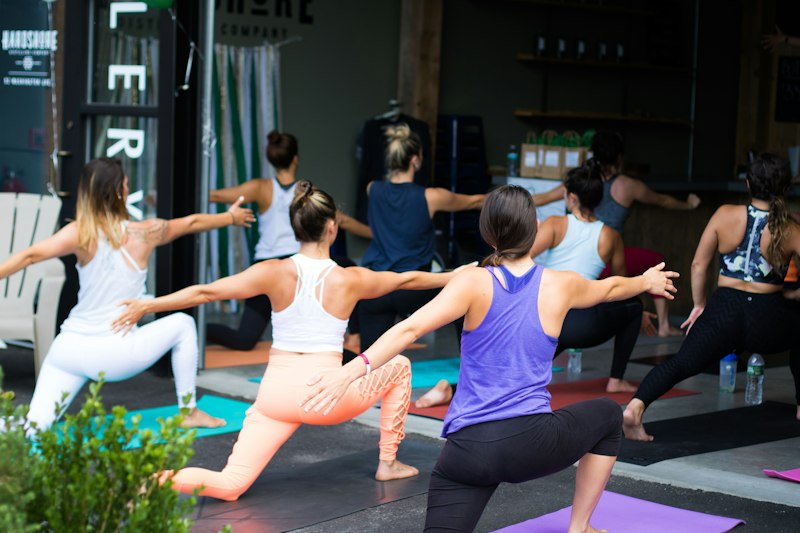
Yoga & Flexibility-Based Training
For yoga or mobility classes:
- 5 minutes: Cat-cow, child's pose, gentle spine twists, shoulder circles
- 3 minutes: Sun salutations (3 to 5 rounds) at a slow, controlled pace
- 2 minutes: Transition into standing poses
- Total: 10 minutes
HIIT & High-Intensity Intervals
For interval-based training:
- 3 minutes: Easy movement (jog, row, bike) to elevate heart rate
- 3 minutes: Dynamic stretching and mobility
- 2 minutes: Movement rehearsal at 50% intensity
- 2 minutes: Short bursts: 20 seconds at 80% effort, 20 seconds easy, repeat x2
- Total: 10 minutes
Combat Sports (Boxing, Muay Thai, MMA)
For fight-based training:
- 2 minutes: Light jogging or jump rope
- 3 minutes: Dynamic stretching (arm circles, shoulder dislocates, hip circles)
- 3 minutes: Shadow boxing or mitts work at light intensity, focusing on technique
- 2 minutes: Gradually build intensity with combinations at 70 to 80% effort
- Total: 10 minutes
Work With a Dubai Fitness Professional
Need personalized warm-up and cool-down protocols tailored to your specific training style and fitness level? A certified personal trainer can design protocols that match your goals and account for Dubai's climate.

6. Cooling Down Properly: The Science & Practice
Just as you would not accelerate a car engine and then turn it off immediately, you should not finish intense exercise abruptly. A proper cool-down is an intentional wind-down phase that brings your system back to baseline.
Why Cool-Down Matters
Gradual heart rate reduction: If you stop abruptly, blood can pool in your legs, temporarily reducing oxygen to your brain and causing dizziness or lightheadedness. A gradual cool-down ensures blood continues circulating evenly, slowly bringing your heart rate down.
Metabolic waste removal: During intense exercise, your muscles produce lactate and hydrogen ions, metabolic byproducts. While the "lactate causes soreness" myth is outdated, lactate does circulate in your blood during and after intense effort. Light movement during cool-down accelerates the removal of these compounds, speeding recovery.
Nervous system recovery: Intense training keeps your nervous system in a heightened (sympathetic) state. The cool-down and subsequent stretching shift you toward parasympathetic activation, the "rest and digest" state where actual tissue repair and adaptation happen. Without this shift, your nervous system remains vigilant, sleep quality suffers, and recovery is impaired.
Flexibility gains: Stretching muscles while they are warm and fatigued is when they are most receptive to lengthening. A cool-down stretching routine can meaningfully increase your flexibility over weeks and months, but only if done consistently post-workout.
The Cool-Down Protocol
Phase 1: Easy movement (3 to 5 minutes). Continue whatever activity you just completed, jogging, cycling, rowing, but at 40 to 50% intensity. For strength training, this might mean 3 to 5 minutes of light walking or easy cycling. For HIIT, drop to 50% intensity for the final few efforts. The goal is to maintain blood flow while gradually lowering your heart rate.
Phase 2: Static stretching (5 to 10 minutes). Once your heart rate has dropped to conversational levels, hold static stretches in the major muscle groups you worked. See the full routine below.
Phase 3: Breathing and parasympathetic activation (2 to 3 minutes). Finish with slow, deep breathing, 10 to 15 slow breaths, inhaling for 4 counts and exhaling for 6 counts. This activates your parasympathetic nervous system and signals your body that the "threat" of intense exercise has passed. Your recovery can now begin in earnest.
7. Complete Static Stretching Routine (Cool-Down)
Hold each stretch for 20 to 30 seconds, 2 to 3 repetitions per side. Breathe slowly and deeply throughout. You should feel a gentle tension, never pain.
Lower Body Stretches (4 minutes)
- Hamstring stretch: Seated or lying on your back, one leg extended, pull your shin toward your chest. Feel the stretch along the back of your thigh.
- Quad stretch: Standing or lying on your side, pull your foot toward your glutes. Feel the stretch along the front of your thigh.
- Hip flexor stretch: Lunge position, back knee down. Feel the stretch along the front of your back hip.
- Glute stretch: Lying on your back, pull one knee across your body toward the opposite shoulder. Feel the stretch in your glute and outer hip.
- Calf stretch: Facing a wall, one leg back with heel planted, lean forward. Feel the stretch along your calf.
Upper Body Stretches (3 minutes)
- Chest stretch: Hands behind your back, straighten your arms and lift slightly. Feel the stretch across your chest and front shoulders.
- Shoulder and upper back: Cross one arm across your chest, pull with the opposite hand. Feel the stretch across your shoulder and upper back.
- Tricep stretch: Reach one arm over your head, bend at the elbow, pull with the opposite hand. Feel the stretch along the back of your upper arm.
- Neck stretch: Gently tilt your head toward each shoulder, hold. Feel the stretch along the side of your neck.
Full-Body Stretches (2 minutes)
- Child's pose: Knees bent, forehead to the floor, arms extended. A gentle, restorative stretch.
- Spinal twist: Lying on your back, pull one knee across your body, turn your head opposite. Feel the twist in your spine.
8. Cool-Down in Dubai Heat: Extra Considerations
Dubai's extreme climate makes warm-up and cool-down even more critical, and demands specific adaptations.
Pre-Cooling Strategies for Outdoor Training
If you are training outdoors during Dubai's warm months (April October), your warm-up should begin indoors if possible. Pre-cool your body before transitioning outside: drink ice water, spend time in an air-conditioned space, or even take a cool (not cold) shower beforehand. This gives you a thermal "buffer" that allows you to warm up more gradually once outside, reducing heat stress.
Hydration During Warm-Up and Cool-Down
In Dubai's heat, your sweat rate is dramatically elevated even during relatively low-intensity warm-up. Begin hydrating before your session, 300 to 500 ml of water 20 to 30 minutes before starting. During your warm-up, take small sips (100 to 150 ml) every 3 to 5 minutes. Continue this pattern through your cool-down. Do not wait until you feel thirsty, by then, you are already mildly dehydrated.
Post-Workout Cooling
After your training session, your body continues generating heat from the metabolic activity of recovery. In Dubai's heat, this can be uncomfortable and counterproductive. After your cool-down stretching:
- Spend 5 to 10 minutes in an air-conditioned space
- Use a cold (not ice-cold) towel on your neck, forehead, and wrists, these are major heat-exchange sites
- Continue sipping cool water throughout the hour post-workout
- Avoid sitting in direct sunlight or in a hot car immediately after training
Timing Your Training Around Dubai's Climate
Consider shifting your training schedule during summer months. Outdoor training is best done before 7 am or after 7 pm during April October. Indoor training (gym, air-conditioned studio) is entirely appropriate year-round. If you must train mid-day, do it indoors and accept that your intensity will be lower, pushing hard in 48-degree heat is neither wise nor necessary.
Between June and September, outdoor training in the heat can genuinely be dangerous. Heat exhaustion and heat stroke are real risks. Train indoors, schedule early morning or evening sessions, stay hydrated, and listen to your body. No workout is worth your health.
9. Foam Rolling as Part of Cool-Down Recovery
Foam rolling is a self-massage technique that complements, but does not replace, stretching. Done properly during cool-down, it can meaningfully improve recovery and flexibility.
How Foam Rolling Works
A foam roller is a cylindrical tool that allows you to apply sustained pressure to muscles. This pressure stimulates nerve endings in your muscles (mechanoreceptors), causing the muscle to relax slightly, a process called autogenic inhibition. Over time, this relaxation can improve flexibility and reduce tightness. Additionally, foam rolling improves blood flow to fatigued muscles, aiding recovery.
When to Foam Roll
Use foam rolling during cool-down, after your static stretching routine. Spend 60 to 90 seconds per muscle group, moving slowly. Focus on the larger muscles: quads, hamstrings, glutes, back, chest, and calves. Avoid rolling directly over joints or bones, stick to muscle belly.
Foam Rolling Protocol
- Quads: Face-down, foam roller under your thighs, slowly roll from hip to knee. 90 seconds.
- Hamstrings: Seated, foam roller under the back of your thighs, lift your hips slightly, roll. 90 seconds.
- Glutes: Seated on the foam roller, roll your glute muscles. 90 seconds.
- Back: Lying on your back, foam roller under your mid-back, slowly extend your back. 90 seconds. Avoid rolling directly over your spine.
- Calves: Seated, foam roller under your calves, lift your hips slightly, roll. 60 seconds.
Foam rolling should feel like a firm massage, uncomfortable but not painful. If it is painful, you are likely pressing too hard or have an underlying issue that needs assessment by a physiotherapist.

10. Common Warm-Up Mistakes to Avoid
Even well-intentioned athletes make these preventable errors:
Mistake 1: Static Stretching Before Exercise
Holding a stretch for 30 seconds before a sprint or heavy lift temporarily reduces force production. Save static stretching for cool-down. Dynamic stretching is what you want before intense effort.
Mistake 2: Insufficient Warm-Up for Strength Training
Many lifters skip warm-up sets, jumping straight to their working weight. This is a recipe for injury and poor performance. Always include warm-up sets, bar only, 50%, 70%, before your working sets.
Mistake 3: Skipping Warm-Up Entirely Because "You Are Running Late"
Ironically, you save a few minutes by skipping warm-up, and potentially lose months to injury recovery. The warm-up is non-negotiable, even if it means trimming 5 minutes off your main session.
Mistake 4: Over-Heating Before Training
A warm-up should elevate your heart rate and temperature, not exhaust you. If your warm-up leaves you breathless and fatigued, it is too intense. You should feel energised and ready, not tired.
Mistake 5: Neglecting the Cool-Down "Because I Am Too Tired"
You are tired because your body is in a heightened state. The cool-down is what brings you down from that state and initiates recovery. Skipping it guarantees slower recovery, worse soreness, and lower quality sleep.
Mistake 6: Ignoring Training-Specific Needs
A general warm-up is better than none, but a sport-specific warm-up tailored to your actual training is superior. The few extra minutes of specificity pay dividends in performance and injury prevention.
11. Frequently Asked Questions
How long should a warm-up be?
For most training: 5 to 10 minutes. For strength training with heavy loads: 8 to 12 minutes including specific warm-up sets. For very short, low-intensity sessions (walking, light yoga): 3 to 5 minutes is sufficient. In Dubai's heat, add 2 to 3 minutes.
Can I use the same warm-up for every training session?
A general warm-up works for any session, but tailoring it to your specific training style (strength, endurance, combat, flexibility) yields better results. Use the general protocol as a baseline and modify based on what you are about to do.
Is foam rolling essential or optional?
Optional but beneficial. If you have time and access to a foam roller, it aids recovery. If not, a thorough static stretching cool-down is sufficient. Never skip stretching to fit in foam rolling, stretching is the priority.
Can I skip the cool-down if I am short on time?
Not ideal, but if you must choose, do at least 5 minutes of easy movement and 3 minutes of static stretching. Even a minimal cool-down is vastly better than abruptly stopping. Ideally, protect 10 minutes for cool-down, it is when adaptation happens.
What is the difference between soreness caused by a bad warm-up versus normal post-workout soreness?
Soreness from insufficient warm-up typically appears within hours and is acute (sharp, localized). Normal post-workout soreness (DOMS) appears 24 to 48 hours later and is diffuse. DOMS is normal and not harmful. Acute pain from an injury is not, if you experience sharp pain during your cool-down or thereafter, seek assessment from a physiotherapist.
Should I warm up the same way in winter (Dubai cooler months) versus summer?
Winter (Nov Mar) requires shorter warm-ups; summer (Apr Oct) requires longer warm-ups. In summer, start indoors, begin gentle, and allow more time for core temperature to rise safely. In winter, you can progress faster. Your body will tell you, if you feel stiff and sluggish, add time.
Get Expert Guidance on Warm-Up & Recovery
Interested in optimizing your entire training session, including warm-up and cool-down protocols tailored to your goals? Work with a certified personal trainer in Dubai who can design a complete programme.
- Warm-up prepares your thermal, cardiovascular, and nervous systems, never skip it
- General warm-up: 5 to 10 minutes of easy movement + dynamic stretching + intensity build
- Dynamic stretching (movement) for warm-up; static stretching (holding) for cool-down
- Cool-down: 3 to 5 min easy movement + 5 to 10 min static stretching + breathing work
- Dubai heat demands extended warm-ups, aggressive hydration, and post-workout cooling
- Sport-specific warm-ups outperform generic warm-ups, tailor to your training type
- Foam rolling enhances recovery but does not replace stretching
- The warm-up and cool-down are where your body actually adapts and recovers, invest in them
Ready to Perfect Your Warm-Up & Cool-Down?
A certified personal trainer can design a complete protocol tailored to your training style and Dubai's climate.
Browse Personal Trainers → Get a Trainer Recommendation →
✓ Free to browse · ✓ Sessions · ✓ Certified professionals only